
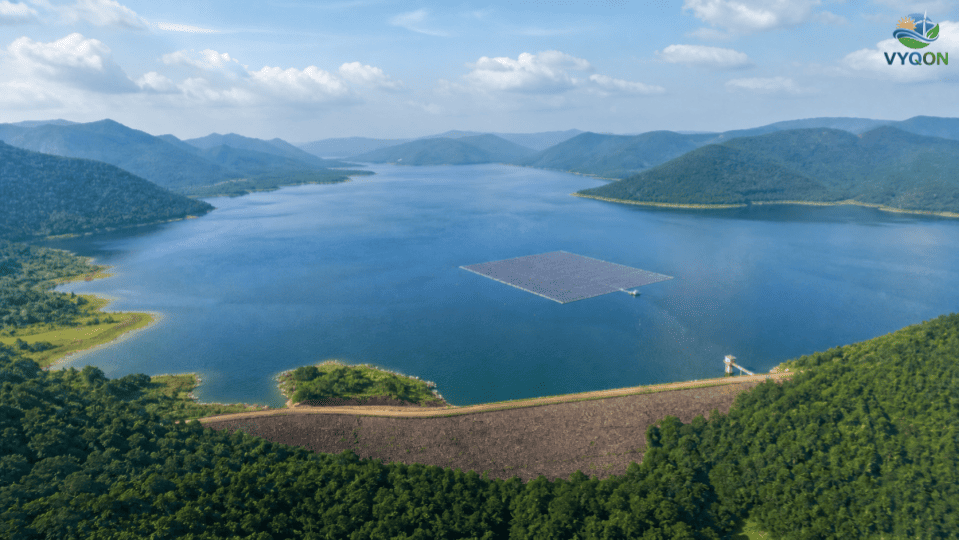
Project Overview and Core Directive
Under the regulatory authority of Case No. 47/2025, the Odisha Electricity Regulatory Commission (OERC) has finalized the procurement framework for a 225 MW floating solar photovoltaic (FSPV) project located at the Upper Indravati Reservoir in Odisha. Pursuant to the Odisha Renewable Energy Policy 2022, GRIDCO Ltd. will execute the project via a Public-Private Partnership (PPP) model, serving as both the nodal agency and the exclusive power procurer. This procurement is governed by the Ministry of Power (MoP) “Solar Bidding Guidelines” dated July 28, 2023, and includes specific deviations approved to address the technical complexities of large-scale hydro-solar hybridization.
Project Architecture and Capacity Split
The project’s physical and organizational structure is engineered to optimize the reservoir’s specific bathymetry:
- Total Installed Capacity: 225 MW.
- Unit Configuration: The capacity is divided into three independent 75 MW units.
- Procurement Authority: GRIDCO Ltd. is the sole counterparty for all long-term Power Purchase Agreements (PPAs) generated by these units.
Regulatory Framework and Approved Deviations (OERC Case 47/2025)
The OERC has granted specific departures from the MoP Solar Bidding Guidelines (Resolution No. 27/01/2023-RCM) to enhance project bankability and accommodate the niche requirements of FSPV technology.
| Parameter | Standard Guideline (MoP) | Approved Deviation (OERC Case 47/2025) |
| Allocation Method (Clause 5.4) | Bucket-filling: Capacity is allocated sequentially to L1, L2, etc., until the total quantum is reached. | Unit-wise Allocation: Capacity is awarded to the lowest bidder for each specific 75 MW unit via reverse auction. |
| Minimum Bid Quantum (Clause 5.2) | 10 MW: Standard minimum for projects connected to the State Transmission Utility (STU). | 75 MW: The minimum bid is strictly linked to the capacity of a single discrete unit. |
| Maximum Allocation (Clause 5.3) | 50% Limit: Maximum of 112.5 MW can be allocated to a single developer. | 150 MW Limit: A single bidder may be allocated a maximum of two units (150 MW). |
Technical Rationale for Deviations The transition from “bucket-filling” to unit-wise bidding is necessitated by the variable bathymetry and engineering requirements of the Upper Indravati Reservoir. Unlike land-based solar, FSPV costs are heavily influenced by site-specific mooring depths and anchoring complexities; a unit-wise approach allows developers to price these engineering risks accurately for specific units rather than averaging them across the entire 225 MW. Furthermore, the 150 MW allocation limit facilitates economies of scale in procurement and construction, while unit-wise division simplifies scheduling, loss accounting, and STU-level metering.
Technical Scope: Environmental and Social Impact Assessment (ESIA)
The selected consultancy firm must execute an ESIA that addresses both standard renewable energy impacts and the unique aquatic disturbances associated with floating arrays.
- Infrastructure Coverage:
- Floating solar arrays and associated buoyancy systems.
- 220 kV transmission lines and dedicated evacuation infrastructure.
- Regulatory Alignment:
- Compliance with Indian national environmental regulations and Odisha state-specific guidelines.
- Adherence to International Finance Corporation (IFC) Performance Standards.
- Environmental and Technical Metrics:
- Baseline assessment of air quality, water quality, and biodiversity.
- Aquatic Nuance Modeling: Specialized modeling for water quality impacts, potential oil spill risks from maintenance activities, and Diel Vertical Migration (DVM) impacts on zooplankton.
- Polarized Light Assessment: Evaluation of reflected polarized light “lake effect” on polarotactic species and avian navigation.
- Social Metrics:
- Development of Indigenous Community Plans and Livelihood Restoration frameworks.
- Structured stakeholder engagement and grievance redressal mechanisms.
Bidder Eligibility and Financial Qualifications
Bidders for the consultancy contract must demonstrate significant sector-specific expertise and financial stability:
- Financial Hurdles: A minimum average annual turnover of ₹10 Crore from consultancy services over the last three financial years.
- Technical Hurdles: Successful completion of at least three ESIA or EIA/SIA studies in the renewable energy or transmission sector within the last five years.
- Security and Fees:
- Earnest Money Deposit (EMD): ₹100,000 (Bank Guarantee or Insurance Surety Bond).
- Performance Bank Guarantee (PBG): ₹250,000 (to be submitted within 20 days of work order).
- Non-refundable Bid Fee: ₹11,800 (inclusive of GST).
Critical Procurement Timeline
The procurement of consultancy services follows the 2026 schedule:
Tender Schedule 2026
| Milestone | Date |
| RFP Issue Date | April 29, 2026 |
| Pre-bid Meeting | May 6, 2026 |
| Bid Submission Deadline | June 3, 2026 (1:00 PM) |
| Opening of Techno-Commercial Bids | June 3, 2026 (5:00 PM) |
| Declaration of Price Bids | June 16, 2026 |
| Signing of Contract Agreement | June 30, 2026 |
Submission Protocol
Proposals must be uploaded via the Bharat Electronic Tender portal or the official GRIDCO website. Selection is based on the Least-cost (L1) bidding methodology. Only firms that achieve a minimum technical evaluation score of 70 marks will have their price bids opened. Price bids from firms failing to meet this technical threshold will be disqualified regardless of cost.
Leave a Comment