
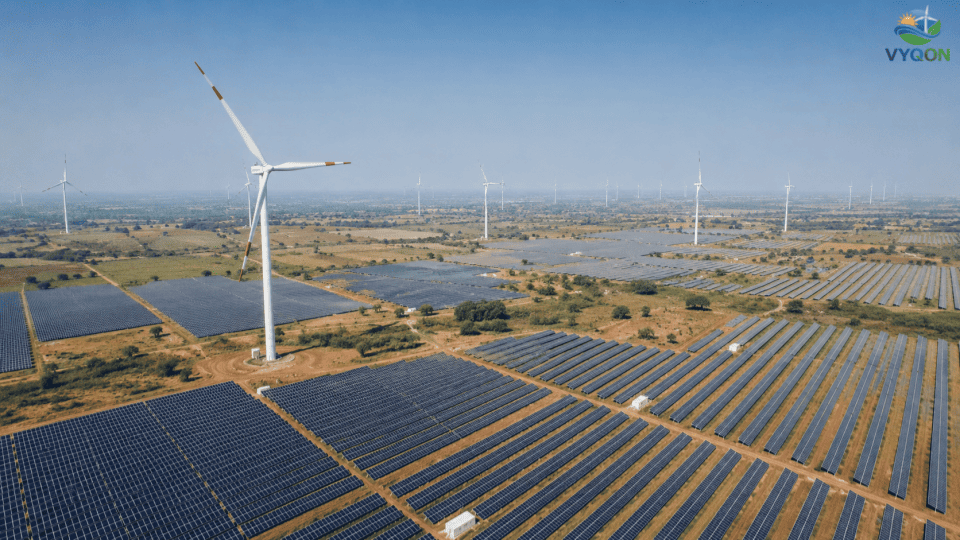
Key Transaction Details
Inox Clean Energy Ltd has reached an agreement to acquire the renewable energy portfolio of Vena Energy India for a total consideration of ₹6,000 Crore. The transaction encompasses a 6 GW portfolio, which is categorized by its current stage of development:
- Operational Assets: 1.2 GW
- Advanced Stage/Near Commissioning Projects: 1.8 GW
- Developmental Pipeline: 3.0 GW
The associated power purchase agreements (PPAs) involve several primary offtake counterparties, including the Solar Energy Corporation of India (SECI), Gujarat Urja Vikas Nigam Limited (GUVNL), state distribution companies (DISCOMs), and various Commercial & Industrial (C&I) clients.
This acquisition occurs as counterparty credit risk in the sector shows signs of stabilization. Following the 2022 Late Payment Surcharge Rules, which restricted defaulting DISCOMs’ access to power exchanges, payment discipline has improved. Sector data indicates that DISCOM payable days have shortened from 168 days in FY2022 to 132 days as of FY2024.
Strategic Growth and Macroeconomic Context
This transaction marks the 10th strategic acquisition completed by Inox Clean Energy within the last 10 months. By integrating the 1.2 GW of operational assets and 1.8 GW of near-commissioning projects from this deal, the company’s combined capacity in these categories now exceeds 4 GW. This growth has been supported by a series of recent acquisitions, including:
- Vibrant Energy
- SunSource Energy
- SkyPower
- Boviet Solar
The execution of this deal aligns with a constructive macro window in the Indian power sector. Funding conditions have become more favorable following the S&P sovereign credit rating upgrade to ‘BBB’ in August 2025 and the subsequent reduction of the RBI repo rate to 5.25% as of February 2026. These shifts have supported narrower corporate spreads and improved access to the long-tenor financing required for capital-intensive renewable infrastructure.
Sector Financial Profile and Credit Trends
As a renewable pure-play developer, Inox Clean Energy’s aggressive expansion follows broader industry credit trends. Sector analysis shows that renewable pure-players carry the highest debt-to-capital ratios among power utilities, often exceeding 70-80%. This leverage is driven by the capital-intensive nature of buildouts where investors provide the majority of capital upfront.
While increased debt levels put near-term pressure on credit metrics such as debt-to-EBITDA, renewable assets demonstrate a structural margin advantage over thermal peers due to the absence of fuel costs and lower variable expenses. Furthermore, the sector continues to rely heavily on bank loans, which typically account for 80% of interest-bearing debt for the top eight Indian utilities, leaving the domestic corporate bond market as an underutilized funding channel.
Corporate Targets
The parent group has defined specific capacity and manufacturing objectives for the 2028 fiscal year (FY28) to guide its long-term investment strategy:
FY28 Official Capacity Targets:
- Installed Independent Power Producer (IPP) Capacity: 10 GW
- Integrated Solar Manufacturing Capacity: 11 GW
Leave a Comment