
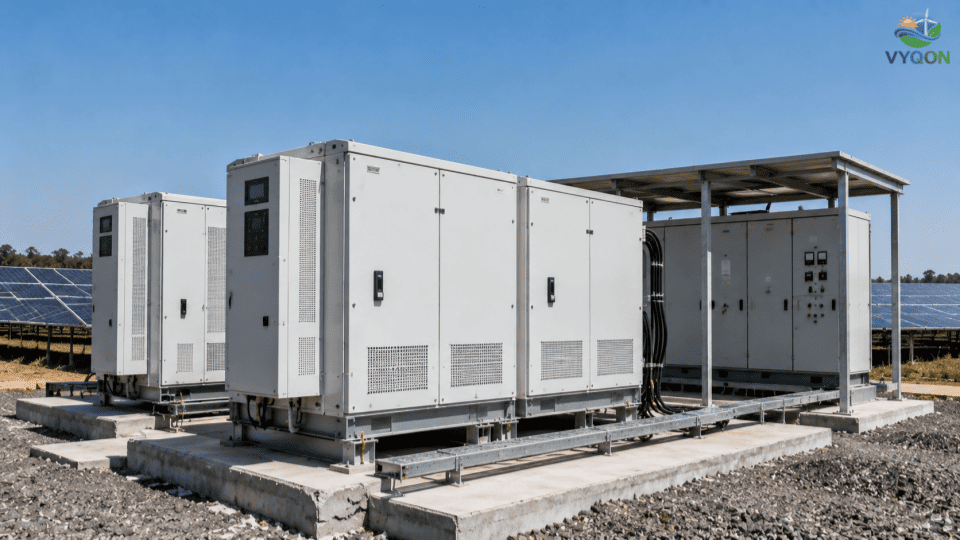
The ruling judicially affirms that solar inverters are integral components of solar power-generating systems, prioritizing functional reality over narrow tariff classification.
BENGALURU—The Karnataka High Court, in the jurisprudentially significant ruling of M/S ABB India Limited vs. The Joint Commissioner, has quashed a confirmed tax demand of approximately ₹120 crore. The decision clarifies that solar inverters are eligible for the 5% concessional Goods and Services Tax (GST) rate under Entry No. 234 of Notification No. 1/2017-Central Tax (Rate), resolving a long-standing classification dispute between the renewable energy industry and tax authorities.
Background of the Legal Dispute
The litigation originated from an audit covering the period of July 2017 to March 2020. The State Tax Department sought to classify solar inverters as “general electrical devices” under HSN 8504, subjecting them to a standard GST rate of 18%. The department contended that because inverters retain an independent identity as electrical apparatus, they should be taxed separately from the solar panels they serve.
ABB India Limited challenged this assessment via Writ Petition No. 17875 of 2023, arguing that solar inverters are specifically engineered for renewable energy applications. The petitioner maintained that these devices are “parts for the manufacture” of solar power-generating systems, thus falling under the 5% concessional bracket provided by Entry No. 234. The financial stakes were substantial, involving the quashing of a confirmed demand totaling ₹120 crore in tax and associated liabilities.
The Court’s Ruling and the “Soul” of the System
Presiding over the bench, Justice S.R. Krishna Kumar applied a “Functional Test” to the dispute, examining the technical ecosystem of solar generation. The court observed that while solar panels produce Direct Current (DC), usable power for industrial, domestic, and grid consumption must be in Alternating Current (AC).
Crucially, the Court relied on the Supreme Court’s landmark precedent in Commr. of Cus. vs. Hewlett Packard India Sales (P) Ltd., which established that components forming an integral part of a system—such as operating software for a laptop—cannot be artificially segregated for taxation. Applying this logic, the High Court determined that a “system” implies a coordination of parts toward a common output. Since the inverter performs the indispensable function of making solar electricity commercially viable, it was characterized as the “soul” and an “inseparable operational component” of the solar power-generating system.
Evidentiary Standards and “Intended Use”
A pivotal aspect of the ruling addressed the evidentiary burden on taxpayers. The Revenue had argued that the petitioner failed to prove the actual end-use of every inverter sold. However, the Court established that for the purpose of claiming a concessional rate, “intended use” is the relevant legal standard, not immediate proof of actual use.
The petitioner successfully demonstrated this intent by producing documentation—including purchase orders and project contracts—linking the supplies to specific renewable energy initiatives such as the Charanka Solar Power Project, the Husk Power Project, and the Oryx Solar Energy Projects.
Furthermore, the Court addressed the executive’s attempt to restrict the tax benefit, ruling that Circular No. 163/19/2021-GST could not be used to narrow the substantive scope of the original statutory notification. The bench affirmed that confining the concession only to complete, bundled systems would render the legislative phrase “parts for their manufacture” redundant.
Policy Alignment and GST 2.0 Framework
This judicial affirmation bridges the gap between the original GST implementation and the “GST 2.0” reforms introduced in September 2025. During the 56th GST Council meeting, recommendations were made to rationalize rates across the renewable energy value chain to 5%.
The ruling also provides clarity in the context of Engineering, Procurement, and Construction (EPC) contracts. Historically, these projects utilized a 70:30 valuation split—taxing 70% of the contract value as goods and 30% as services (at 18%). By confirming that inverters qualify as solar-based devices, the Court ensures fiscal consistency with national objectives like the National Solar Mission and the PM-KUSUM scheme, effectively reducing the capital cost of clean energy projects and supporting India’s transition toward sustainable power.
Fact Sheet: Key Takeaways
| Data Point | Details |
| Case Name | M/S ABB India Limited vs. The Joint Commissioner |
| Writ Petition No. | WP No. 17875 of 2023 [2026 (5) TMI 1225] |
| Jurisdiction | Karnataka High Court |
| Presiding Judge | Justice S.R. Krishna Kumar |
| Applicable Notification | Notification No. 1/2017-Central Tax (Rate), Entry No. 234 |
| Previous Tax Rate Applied | 18% (HSN 8504 – General Electrical Devices) |
| Affirmed Tax Rate | 5% (Solar Power Based Device / System Part) |
| Final Financial Impact | ₹120 Crore demand quashed |
| Key Legal Precedent | Hewlett Packard India Sales (P) Ltd. (Supreme Court) |
| Key Evidentiary Projects | Charanka, Husk, and Oryx Solar Power Projects |
Leave a Comment