
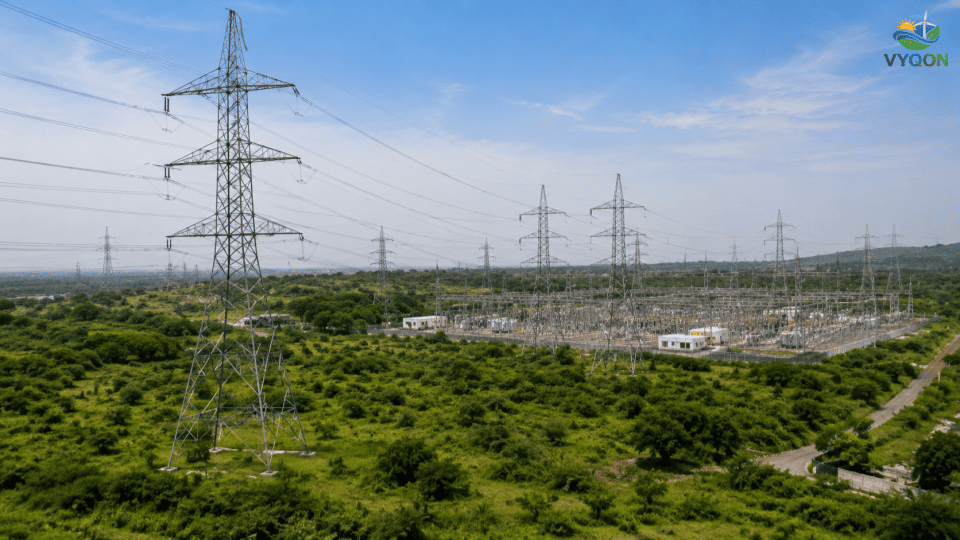
The Karnataka Electricity Regulatory Commission (KERC) has notified the Karnataka Electricity Regulatory Commission (Transmission Licence) Regulations, 2026, marking the first time in the state’s history that the Tariff-Based Competitive Bidding (TBCB) modality has been deployed for intra-state transmission infrastructure. Notified on May 21, 2026, and effective from May 29, 2026, the new framework ends a 22-year reliance on the 2004 licensing rules for this project category. The regulations provide a specialized legal structure for private-sector participation in the state’s grid, aligning Karnataka with Ministry of Power guidelines to modernize procurement and accelerate the expansion of its transmission network.
Key Regulatory and Financial Parameters
The 2026 Regulations introduce a streamlined financial framework designed to accommodate the unique requirements of TBCB projects. A primary shift is the transition from a capacity-based annual fee to a flat-rate system, which simplifies administrative overhead and provides cost certainty for bidders.
| Parameter | New Requirement (Regulations, 2026) | Previous/Alternative Framework |
| Tariff Adoption Fee | ₹25 Lakh per application (Section 63) | Not previously specified for TBCB |
| Annual License Fee | ₹20 Lakh (Flat Fee) | ₹1 Lakh per MW (Min: ₹20 Lakh; Max: ₹20 Lakh) |
| License Validity | 25 Years | N/A |
| Renewal Application | Mandatory 2 years prior to expiry | N/A |
Compliance Mandates for Licensees Entities granted a transmission license under this framework are bound by specific technical and financial obligations to ensure grid reliability:
- Non-Discriminatory Access: Licensees must provide open, non-discriminatory network access to all eligible users.
- Trading Prohibition: To prevent market distortion, transmission licensees are strictly prohibited from engaging in electricity trading.
- Operational Integrity: Assets must be constructed, operated, and maintained efficiently, with separate audited accounts for each distinct business activity.
- Risk Management: Mandatory insurance coverage is required for all transmission assets to mitigate systemic financial risks.
Bid Coordination and Procedural Mandates
The implementation of the TBCB framework involves a coordinated oversight mechanism between the state government and authorized coordinators. While the regulations recognize both REC Power Development and Consultancy Limited (RECPDCL) and PFC Consulting Limited (PFCCL) as authorized Bid Process Coordinators (BPC), RECPDCL has been appointed as the acting lead for the state’s inaugural TBCB projects.
- State Transmission Utility (STU) Oversight: Following the filing of a license application, the STU (KPTCL) is required to provide its technical recommendations to the Commission within a mandatory 10-to-20-day window. This streamlined timeline is a core component of the new expedited approval process.
- Transparency Protocols: Applicants must utilize the KERC e-filing portal and post all relevant documentation on their corporate websites. Additionally, a public notice must be published in both English and Kannada newspapers within three days of filing the application.
- Institutional Framework: An empowered committee formed by the Government of Karnataka serves as the coordinating body to ensure that the bidding process remains compliant with Central Government guidelines.
Technical Project Background: Inaugural TBCB SPVs
The 2026 Regulations are currently being applied to the first set of intra-state transmission projects in Karnataka. These projects, managed by RECPDCL, were transferred to successful bidders through Project-Specific Special Purpose Vehicles (SPVs):
- Hampapura Power Transmission Limited: This SPV was transferred to Resonia Limited at an acquisition price of ₹86.07 million. The project involves the development of a 400kV Gas Insulated Substation (GIS) and associated lines in Mandya District. It is designed to relieve loading constraints on the Huygonahalli, Tubinakere, and Kothipura substations.
- Mekhali Power Transmission Limited: Acquired by Dilip Buildcon Limited for ₹80.59 million, this project entails a 400kV Air Insulated Substation (AIS) and associated lines in Belagavi District. The primary objective is to alleviate loading violations at the 400/220kV Narendra substation in Dharwad.
- Infrastructure Strategy: Both projects are scheduled for completion within 24 months of the SPV transfer, focusing on stabilizing the regional grid and facilitating the evacuation of power from expanding renewable energy clusters.
Regulatory Enforcement and Lender Rights
To ensure project bankability and operational continuity, the Commission has established rigorous enforcement protocols and specific provisions for debt holders.
- Step-in Rights for Lenders: In a critical move to ensure the bankability of high-capital TBCB projects, the regulations allow lenders to nominate a replacement entity to take over the transmission license in the event of a debt default, subject to KERC approval.
- Revocation Protocols: KERC maintains the authority to revoke licenses in cases of insolvency or persistent default. Such actions require an official inquiry, adherence to the principles of natural justice, and a mandatory three-month notice period.
- Adjudication Pathways: The regulations mandate that any disputes must first be addressed through mutual discussion. Failing a resolution, the matter is referred to the Commission for final adjudication.
Leave a Comment