
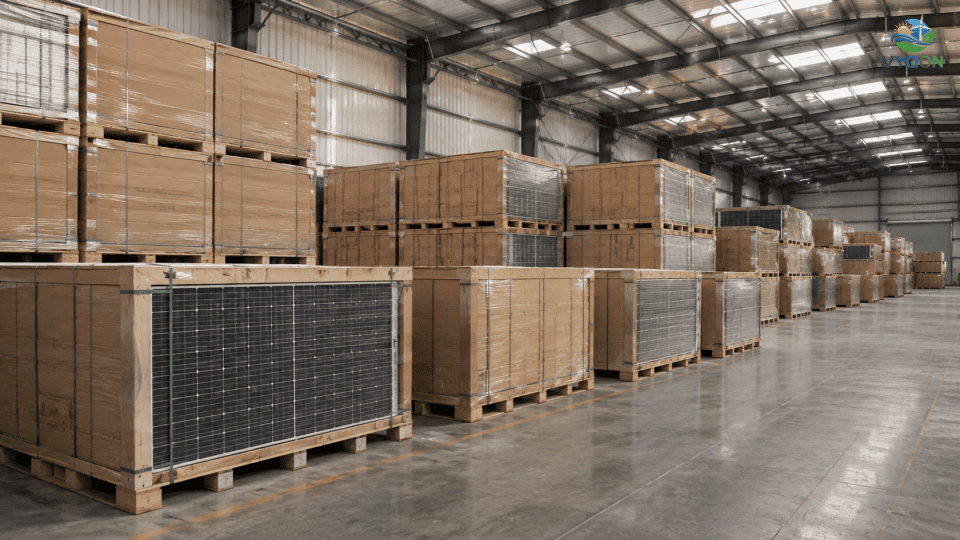
The Ministry of New and Renewable Energy (MNRE) has formally rescinded its Office Memorandum (O.M.) No. 283/16/2023-GRID SOLAR dated March 29, 2024. The decision, issued on July 30, 2026, and signed by Sanjay G. Karndhar (Scientist-E), terminates the blanket grandfathering window previously granted to solar projects facing commissioning delays despite having modules on-site by the end of FY 2023-24. While the general relaxation has been withdrawn, the Ministry maintains a “removal of difficulties” mechanism to review genuine implementation hurdles on a case-by-case basis.
Regulatory Timeline and Historical Context
The enforcement of the Approved List of Models and Manufacturers (ALMM) framework has seen several administrative shifts intended to balance domestic manufacturing capacity with project execution cycles:
- March 10, 2023: MNRE held the ALMM Order in abeyance for the 2023-24 financial year, providing an exemption for all projects commissioned by March 31, 2024.
- March 29, 2024: The mandate was reinstated effective April 1, 2024. However, a clarification allowed for the separate examination of projects where modules reached the site by March 31, 2024, but commissioning was delayed by factors beyond the developer’s control.
- July 30, 2026: Citing the fact that more than two years have elapsed since the 2024 order, the Ministry rescinded the relaxation with immediate effect. This restores the original requirement that all eligible projects must utilize modules enlisted in ALMM List-I.
Mandatory ALMM Applicability and Procurement Compliance
The core ALMM framework applies to a broad spectrum of projects supported by public funds or grid connectivity mandates. Under the July 30 memorandum, the following categories must comply with ALMM List-I:
- Government Projects: Initiatives by Central or State Governments, Central/State PSEs, and autonomous bodies.
- Government-Assisted Projects/Schemes: Projects receiving financial or logistical support under national or state programs.
- Open Access and Net-Metering Projects: Standard grid-connected installations for commercial, industrial, or residential use.
- Section 63 Projects: Supply-side projects established under competitive bidding guidelines of the Electricity Act, 2003.
Procurement Note for EPCs: Developers must note that ALMM compliance is verified at the model-specific level. Verification is based on exact model numbers and wattage ratings as per the ALMM list, rather than a generic manufacturer brand approval. Non-listed models from a listed manufacturer remain ineligible for compliant projects.
Case-by-Case Exemption Mechanism for Pending Projects
For projects that remain uncommissioned but seek relief under the now-rescinded 2024 order, the MNRE will examine requests individually. Applications must be submitted by the renewable power developer within a “reasonable period.” To facilitate this, the Ministry has defined specific technical thresholds for investment protection:
- Category I Projects: Developers must demonstrate that 100% of the required modules were present at the project site and at least 50% were installed before June 1, 2026. Evidence must include geotagged and timestamped site photographs and a certification of the DC-side installation from the Electrical Inspectorate.
- Category II Projects (Effective Steps): Projects seeking relief based on implementation progress must satisfy three criteria:
- Possession of 75% of the required land via registered ownership, lease, or allotment.
- Documented financial closure.
- Receipt of in-principle connectivity approval with a defined start date.
Policy Convergence: List-II (Cells) and the Global “Cost Squeeze”
The rescission of the List-I (Modules) relief coincides with the enforcement of List-II (Cells) on June 1, 2026. This mandate requires solar cells to be sourced from approved domestic manufacturers.
Institutional investors should note the emerging “cost squeeze” driven by external economic shifts. China reduced its solar export rebates from 13% to 9% in December 2024 and completed a total withdrawal of these rebates by April 2026. This has elevated import costs by 0.02-0.03 yuan per watt, narrowing the arbitrage margin between imported and ALMM-compliant hardware. Analyst projections suggest this supply chain transition will result in a tariff impact of ₹0.40–0.50 per unit.
Furthermore, legal and compliance teams should recognize that the cell-level exemption window was influenced by a Ministry of Finance memorandum (April 29, 2026). This memorandum classified the West Asia situation as “war” for force majeure purposes, allowing for penalty-free extensions of two to four months for projects where contractual obligations were disrupted, provided the parties were not in default as of February 27, 2026.
Key Compliance Dates for Developers
| Milestone / Requirement | Date / Deadline |
| List-II (Cells) Bid Submission Deadline for Exemption | August 31, 2025 |
| Mandatory Solar Cell Sourcing (List-II) Enforcement | June 1, 2026 |
| List-II Exemption Application Deadline (via NISE portal) | June 30, 2026 |
| Rescindment of March 2024 List-I Transition Relief | July 30, 2026 |
| List-II Commissioning Deadline (Net-metering/Open Access) | December 31, 2026 |
| PM Surya Ghar “Give It Up” List-II Exemption Deadline | March 31, 2027 |
Administrative Shift and Policy Stability
The administrative shift signals the government’s intent to enforce the ALMM framework strictly as domestic manufacturing capacity scales toward an anticipated 43-47 GW of cell capacity by mid-2026. By moving away from blanket grandfathering windows to a rigorous, document-traceable review process, the MNRE aims to foster long-term investor confidence in the Atmanirbhar Bharat solar ecosystem. This procedural tightening ensures that exemptions are limited to genuine operational difficulties while maintaining the integrity of the domestic content mandate.
Official Sources and Reference Portals
- Ministry of New & Renewable Energy (MNRE) The primary governing body that issues ALMM orders and maintains the approved lists for modules (List-I) and cells (List-II).
- Official Website: https://mnre.gov.in/
- Key Document: Office Memorandum No. 318/38/2024-Grid Connected Rooftop (Dated 30th July 2026) — Rescinding of earlier O.M. dated 29.03.2024.
- National Institute of Solar Energy (NISE) – DCR Portal The official portal used for submitting exemption applications and verifying the Domestic Content Requirement (DCR) status of solar modules.
- DCR Portal: https://solardcrportal.nise.res.in/
- Bureau of Indian Standards (BIS) The authority responsible for product-safety registrations, including standards like IS 14286 and the compulsory registration scheme for solar modules.
- Official Website: https://bis.gov.in/
- PM Surya Ghar National Portal The dedicated government platform for residential rooftop solar consumers to apply for subsidies and manage ALMM List-II exemptions.
- Portal Access: https://pmsuryaghar.gov.in/ (Reference to government workflows).
Leave a Comment