
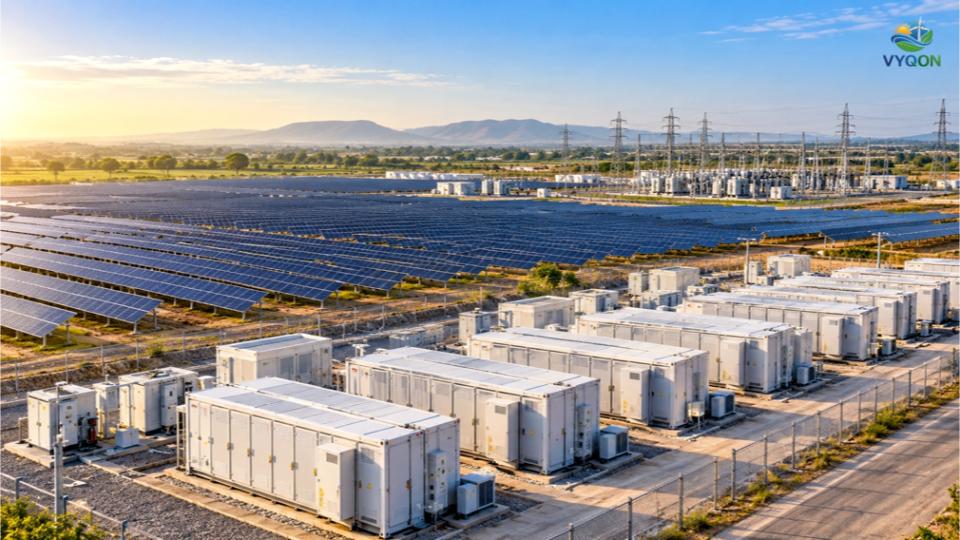
The ten-year financing facility, valued at approximately ₹955 crore, will support ReNew’s under-construction renewable energy projects, including solar and hybrid developments, while strengthening access to international green financing.
ReNew has secured a USD 100 million financing facility, equivalent to approximately ₹955 crore, from FMO, the Dutch entrepreneurial development bank, to support the development of renewable energy projects currently under construction across India. The financing has been extended to ReNew Solar Power Private Limited, a subsidiary of the ReNew group, through an Indian rupee-denominated corporate debt arrangement with a ten-year tenor. The transaction was announced by both organisations on 13 October 2026 and represents a financing milestone in ReNew’s ongoing expansion of its clean energy portfolio.
The facility has been structured under the Voluntary Retention Route (VRR) and is intended to provide long-term capital for renewable energy projects, including solar and hybrid developments. The arrangement is expected to strengthen ReNew’s ability to finance projects through various stages of development while diversifying its funding sources across domestic and international financial institutions. According to the official announcements, the transaction represents FMO’s largest single-ticket investment in India’s energy sector and its largest 2X-aligned corporate financing in Asia. These milestones highlight the growing role of international development finance in supporting renewable energy infrastructure and sustainable investment in India.
Importantly, the USD 100 million commitment represents a financing arrangement rather than the commissioning of new electricity generation capacity. The companies have not disclosed a specific allocation of the funds to individual solar or hybrid projects, nor have they announced additional operational megawatts resulting directly from the transaction. The financing is intended to support projects already under construction, with actual capacity additions dependent on their subsequent completion, testing and commercial commissioning.
Long-Term Financing Strengthens ReNew’s Renewable Energy Development Strategy
Large-scale renewable energy projects require substantial capital investment throughout their development and construction periods. Solar, wind and hybrid projects involve expenditure on generating equipment, civil infrastructure, electrical systems, transmission connections and commissioning activities before they can begin generating commercial revenue. As a result, access to financing with suitable repayment periods is an important consideration for developers managing multiple projects at different stages of execution.
ReNew’s ten-year financing facility provides an additional source of longer-term capital that can support construction-related expenditure and improve financial planning across its renewable energy portfolio. Unlike short-term financing arrangements, longer-tenor debt may provide greater flexibility in managing repayment obligations over the development and operating life of renewable energy assets. However, the financial benefits will ultimately depend on the facility’s interest rate, repayment structure, project-level allocation and other contractual conditions, which have not been publicly detailed in the announcements.
The involvement of FMO is particularly significant because development finance institutions play an important role in mobilising private capital for infrastructure projects with environmental and economic development objectives. FMO finances businesses and projects in emerging markets, with renewable energy representing an important area of investment. Through this transaction, the institution is expanding its exposure to India’s clean energy sector while supporting a renewable energy developer with an established operating and development portfolio.
According to ReNew, the financing will strengthen its access to international capital and provide additional flexibility for the execution of ongoing renewable energy projects. ReNew’s Chief Financial Officer, Kailash Vaswani, described the arrangement as an important milestone in the company’s capital-raising strategy, reflecting confidence in its business model and project execution capabilities. FMO also emphasised the significance of providing long-term financing to support the expansion of renewable electricity generation in one of the world’s major energy markets.
The use of the Voluntary Retention Route adds another important dimension to the transaction. The VRR is a framework established by the Reserve Bank of India that allows eligible foreign portfolio investors to invest in Indian debt instruments under specified conditions, including retention requirements. In the present arrangement, ReNew identifies the facility as being structured through this route, while FMO describes the financing as an INR-denominated corporate debt facility.
Rupee-denominated financing can be relevant for Indian infrastructure investments because a substantial portion of project expenditure and operating revenue may be denominated in Indian currency. Nevertheless, the actual allocation of currency risk and other financing obligations depends on the contractual structure. The publicly disclosed information does not provide sufficient detail to quantify any specific foreign-exchange savings or financial advantage from this transaction.
Supporting Solar and Hybrid Projects Under Construction
The financing is intended to support ReNew’s renewable energy projects currently under development, including solar and hybrid generation assets. Such projects require coordinated investment in engineering, equipment procurement, construction activities and electricity evacuation infrastructure before they can enter commercial operation. Availability of long-term funding can help developers maintain construction schedules, manage equipment procurement commitments and coordinate activities across multiple project locations.
For utility-scale solar projects, capital expenditure generally includes photovoltaic modules, mounting structures, inverters, transformers, power cables, monitoring equipment and grid-interconnection infrastructure. Project execution also involves site development, installation, electrical testing and coordination with transmission or distribution authorities. These activities require financial resources well before the full generating facility becomes commercially operational.
Hybrid renewable energy projects can involve additional engineering and financing considerations because they may combine different renewable generation technologies and, depending on the project configuration, energy storage or other balancing arrangements. Coordinating these systems requires careful consideration of generation profiles, grid connectivity, scheduling requirements and contractual delivery obligations.
ReNew’s financing arrangement may therefore support the broader construction programme by improving access to capital during these development stages. However, the official announcements do not identify the exact projects receiving funds, their individual installed capacities or the proportion of financing allocated to solar compared with other renewable technologies.
It is also important to distinguish committed financing from actual project expenditure. Securing a loan facility does not necessarily mean the entire amount has already been drawn or spent on construction. The financial resources will need to be deployed according to applicable agreements and the company’s project requirements. Similarly, the availability of financing does not remove engineering and execution risks associated with equipment delivery, construction progress, grid connectivity or regulatory approvals.
For renewable energy developers, the successful conversion of financed projects into operating assets depends on maintaining coordination between financial planning and technical execution. A completed solar array cannot deliver electricity commercially without functioning electrical infrastructure, approved grid connections and the necessary commissioning procedures. Therefore, the effectiveness of the financing will ultimately be reflected in the progress and performance of the projects it supports.
FMO’s Green Financing and 2X Challenge Commitments
An important feature of the transaction is its environmental and social development classification. FMO has classified 100% of the USD 100 million investment as Green, reflecting the facility’s intended contribution to climate-change mitigation through renewable energy development. This classification reinforces the role of development finance institutions in directing capital towards projects that support lower-carbon energy infrastructure.
The financing also qualifies under the 2X Challenge, an international initiative designed to promote women’s economic participation and empowerment through investment. According to FMO, the arrangement represents its largest 2X-aligned corporate financing in Asia, combining renewable energy investment with broader objectives related to workplace inclusion and equal opportunities.
ReNew’s participation in the framework is connected to its governance practices and commitment to improving women’s representation within its workforce. The company has expressed an ambition to increase women’s participation to at least 30% by 2030, alongside efforts to support professional development, mentoring and career advancement. This remains a future target rather than a representation of the company’s current workforce composition.
The inclusion of gender-related development objectives demonstrates how international renewable energy financing is increasingly evaluated beyond conventional financial returns and electricity generation outcomes. Environmental performance, governance practices and social development commitments can influence the assessment of investment opportunities, particularly for institutions operating under development-finance mandates.
For India’s renewable energy sector, transactions of this nature may strengthen investor confidence in financing structures that combine commercially viable infrastructure development with measurable environmental and social objectives. However, the actual results will depend on the implementation of the supported renewable projects and subsequent reporting of relevant sustainability indicators.
ReNew’s financing arrangement also reflects the importance of maintaining a diversified capital structure as the company expands its renewable energy portfolio. Domestic financial institutions, international development banks and capital-market financing can provide different sources of investment funding, helping developers manage financial requirements across construction and operational stages.
As India’s electricity system incorporates increasing amounts of renewable energy, the availability of long-term financing will remain an important factor in supporting utility-scale solar, wind and hybrid developments. Access to capital must be accompanied by reliable project execution, suitable transmission infrastructure and commercially sustainable power supply arrangements to translate investment commitments into operating renewable electricity assets.
Conclusion
ReNew’s USD 100 million financing agreement with FMO represents a development in international renewable energy financing for India. The approximately ₹955 crore, ten-year INR-denominated corporate debt facility will support under-construction renewable energy projects across the ReNew group, including solar and hybrid developments, while diversifying the company’s access to long-term capital.
The transaction is also significant for FMO, representing its largest investment in India’s energy sector and its largest 2X-aligned corporate financing in Asia. With the investment classified as 100% Green, the arrangement connects renewable energy infrastructure development with wider environmental and social investment objectives.
Although the financing does not immediately add new operational generating capacity, it provides resources intended to support the development and completion of renewable energy projects. Future progress will be measured through project-level implementation, financing deployment and the commercial operation of the generation assets supported by the facility.
Reference:
ReNew – Official Press Release https://www.renew.com/press-release/renew-secures-usd-100-million-from-fmo-in-dutch-development-bank-s-largest-ever-single-ticket-investment-in-india-s-energy-sector
Leave a Comment