
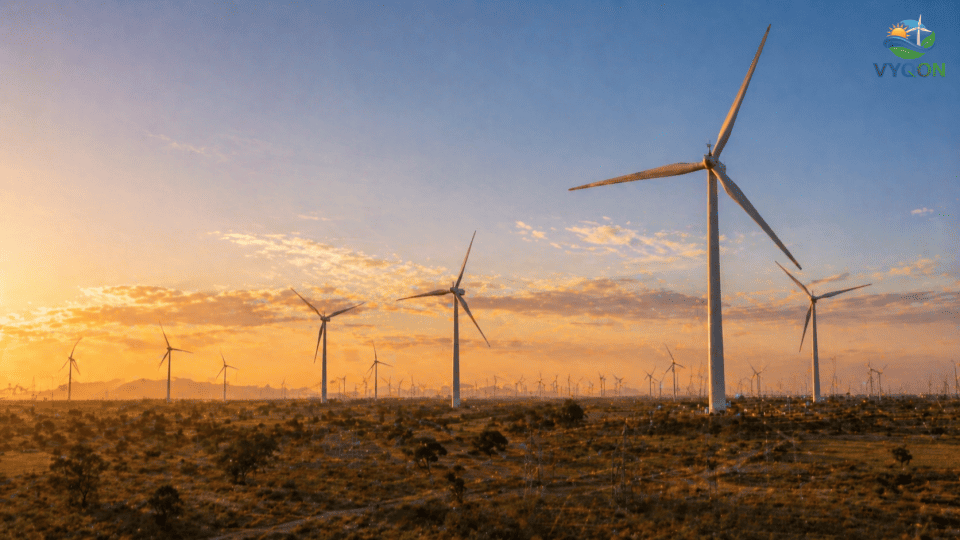
Historic Growth in Onshore Wind Capacity
India achieved an annual wind capacity addition of 6.1 GW during the 2025-26 fiscal year. This performance represents a 46% growth rate compared to FY 2024-25 and exceeds the previous high of 5.5 GW established in FY 2016-17. Cumulative installed wind power capacity has now surpassed the 56 GW threshold. In terms of electricity production, wind generation increased to 88.05 BU during the April-December 2025 period, representing a 29.51% increase over the 67.98 BU recorded in the corresponding period of the previous year.
Strategic Targets and Long-Term Projections
The national energy trajectory is defined by the following targets and projections:
- Non-Fossil Fuel Capacity: Achieve 500 GW of non-fossil fuel-based energy capacity by 2030.
- Wind Sector 2030 Goal: Reach 100 GW of installed wind capacity by 2030.
- Wind Sector 2036 Goal: Reach 156 GW of installed wind capacity by 2036.
- CEA Projection: The Central Electricity Authority (CEA) generation expansion study indicates a requirement of 138 GW of wind capacity by 2034-35 to meet projected demand.
Policy Framework and Growth Drivers
Administrative and regulatory measures from the Ministry of New and Renewable Energy (MNRE) have maintained sectoral momentum. These initiatives include:
- Customs Duty Concessions: Provision of Concessional Custom Duty on specific components and raw materials utilized in wind turbine manufacturing.
- Transmission Incentives: A graded waiver of Inter-State Transmission System (ISTS) charges, valid for projects commissioned until June 2028.
- Bidding and Obligations: Implementation of competitive bidding mechanisms and separate Wind Renewable Consumption Obligation (RCO) frameworks.
- Technical Support: Ongoing guidance provided by the National Institute of Wind Energy (NIWE).
- Market Access: The roll-out of Green Energy Open Access and a developed project pipeline have facilitated increased deployment.
Hybrid Projects and Infrastructure Readiness
The increase in capacity is supported by a pipeline of wind-solar hybrid projects. Sector momentum is further attributed to transmission readiness, the discovery of competitive tariffs, and established project execution capabilities. These factors have enabled the planned deployment of wind assets to meet rising peak demand.
Regional Leaders in Capacity Addition
Capacity additions during the fiscal year were concentrated in Gujarat, Karnataka, and Maharashtra. These states serve as primary contributors due to established infrastructure and policy frameworks for grid-connected wind power. Furthermore, the progressive implementation of Green Energy Open Access in these regions has served as a specific driver for localized capacity expansion.
The Path to “Viksit Bharat”
The Indian wind energy program has evolved from its start in the early 1990s into a leading global market. The current expansion aligns with the “Viksit Bharat” vision for 2047 and the goal of energy independence. This trajectory was reinforced during the 2025 Regional Conferences of Power Ministers, where officials emphasized resource adequacy planning and the alignment of state-level capacity with national 2030 and 2047 objectives.
Leave a Comment