
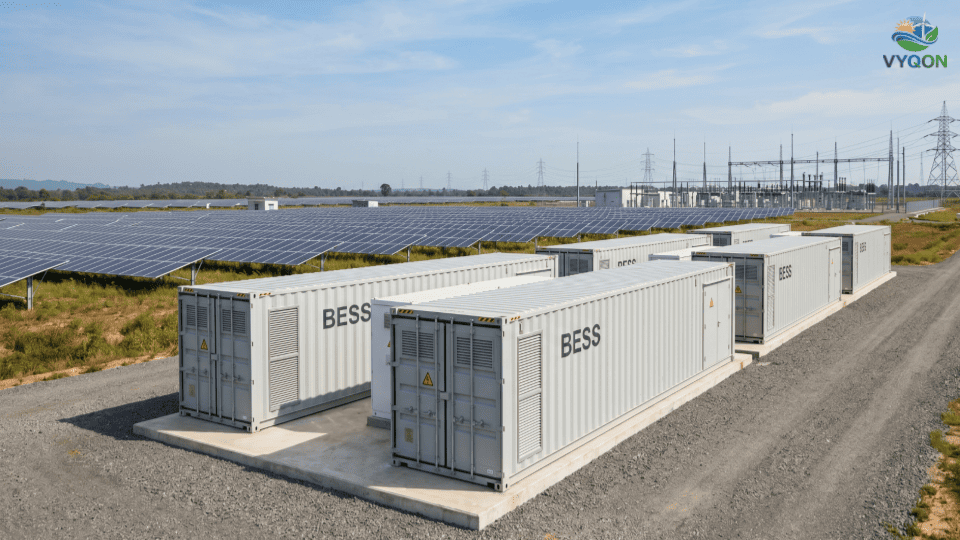
The Kerala State Electricity Board (KSEBL) has issued a formal invitation for bids to select a consultant to conduct technical feasibility and commercial viability studies for utility-scale Battery Energy Storage Systems (BESS) across the state. This consultancy represents a strategic roadmap for a massive infrastructure rollout, as KSEBL targets the deployment of 3,000–5,000 MWh of storage capacity over the next three to five years. The primary deadline for the submission of bids is June 30, 2026.
Tender Identification and Administrative Particulars
The procurement is being conducted via a “Limited Tender” process based in Thiruvananthapuram, Kerala. The following administrative particulars apply:
- Tender ID: 2026_KSEB_853761_1
- Reference No.: CP/AEE-1/BESS-Planning/2024-25
- Issuing Authority: Chief Engineer (Corporate Planning), Kerala State Electricity Board (KSEBL)
- Estimated Value: ₹25.00 Lakhs
- Earnest Money Deposit (EMD): ₹50,000
- Tender Fee: ₹5,000
- Bid Validity: 180 days
Scope of Consultancy and Technical Objectives
The selected consultant will perform a comprehensive 10-year outlook study to determine the requirements for integrating utility-scale BESS into the Kerala grid. This move signals a transition from pilot initiatives to utility-scale operations; notably, the Kerala State Electricity Regulatory Commission (KSERC) has already cleared smaller BESS projects at four specific substations: Sreekantapuram, Mulleria, Areekode, and Pothencode.
The feasibility study must evaluate systems based on standard technical parameters, specifically AC-coupled energy storage utilizing electrochemical accumulation. The analysis will encompass several critical subsystems:
- Battery Management Systems (BMS) for cell protection and state monitoring.
- Bi-directional Power Conditioning Systems (PCS).
- Auxiliary infrastructure, including HVAC and fire suppression systems.
- Energy Management Systems (EMS) for grid communication.
The consultancy will assess these technologies against primary use cases designed to stabilize a grid where approximately 90% of internal generation is hydroelectric and 10% is solar. Core use cases include:
- Energy Shifting: Storing excess solar and hydel generation for use during evening peaks.
- Ancillary Services: Supporting Tertiary Reserve Ancillary Services (TRAS) and Secondary Reserve Ancillary Services (SRAS).
- Grid Management: Mitigating peak demand volatility and reducing high-cost power purchases from energy exchanges.
KSEBL Financial Allocation and Regulatory Context
This tender is a key component of KSEBL’s Capital Investment Plan for the 2026-27 fiscal year, which carries a total outlay of ₹6,478.41 crore. A specific budgetary allocation of INR 170 crore has been earmarked for BESS development.
A central objective of the commercial viability study will be to evaluate project eligibility for the Union Government’s Viability Gap Funding (VGF) scheme. Under this central financial assistance program, standalone BESS projects can receive up to 40% of their Capital Expenditure (Capex) in support, a factor essential to the project’s long-term bankability.
KSEBL has previously engaged with the consultancy market for similar assessments, having empanelled or selected firms such as DNV MES India Pvt Ltd, Tata Consulting Engineers Ltd, and Deloitte Touche Tohmatsu India LLP. The broader goal remains an increase in internal power handling capacity by at least 125 MW to replace expensive exchange-based peak power.
Submission and Bidding Timeline
Bidders must adhere to the following chronological milestones for the selection process:
- Submission Opens: June 4, 2026
- Submission Closes: June 30, 2026
- Bid Opening: July 1, 2026
- TENDER PORTAL: https://etenders.kerala.gov.in/nicgep/app
Leave a Comment