
Executive Summary of the Transaction
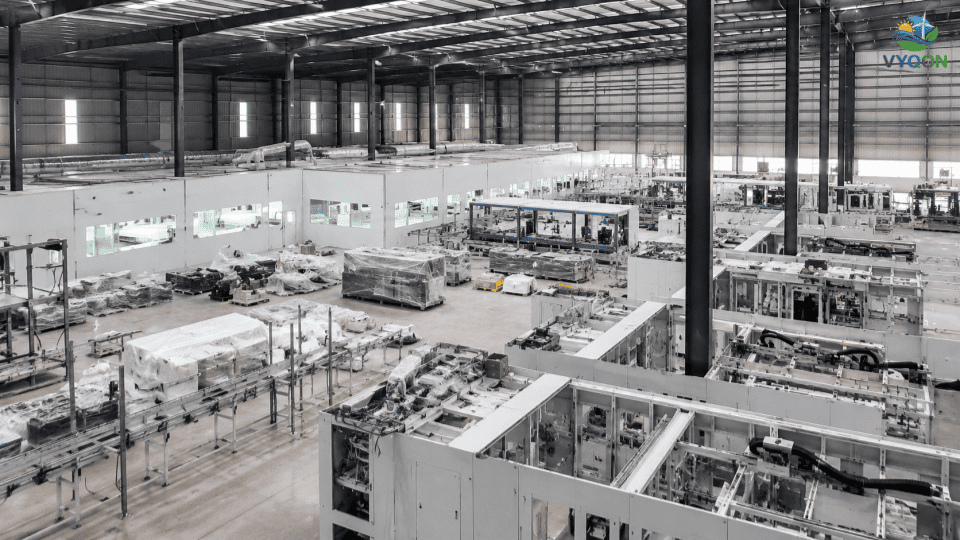
In July 2026, StarlinePS Enterprises Ltd. announced a strategic investment of ₹160 crore to acquire a 50% equity stake in Celloraa Energy Pvt. Ltd. The capital injection is designated for the establishment of a high-efficiency 1.2 GW Domestic Content Requirement (DCR)-compliant solar cell manufacturing facility in Surat, Gujarat. The plant will utilize N-type technology to address critical supply shortages in India’s renewable energy value chain. Commercial production at the facility is scheduled to commence by the end of the 2026-27 financial year or early 2027.
Strategic Financial and Governance Structure
The transaction is structured in distinct phases and is accompanied by a significant expansion of the investor’s financial and governance frameworks to support industrial manufacturing:
- Investment Tranches:
- Phase 1: An initial equity subscription of ₹160 crore for 25,000 equity shares at a price of ₹64,000 per share.
- Phase 2: A planned subsequent investment of up to ₹190 crore through the subscription or acquisition of securities.
- Financial Limit Revisions: StarlinePS has initiated a shareholder postal ballot to increase its aggregate investment, loan, and guarantee limits to ₹2000 crore. This includes a dedicated limit of ₹1000 crore for corporate guarantees or securities to facilitate Celloraa Energy’s credit requirements and working capital.
- Governance and Professionalization: To oversee the strategic pivot, Mr. Shreyansh Baid, a Chartered Accountant and Fellow Company Secretary, has been appointed as an Independent Director for a five-year term (July 1, 2026 – June 30, 2031).
Facility Specifications and Technological Integration
The facility will deploy N-Type TOPCon (Tunnel Oxide Passivated Contact) technology. While the first phase establishes 1.2 GW of capacity, the project roadmap includes a planned expansion to 2.4 GW.
Technical and Operational Specifications
| Component | Details/Provider | Stated Advantages |
| Cell Technology | N-Type TOPCon | Crystalline silicon architecture with high-efficiency passivated contacts; current commercial performance benchmark. |
| Deposition Systems | centrotherm: Six (6) c.PLASMA Q MAX PECVD systems | Specialized for polysilicon and silicon nitride deposition; provides operational savings in energy and specialty gas consumption. |
| Wet Processing | RENA Technologies: InEtchSide 4+, BatchPolyClean N600, BatchEtch N600, and BatchTex N600 | High-throughput batch and inline platforms adapted from semiconductor standards for superior process control. |
| Sustainability Metrics | RFL Technology (Water-capping) | Achieves a ~50% reduction in water consumption and wastewater; supports Zero Liquid Discharge (ZLD) mandates. |
| Operational Safety | H2O2-free Processes | Eliminates hydrogen peroxide use; reduces hazardous chemical handling, regulatory burdens, and storage risks. |
Regulatory Framework: ALMM List-II and DCR Compliance
The facility’s output is designed to fulfill the mandates of the Approved List of Models and Manufacturers (ALMM) List-II, effective as of June 1, 2026. This Ministry of New and Renewable Energy (MNRE) regulation requires all government-backed, net-metered, and open-access solar projects to utilize domestic solar cells.
The investment addresses a severe structural deficit in the Indian TOPCon supply chain:
- Capacity Mismatch: India currently possesses approximately 193 GW of module manufacturing capacity (ALMM List-I) against only ~31 GW of approved domestic cell capacity (ALMM List-II).
- TOPCon Deficit: The gap is most acute in high-efficiency TOPCon technology, where 172 GW of module capacity is supported by only ~10 GW of domestic cell manufacturing.
- Open Market Constraints: Vertically integrated manufacturers consume approximately 28.5 GW of their own cell production. Consequently, only 2.5 GW is available for the open market, meaning less than 1.9% of the requirements for standalone module manufacturers are currently serviceable by domestic sources.
Corporate Background and Industry Context
- StarlinePS Enterprises: The firm is executing a strategic pivot from the diamond and jewelry trade into renewable energy infrastructure. This diversification is driven by macro-economic catalysts, including the Basic Customs Duty (BCD) on imports and the Production Linked Incentive (PLI) scheme, which favor domestic industrial assets.
- Celloraa Energy: Based in Surat, the provider aims for full vertical integration, with a project pipeline spanning from silicon wafers to utility-scale power generation.
- Direct Quotes:
- Shwet Koradiya (Director, StarlinePS): “Our investment in Celloraa Energy reflects our strong confidence in India’s rapidly growing renewable energy manufacturing sector… This partnership represents our commitment to fostering technological innovation [and] domestic manufacturing excellence.”
- Brijesh Gondaliya (Director, Celloraa): “Together, we are committed to accelerating the nation’s journey towards energy independence and sustainable growth.”
- Industry Positioning: Celloraa joins a domestic landscape currently dominated by large-scale integrated entities including Adani Solar, Waaree Energies, and Reliance Industries.
Critical Project Milestones and Risk Factors
The project’s realization is subject to the following execution and market factors:
- Acquisition Timeline: Completion of the 50% equity acquisition is expected within 12 months, subject to customary conditions precedent and regulatory approvals.
- Gestation and Production: Commercial production is targeted for early 2027, following a capital-intensive gestation period estimated at 18 to 24 months.
- Capital Requirements: Industry benchmarks indicate that 1 GW of cell manufacturing requires an investment of ₹250 crore to ₹400 crore, significantly exceeding the ₹50–80 crore required for module assembly.
- Operational and Tech Risk: The venture faces significant execution risks, including high capital intensity and the potential for technology obsolescence in the rapidly evolving high-efficiency N-type market.
Leave a Comment