
Executive Summary
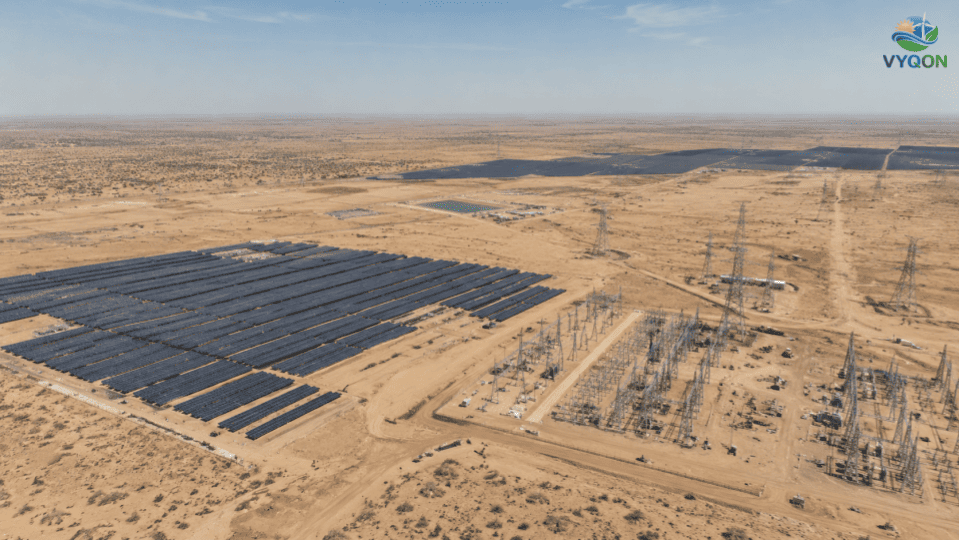
The Rajasthan Electricity Regulatory Commission (RERC) has issued approval for seven specific deviations from the Ministry of Power (MoP) standard guidelines regarding the procurement of hybrid power. The project involves a substantial capacity of 2,450 MW Solar PV integrated with a 1,600 MW/6,400 MWh Pugal Battery Energy Storage System (BESS). Procurement for the initiative is designated to be managed by Rajasthan Urja Vikas and IT Services Limited (RUVITL).
The Project Overview
The project is categorized as a Firm and Dispatchable Renewable Energy (FDRE) configuration. According to MoP definitions, FDRE refers to a power profile configuration specified in the Request for Selection (RfS) intended to meet demand through renewable sources, including configurations such as “firm delivery at rated capacity” at specified hours or round-the-clock supply [SOURCE_IMAGE_44].
The regulatory framework establishes that power will be procured through 25-year Power Purchase Agreements (PPAs). In this structure, RUVITL functions as the Intermediary Procurer, while the Rajasthan Distribution Companies (DISCOMs) serve as the End Procurers who will ultimately consume the energy to meet their demand profiles and Renewable Purchase Obligations (RPO) [SOURCE_IMAGE_45].
Breakdown of the 7 Approved Deviations
The approved deviations represent a strategic shift from standard MoP guidelines to address specific procurement risks and administrative requirements unique to the Rajasthan hybrid project.
Deviation 1: Peak Hour Penalty Increase
- MoP Guideline: Clause 4.1 specifies that the penalty for a generator’s failure to meet stipulated availability shall be equal to 1.5 times the tariff for the units not supplied [SOURCE_IMAGE_46].
- Approved RERC Deviation: The commission has approved a more stringent penalty of 2.0 times the PPA tariff for shortfalls occurring during peak hours.
- Regulatory Rationale: This increase is intended to ensure higher reliability of supply during critical peak demand periods, incentivizing the developer to maintain the integrity of the dispatchable profile.
Deviation 2: Minimum Bid Capacity Requirement
- MoP Guideline: Clause 6.2 allows for a minimum bid capacity of 50 MW to facilitate wider participation [SOURCE_IMAGE_46].
- Approved RERC Deviation: The minimum bid capacity for this project is set at 250 MW.
- Regulatory Rationale: A higher minimum threshold is utilized to ensure administrative efficiency and to attract developers capable of managing the technical complexities associated with large-scale solar-plus-storage integration.
Deviation 3: Mandatory Proportionate BESS for Early Commissioning
- MoP Guideline: Clause 14.5 generally permits the early commencement of power supply from individual project components before the full capacity is commissioned [SOURCE_IMAGE_54].
- Approved RERC Deviation: Under the RERC-approved terms, if a developer opts for early commissioning, the installation and operationalization of a proportionate BESS capacity is mandatory.
- Regulatory Rationale: This ensures that the fundamental FDRE characteristic of the project—firmness of supply—is not compromised during the partial commissioning phase.
Deviation 4: Force Majeure Definition and Relief
- MoP Guideline: Clause 7.4.1 stipulates that Force Majeure (FM) provisions should follow general “Industry Standards” [SOURCE_IMAGE_48].
- Approved RERC Deviation: The commission has moved away from ambiguous industry standards to a granular, exhaustive list of events. This includes Acts of God (typhoons, floods, cyclones, droughts, famines, plagues, or other natural calamities), acts of war, civil unrest, and specific technical delays such as the “delay in grant of connectivity/LTA” [SOURCE_IMAGE_8]. Furthermore, the commission clarified that no adjustment in tariff shall be allowed on account of Force Majeure events [SOURCE_IMAGE_10].
- Regulatory Rationale: Providing a specific list offers better clarity and is intended to avoid future litigations arising from the ambiguity of general industry terms [SOURCE_IMAGE_10].
Deviation 5: Change-in-Law Provisions
- MoP Guideline: Clause 7.7 requires provisions to align with the Electricity (Timely Recovery of Costs due to Change in Law) Rules, 2021 [SOURCE_IMAGE_49].
- Approved RERC Deviation: The approved deviation sets a specific 1% revenue threshold of the estimated revenue for the contract year to trigger relief. Relief is formulaic: an increase or decrease of 1 paisa/unit for every INR 2.0 Lakh per MW of impact on the project cost [SOURCE_IMAGE_11]. This formula applies specifically to costs incurred up to the Scheduled Commencement of Supply Date (SCSD) [SOURCE_IMAGE_11].
- Regulatory Rationale: Defining the scope of Change-in-Law prevents the clause from being used as a tool for frequent tariff revisions, which could otherwise increase the burden on end consumers [SOURCE_IMAGE_12].
Deviation 6: Bid Structure and Capacity Allocation
- MoP Guideline: Clause 6.3 limits the allocation of capacity to a single bidder to 50% of the total tender quantum [SOURCE_IMAGE_46].
- Approved RERC Deviation: A single bidder (including its parent, affiliate, or group companies) is eligible to bid for and be allocated up to 100% of the total RfS capacity [SOURCE_IMAGE_12].
- Regulatory Rationale: The deviation aims to prevent sub-optimal rate discovery. If a single bidder provides a more competitive rate for the entire quantum, there is no regulatory justification for allocating capacity to a higher-priced (L2) bidder [SOURCE_IMAGE_13].
Deviation 7: Procurement of Excess Power
- MoP Guideline: Clause 7.2(c) allows generators to sell excess power to third parties or power exchanges without requiring a No Objection Certificate (NOC) from the procurer [SOURCE_IMAGE_47].
- Approved RERC Deviation: RUVITL is granted a “First Right of Refusal” as a vested right to purchase any excess power at the specific PPA tariff [SOURCE_IMAGE_13]. Generators must seek an NOC to sell elsewhere, and RUVITL must respond within 15 days, failing which the request is deemed refused [SOURCE_IMAGE_13].
- Regulatory Rationale: Because generators may seek higher tariffs during peak periods in the open market, this deviation ensures the procurer can retain excess energy at a predictable cost to benefit the end consumers [SOURCE_IMAGE_13].
Next Regulatory Steps
Following the approval of these deviations, the procurement process will advance with the formal issuance of the Request for Selection (RfS) and project-specific draft Power Purchase Agreements (PPAs).
Based on the MoP indicative timeline:
- Bid Submission: A minimum of 22 days is required between the issuance of the RfS and the bid submission deadline [SOURCE_IMAGE_50].
- Letter of Award (LoA): Targeted for issuance within 110 days from the zero date (RfS issuance) [SOURCE_IMAGE_51].
- Signing of PPA & PSA: The target for the final execution of the Power Purchase Agreement and Power Sale Agreement is within 140 days of the RfS issuance [SOURCE_IMAGE_51].
Leave a Comment