
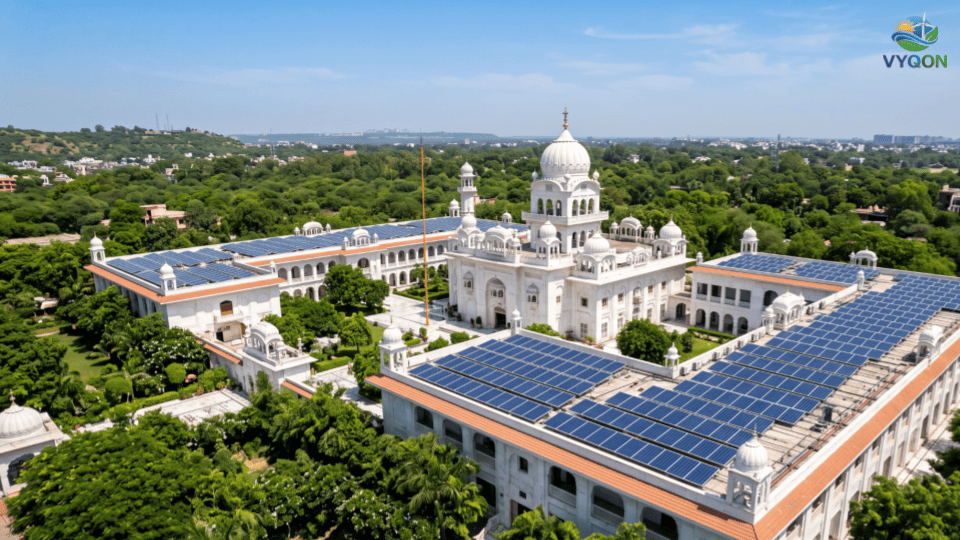
Gobind Sadan Gurdwara in Delhi’s Chattarpur area has effectively mitigated a recurring ₹5 Lakh monthly utility liability by commissioning a 100 kW rooftop solar power plant. Executed by developer Loom Solar, the project leverages high-efficiency photovoltaic technology to transition the institutional complex from grid dependency toward localized energy independence. This strategic installation answers the facility’s demand for high-load operational stability while providing a documented model for institutional cost reduction.
Project Specifications and Financial Analysis
The economic and technical scope of the installation is defined by the following metrics:
- Total Installed Capacity: 100 kW.
- Previous Energy Expenditure: Approximately ₹5 Lakh per month.
- Current Status: Operational; significant reduction in grid electricity procurement following commissioning.
The project operates within the framework of the PM Surya Ghar Muft Bijli Yojana, a flagship initiative of the Ministry of New & Renewable Energy (MNRE). By utilizing MNRE-backed incentives, the Gurdwara has transitioned its electricity overhead from a passive expenditure into a profitable, long-term asset. This shift demonstrates the viability of the “Muft Bijli” (Free Electricity) model for large-scale institutions that face substantial monthly billing cycles and require reliable, subsidised renewable infrastructure to maintain financial health.
Environmental Impact and Carbon Displacement
Technical synthesis using “SolarTech” methodology indicates that this 100 kW system generates a significant environmental offset by displacing carbon-intensive energy from the Delhi mixed grid. The following data accounts for the 41 grams CO2/kWh lifecycle footprint of the panels, providing a net displacement figure.
| Metric | Estimated Annual Performance (100 kW System) |
| Delhi Grid Intensity (Mixed Grid) | 400–600 lbs CO2 per MWh |
| Lifecycle Emissions (Photovoltaic) | 41 grams CO2 per kWh |
| Estimated Annual Net CO2 Displacement | 30–40 Metric Tons |
Environmental Equivalencies
Based on the 10:1 scaling ratio for 100 kW systems, the annual carbon reduction is equivalent to:
- Tree Sequestration: Planting and maturing 1,000 tree seedlings over 10 years.
- Vehicle Emissions: Eliminating the carbon footprint of 100,000 miles of passenger vehicle travel.
- Fuel Conservation: Avoiding the combustion of approximately 20,000 gallons of gasoline.
Operational Integration: Support for 24/7 Langar
The transition to “solar electricity that runs everything” is a strategic evolution of Gobind Sadan’s historical commitment to self-sufficiency. In 1982, the organization’s “Chaltua” estate in Pilibhit faced extreme manual demands, including 9-kilometre treks through jungles to manage land that utilized basic gobar gas plants for the langar and a sugar cane crusher for production.
The 2024 implementation in Delhi replaces these manual and low-yield systems with high-efficiency solar to support 24/7 langar (community kitchen) operations. This shift ensures that the high-load demands of continuous food preparation and preservation are met by a stable, renewable source, aligning the institution’s current energy strategy with its long-standing mission of “enlightened development.”
Technical Implementation and Stakeholders
The technical architecture of the project emphasizes industrial-grade durability and future-proofing. Stakeholders and specific components include:
- Project Developer: Loom Solar.
- Solar Panel Technology: Topcon 590W high-efficiency panels.
- Inverter System: Fusion series inverters. Notably, the project utilizes 250 kW class components for a 100 kW load; this significant over-specification suggests a focus on handling peak DC surges from the Topcon panels and providing institutional-grade durability.
- Infrastructure: High-stability, “firm” mounting structures designed specifically for damage prevention.
The installation is characterized by a “clean and finished” wiring setup, serving as a documented case study for institutional profitability. By converting sunlight into a manageable utility solution, the project provides a technical blueprint for other high-consumption facilities seeking to mitigate grid-based financial liabilities.
Leave a Comment