
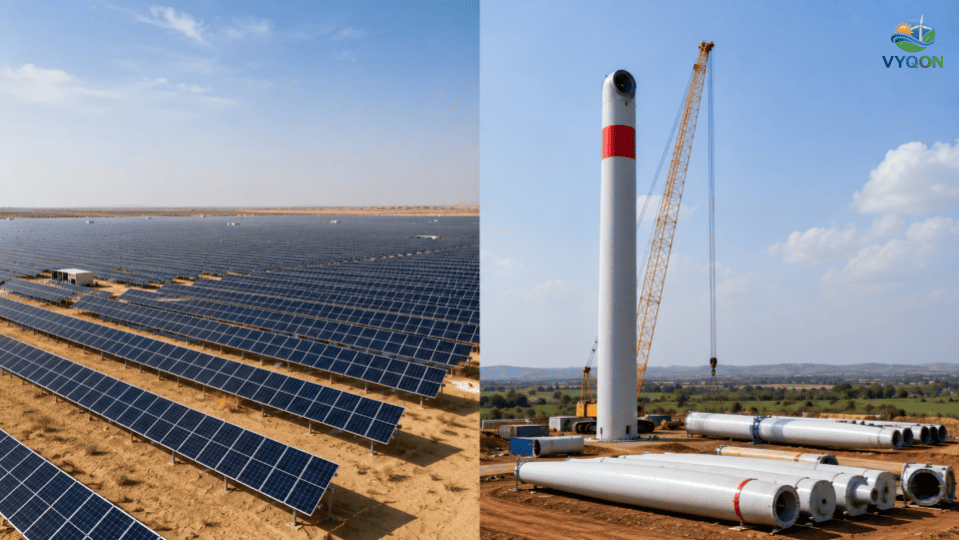
Executive Summary of the Regulatory Decision
The Central Electricity Regulatory Commission (CERC) has granted TP Saurya Limited authorization to inject and sell electricity from a 100 MW solar unit to third parties. This ruling addresses the monetization of “infirm power”—defined as electricity generated during the trial and commissioning phases before a plant officially enters commercial operation—during the interim period before the full hybrid project can be commissioned.
Core Decision: The Commission ruled that TP Saurya is entitled to monetize its ready solar assets through third-party sales after the original buying entities rejected an interim tariff proposal. By permitting this injection beyond the standard timelines established in the Indian Electricity Grid Code (IEGC) 2023, the regulator has protected the developer from stranded asset risks caused by external transmission infrastructure bottlenecks.
Project Specifications and Operational Status
The dispute centers on a major renewable energy installation developed by TP Saurya Limited, a wholly owned subsidiary of Tata Power Renewable Energy Ltd (TPREL).
- Project Type: 600 MW wind-solar hybrid project (comprising 400 MW solar and 200 MW wind capacity).
- Specific Unit: A standalone 100 MW solar component.
- Location: Bikaner, Rajasthan.
- Operational Milestone: The 100 MW unit received first-time charging approval on April 24, 2024, and has successfully completed its mandatory trial run.
Primary Cause of Commissioning Delays
While the solar component in Rajasthan is technically operational, the project cannot achieve formal Commercial Operation Date (COD) status under its Power Purchase Agreement (PPA) due to delays in the wind segment of the hybrid configuration.
- Associated Component: A 200 MW wind project located at Gadag, Karnataka.
- Infrastructure Bottleneck: Delays are attributed to pending readiness and connectivity challenges at the Gadag-II pooling substation, a critical piece of the Central Transmission Utility (CTU) infrastructure.
- Revised Timeline: The Solar Energy Corporation of India (SECI) has extended the Scheduled Commercial Operation Date (SCOD) to February 24, 2026, or two months from the actual connectivity start date, whichever is later.
Contractual Conflict and Tariff Determinations
The regulatory intervention followed a breakdown in negotiations between TP Saurya and the designated buying entities: MPSEZ Utilities Limited (a subsidiary of Adani Energy Solutions) and CESC Limited.
- Tariff Dispute: A proposed mutually agreed interim tariff of ₹3.08/kWh was rejected by the buying utilities.
- The NOC Pathway: Following the buyers’ rejection of the commercial proposal, SECI issued a “no-objection certificate” (NOC), formally permitting TP Saurya to seek third-party buyers.
- Right of Refusal Dismissed: The buying entities argued they held a “first right of refusal” to the power at the original contracted PPA tariff. The Commission dismissed this claim, noting that since no mutual agreement was reached for the interim period, the developer was within its rights to pursue third-party sales to avoid resource wastage.
Regulatory Harmonization of RfS and PPA Provisions
In reaching its decision, the CERC performed a legal reconciliation between the PPA and the Request for Selection (RfS). This harmonization is critical for the industry, as it sets a precedent for how “mismatched” commissioning timelines in hybrid projects should be handled under the IEGC 2023.
| Document | Provision Context |
| Power Purchase Agreement (PPA) | Prohibits the declaration of a Commercial Operation Date (COD) for a standalone component of a hybrid project. |
| Request for Selection (RfS) | Permits the injection and sale of power from a ready component to outside parties during transmission-related delays. |
Precedent and Directives: The Commission highlighted the need for better alignment between bidding documents and contractual agreements. Consequently, the CERC directed SECI to ensure that future PPAs clearly incorporate the RfS provisions to prevent similar litigation and provide clarity for developers facing infrastructure-related delays.
Compliance and Monitoring Requirements
TP Saurya must maintain strict adherence to operational standards during this interim third-party sale period:
- Regulatory Adherence: Full compliance with the Indian Electricity Grid Code (IEGC) 2023.
- Operational Oversight: Strict following of all instructions issued by the Regional Load Dispatch Centre (RLDC).
- Power Classification: The generated electricity must be classified as “infirm power” until the project achieves formal commissioning under the terms of the PPA.
- Market Monitoring: Investors and stakeholders should monitor the Gadag-II substation connectivity, as the transition back to the long-term PPA structure depends entirely on that infrastructure’s completion.
Leave a Comment