
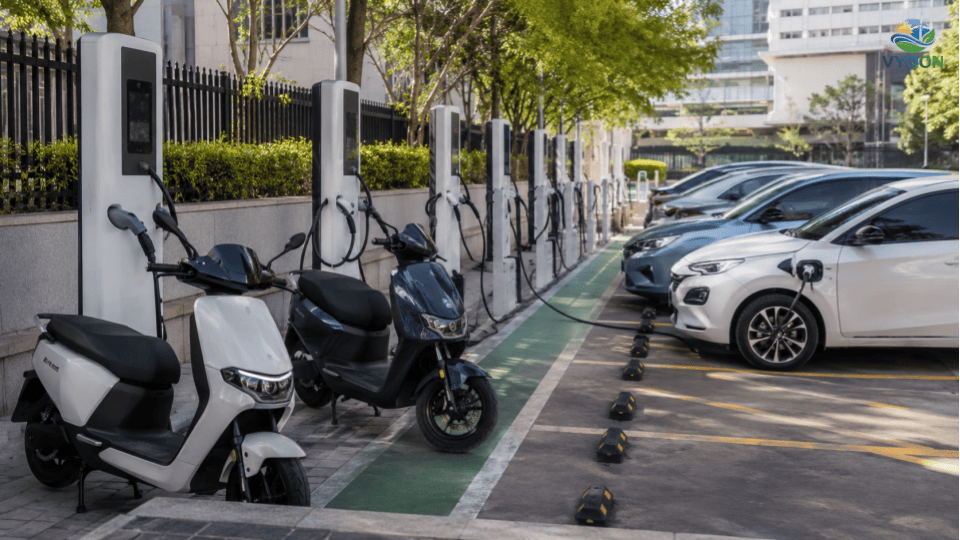
National EV Sales Milestone
The Indian electric vehicle (EV) sector achieved a watershed moment in Q2 2026, registering total sales of 837,453 units. This performance reflects a robust 52.3% Year-on-Year (YoY) growth rate, underscoring a sustained transition toward electric mobility. As of the end of this quarter, the cumulative registered EV count in India has climbed to 9.19 million, pushing the total EV market share past the 10% penetration threshold for the first time in history.
Market Penetration and Policy Landscape
The first half (H1) of 2026 closed with 1,541,377 registrations, resulting in an overall market penetration rate of 11.43%. This momentum is underpinned by aggressive state-level interventions and central support schemes. A primary driver is the Delhi EV Policy 2026, which has pledged a massive INR 15,000 Crore (approximately US$ 1.8 billion) to incentivize adoption. Simultaneously, Bihar has codified a strategic target of 30% EV penetration in new registrations by 2030. On the national stage, the PM E-DRIVE and PM E-Bus Sewa schemes remain the structural pillars for fleet electrification, though market dynamics are increasingly moving beyond a pure reliance on these subsidies.
Two-Wheeler (2W) Segment Performance: Legacy vs. Disruptors
In June 2026, the 2W category recorded an EV penetration rate of 10.6%, a significant jump from 7.3% in June 2025. While pure-play EV manufacturers maintain 100% electric portfolios, legacy Original Equipment Manufacturers (OEMs) are navigating a divergent transition:
- Bajaj Auto: Leads the legacy transition with 23% EV penetration.
- TVS Motor: Reports 13.1% EV penetration.
- Hero MotoCorp: Currently at 4.6% EV penetration.
The market is bracing for further disruption as legacy ICE giants Suzuki and Yamaha begin their entry into the electric space. While their current penetration is negligible (Suzuki at 0.04% and Yamaha at 0.2%), their manufacturing scale and dealership networks are expected to challenge the current dominance of pure-play leaders like Ola Electric (16,145 units) and Ather Energy (31,213 units).
Three-Wheeler (3W) Segment: A Landmark in Electrification
The 3W segment has become the primary laboratory for Indian electrification, with L5 passenger auto penetration reaching a landmark 50.1% in June 2026. Cargo 3W L5 penetration followed at 30.5%.
A comparative analysis of OEM performance reveals a widening gap between leaders and laggards:
- Mahindra Last Mile Mobility: Dominates the transition with a 98.1% passenger EV share and a 63.2% cargo EV share.
- Bajaj Auto: Following a different trajectory, recording a 29.9% passenger EV share but lagging in cargo at 8.4%.
- Pure EV Specialists: Omega Seiki and Dilli Electric Auto maintain 100% electric sales, securing niche market leadership.
Significantly, growth in the 3W segment is increasingly decoupled from government incentives. Despite the withdrawal of certain PM E-DRIVE benefits for cargo models, demand has remained resilient, suggesting that the utility and operational savings of electric 3Ws have reached a point of market-driven sustainability.
Passenger Vehicle (4W) and Luxury Market Trends
The passenger vehicle segment recorded a June 2026 EV penetration rate of 7.7%, up from 4.8% YoY. The data highlights a stark “divergent transition” between manufacturers:
| OEM | EV Penetration (%) |
| JSW MG Motor India | 83.8% |
| Tata Motors | 21.3% |
| Mahindra & Mahindra | 14.4% |
| Maruti Suzuki India | 1.1% |
While JSW MG and Tata Motors have leaned heavily into electrification, Maruti Suzuki remains on the periphery of the segment. In the luxury tier, BMW India has established a clear lead in the electric transition with a 29.1% EV share, nearly doubling the 14.6% share reported by Mercedes-Benz India.
Commercial Vehicles: The Supply-Driven Surge
The heavy electric vehicle segment saw exceptional YoY growth in H1 2026, primarily driven by improved model availability and fleet decarbonization mandates:
- Electric Buses: Sales rose 42% YoY to 3,021 units, supported by bulk tenders under the PM E-Bus Sewa scheme.
- Electric Trucks: Registrations surged by 339.57% YoY (611 units). Analysts attribute this specific spike to the increased supply of diverse electric truck models entering the market, allowing industrial logistics fleets to move from pilot projects to active deployment.
Analytical Context: Rethinking Adoption Barriers
A recent study by IISc Bangalore provides critical context for these registration trends. By testing informational interventions in a Tier II city, researchers found that range-based (infrastructure/capacity) and norm-based (social proof) interventions were the only factors that statistically increased adoption intention.
Notably, cost-based interventions—focusing solely on financial incentives and fuel savings—were not significant in isolation. This aligns with the observed trends in the 3W segment, where adoption has continued to scale based on perceived reliability and social acceptance even as subsidies fluctuated. For policy-makers and OEMs, this suggests that the next phase of growth depends less on “cheaper” vehicles and more on mitigating range anxiety and building social credibility for the technology.
Official Data Sources & Citations
- Vahan Dashboard (Ministry of Road Transport and Highways)
The primary repository for real-time vehicle registration data across India, used for segment-wise and state-wise EV sales metrics.
Link: https://vahan.parivahan.gov.in/vahan4dashboard/ - Ministry of Heavy Industries (MHI)
The nodal ministry for the implementation of the PLI Schemes for Automobile and Battery sectors and the oversight of EV manufacturing incentives.
Link: https://heavyindustries.gov.in/ - Ministry of Road Transport and Highways (MoRTH)
The central authority responsible for formulating and administering policies related to road transport and vehicle regulations.
Link: https://morth.nic.in/ - Press Information Bureau (PIB)
The official agency for disseminating information on government policies, including updates on the Production-Linked Incentive (PLI) schemes.
Link: https://pib.gov.in/
Leave a Comment