
The 110 GWh Milestone
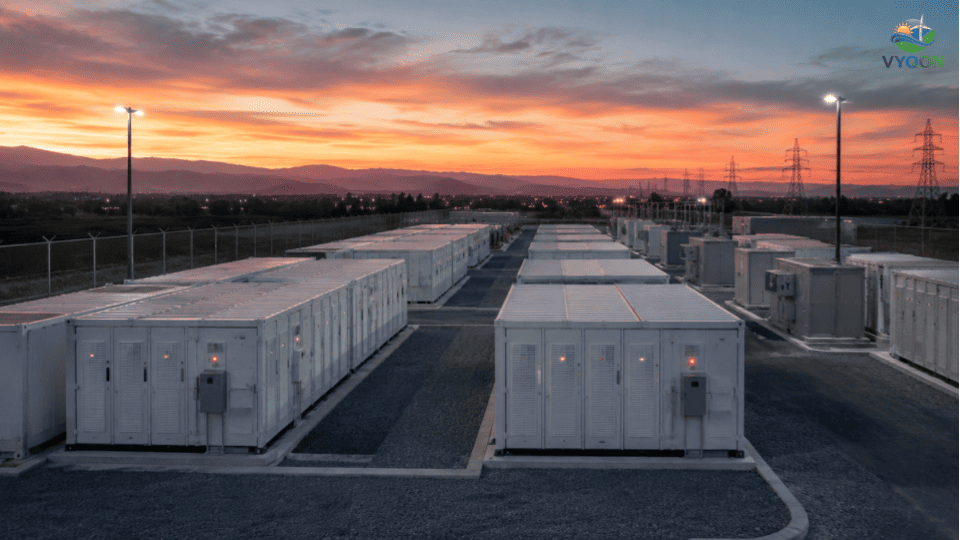
India’s energy storage system (ESS) pipeline has reached 110 GWh. This capacity, encompassing both tendered and under-construction projects, accounts for approximately 25% of the 411.4 GWh cumulative storage requirement projected by the Central Electricity Authority (CEA) for the fiscal year 2031-32. The pipeline is constructed upon two primary technology pillars: Battery Energy Storage Systems (BESS) and Pumped Storage Projects (PSP).
CEA Estimates and the 2030-2032 Outlook
The “Report on Optimal Generation Capacity Mix (Version 2.0)” updated the national storage outlook by revising benchmarks previously established in the 19th Electric Power Survey (EPS). The 19th EPS projected a peak electricity demand of 340 GW and an energy requirement of 2,400 BU for 2029-30. However, the revised 20th EPS estimates a lower peak demand of 334.8 GW and an energy requirement of 2,279.7 BU for the same period.
Factors driving the requirement for storage capacity include:
- National Hydrogen Mission: A production target of 10 million tonnes of green hydrogen by 2030. Approximately 5 million tonnes of this load is expected to be grid-connected, creating an additional energy requirement of 250 BU.
- Electric Vehicle (EV) Integration: EV penetration is projected to contribute 3 GW to peak demand and 15 BU to total energy requirements by 2029-30.
- Renewable Energy (RE) Intermittency: The non-dispatchable nature of solar and wind generation necessitates grid balancing through storage.
- Generation Mix Targets: India is committed to ensuring 50% of its cumulative electric power installed capacity originates from non-fossil fuel-based resources by 2030.
Breakdown of the Current Storage Pipeline
Standalone project procurement dominated the sector in 2025, accounting for 71% of the total capacity tendered. Cumulative ESS tendered capacity has expanded from 6.8 GW in 2018 to approximately 90.7 GW by 2025.
BESS Allocation In 2025, 10.4 GW of standalone BESS capacity was allocated. The 2-hour, 2-cycle configuration represented 57% of this volume, utilized primarily for managing morning and evening peak demand windows.
PSP Progress The Solar Energy Corporation of India (SECI) awarded 1,344 MW of Pumped Storage capacity, falling short of its 1,500 MW (12,000 MWh) tender objective due to auction outcomes. The awarded capacity was distributed as follows:
- Greenko Energies: 720 MW
- Tata Power: 324 MW (partial award against 660 MW bid)
- Torrent Energy Storage Solutions: 300 MW
Execution and Financial Viability Challenges
The BESS sector is observing a divergence between discovered tariffs and the underlying cost of project delivery.
Tariff Viability and Speculative Bidding Tariffs for 2-hour BESS systems reached a low of INR 1.48 lakh/MW/month, while the viability benchmark is estimated at INR 2.3 lakh/MW/month. Consequently, 75% of the 2-hour BESS capacity allocated in 2025 is classified as “risky.” This aggressive pricing was catalyzed by a reduction in Viability Gap Funding (VGF) support, which dropped from INR 27 lakh/MWh to INR 18 lakh/MWh, leading to speculative bidding behavior.
Supply Chain and Timing Risks India maintains a heavy reliance on China for lithium-ion cells. Two major factors threaten project economics:
- Input Volatility: Lithium carbonate prices in China nearly doubled between mid-2025 and December 2025.
- Rebate Removal: China will phase out battery export rebates (currently 9%) starting April 2026, with full removal by 2027. Projects awarded in late 2025 will enter their procurement phase exactly as these rebates expire, creating a “perfect storm” for financial viability.
Developer and Infrastructure Risks
- Experience Gap: Only 46.3% of allocated BESS capacity was awarded to developers with established execution readiness. Ten of the top 15 awardees are new entrants, including firms from unrelated industries such as food processing, mining, and packaging.
- Financing Constraints: Lenders typically require an internal rate of return (IRR) of 15–20%. The combination of speculative tariffs and supply chain shifts is expected to cause project delays of 9 to 18 months.
- Solar Curtailment: In the second half of 2025, 2.3 TWh of solar generation was curtailed due to grid security concerns, underscoring the lack of adequate storage to integrate existing renewable capacity.
Key Takeaways Table
| Metric Type | Value/Status | Primary Roadblocks | Data Source |
| CEA 2032 Target | 411.4 GWh | RE Intermittency & Grid Balancing Requirements | CEA v2.0 |
| Current Pipeline | >110 GWh | Financial Closure Delays | IEEFA 2026 |
| Progress | ~25% | Speculative Bidding | IEEFA / CEA |
| Configuration Trend | Standalone 2-hour/2-cycle | Supply Chain Volatility | IEEFA 2026 |
| Developer Readiness | 46.3% High Readiness | Unrelated Industry Experience | IEEFA 2026 |
Official Source Citations
1. Ministry of New and Renewable Energy (MNRE), Government of India
- Document: Lok Sabha Unstarred Question No. 743 Answered on 04.02.2026 regarding Renewable Energy Capacity.
- Official Website: https://mnre.gov.in/
2. Central Electricity Authority (CEA), Ministry of Power, Government of India
- Document: Report on Optimal Generation Capacity Mix for 2029-30 (Version 2.0), April 2023.
- Official Report Link: National Electricity Plan (Volume II) Transmission.
- Pumped Storage Status Report: Pumped Storage Projects Status.
3. Ministry of Power, Government of India
- Document: Notification of the National Electricity Plan (NEP) for 2022-32.
- Resource Link: 500 GW Non-Fossil Fuel Target.
4. Press Information Bureau (PIB), Government of India
- Press Release: CEA notifies the National Electricity Plan for 2022-32.
- Link: https://www.pib.gov.in/PressReleaseIframePage.aspx?PRID=1928750.
- Press Release: PLI-ACC Scheme for Battery Storage.
5. Ministry of Mines, Government of India
- Document: Identification of 30 Critical Minerals and National Critical Mineral Mission (NCMM).
- Mineral List Link: Strategically Important Critical Minerals.
6. Solar Energy Corporation of India (SECI), Government of India
- Project Award: Award of 1,344 MW Pumped Storage Capacity following Global Competitive Bidding.
- Official Website: https://seci.co.in/
Leave a Comment