
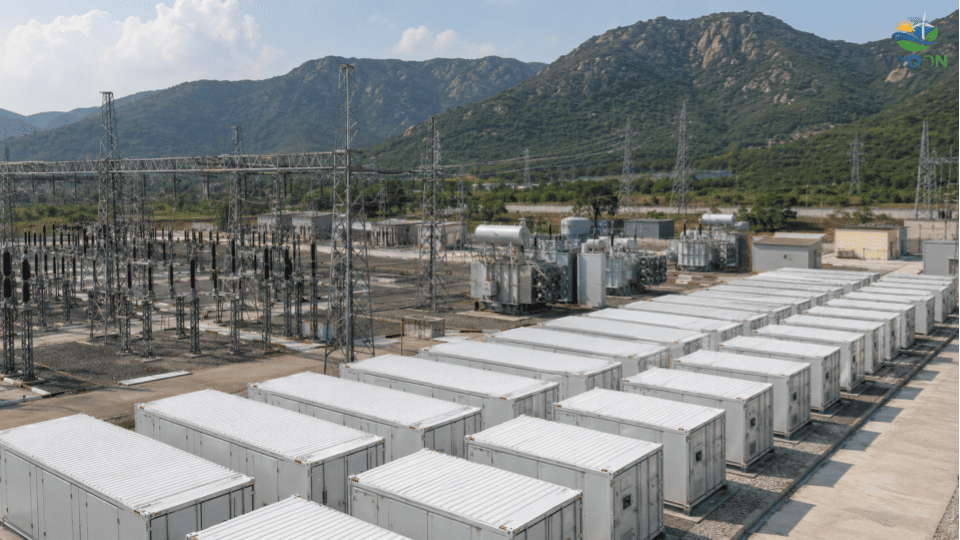
India’s push for dependable, round-the-clock clean power has reached another milestone. The Solar Energy Corporation of India Limited (SECI) has moved its latest standalone battery energy storage tender, SECI-ESS-IV, into the pre-bid stage, giving prospective developers a formal opportunity to raise queries before final bid submission. The tender seeks Battery Energy Storage System Developers (BESSDs) for 800 MW/3,200 MWh of standalone Battery Energy Storage Systems (BESS), making it one of the larger four-hour-duration storage procurements launched by a central agency in India.
Tender Overview
SECI published the Request for Selection (RfS) on 1 October 2026 under Tender ID SECI000286 and tender reference number SECI/C&P/IPP/15/0010/26-27. On the ISN-ETS portal, the tender carries the Tender Search Code SECI-2026-TN000032. The tender covers ISTS-connected standalone BESS with an aggregate storage capacity of 3,200 MWh, configured as 800 MW for four hours, and projects can be located anywhere in India.
Selected developers will build the projects on a Build-Own-Operate (BOO) basis, with the core objective of supplying stored energy to buying entities on an “on-demand” basis. SECI will act as the Intermediary Procurer, signing agreements with successful bidders for the supply of stored electricity to designated buying entities, whose details will be announced later.
Pre-Bid Meeting Details
SECI announced the pre-bid meeting through an official notification uploaded on 6 October 2026. The key details are:
- Date and time: 9 October 2026 at 4:00 PM (IST)
- Mode: Hybrid, with both online and offline participation
- Offline venue: Neer Room, 6th Floor, NBCC Office Block Tower-2, East Kidwai Nagar, New Delhi – 110023
- Online platform: Video conference on Microsoft Teams, with prior registration through a form provided by SECI
The meeting gives developers a forum to raise technical, commercial and contractual questions, which SECI typically addresses through clarifications and amendments to the RfS. SECI has stated that all such updates will be posted only on its website and the Bharat Electronic Tender portal, with no separate notification.
Operational Requirements
The tender defines an operating window aimed at evening and night-time peak demand. The buying entity can schedule discharge for any four hours, beginning from 17:00 hrs on a given day and ending by 11:00 hrs the following day. Project capacity must be quoted for four hours of charging and four hours of discharging in one cycle, with procurement measured in energy (kWh) terms.
The tender is technology-agnostic with respect to the storage technology deployed, but it carries a clean-energy condition: developers must arrange charging power so that at least 51 percent of the energy used to charge the BESS comes from renewable sources. Developers are also responsible for land, installation, grid connectivity, approvals, and operation and maintenance.
Bidding Capacity and Process
A single bidder, including its group companies, can bid for a minimum of 50 MW/200 MWh and up to the full tendered capacity of 800 MW/3,200 MWh. This range allows participation from mid-sized independent power producers as well as large developers aiming for the entire capacity. Procurement follows a two-bid system under tariff-based competitive bidding, and final awards will be decided through an e-reverse auction.
Key Dates
- Tender publication: 1 October 2026
- Pre-bid meeting: 9 October 2026, 4:00 PM
- Online bid submission deadline: 30 October 2026, 6:00 PM
- Offline bid submission deadline: 3 November 2026, 6:00 PM
- Bid opening: 4 November 2026, 10:00 AM
Financial Requirements
The cost of the RfS document is ₹59,000 (₹50,000 plus GST), and the bid processing fee is ₹20,000 per MW, capped at ₹20 lakh, plus GST. Bidders must furnish an earnest money deposit of ₹7,18,400 per MW of quoted capacity and must have a net worth of at least ₹71.84 lakh per MW of quoted capacity. Successful developers will further pay a success charge of ₹1 lakh per MWh plus GST and a payment security deposit of ₹5 lakh per MWh. These thresholds are intended to ensure that only financially capable developers take on long-term storage commitments.
Why This Tender Matters
The move toward four-hour storage is significant. As solar capacity grows rapidly, the grid faces a widening gap between abundant daytime generation and high evening demand. A four-hour system that can be dispatched anywhere between evening and the next morning directly addresses this “duck curve” challenge, improving grid reliability and reducing renewable energy curtailment.
The on-demand structure also gives buying entities operational flexibility, allowing utilities to draw stored energy when the grid needs it most rather than following a fixed schedule. For developers, pan-India siting freedom and a flexible bid range create a competitive opening, and the tariff discovered in the reverse auction is likely to serve as a reference point for future four-hour storage procurements at both central and state levels.
Conclusion
With the pre-bid stage now open, SECI-ESS-IV is moving from announcement to active market engagement. Clarifications emerging from the pre-bid meeting, particularly on charging arrangements, buying entities and payment security, will shape bidder confidence and final pricing. As India scales up renewable capacity, tenders like this will be central to turning variable clean energy into reliable, dispatchable power.
Official References
- SECI Tender Details Page (Tender ID SECI000286, RfS No. SECI/C&P/IPP/15/0010/26-27): https://www.seci.co.in/tender-details/Ympx
- RfS Document – SECI-ESS-IV: https://www.seci.co.in/uploads/tenders/RfS-ESS-IV-final_upload.pdf
- SECI Pre-bid Meeting Notification (dated 06.10.2026): https://www.seci.co.in/uploads/tenders/corrigendums/Pre-bid_meeting_notification50.pdf
- ISN-ETS (Bharat Electronic Tender) Portal, TSC SECI-2026-TN000032: https://www.bharat-electronictender.com
Leave a Comment