
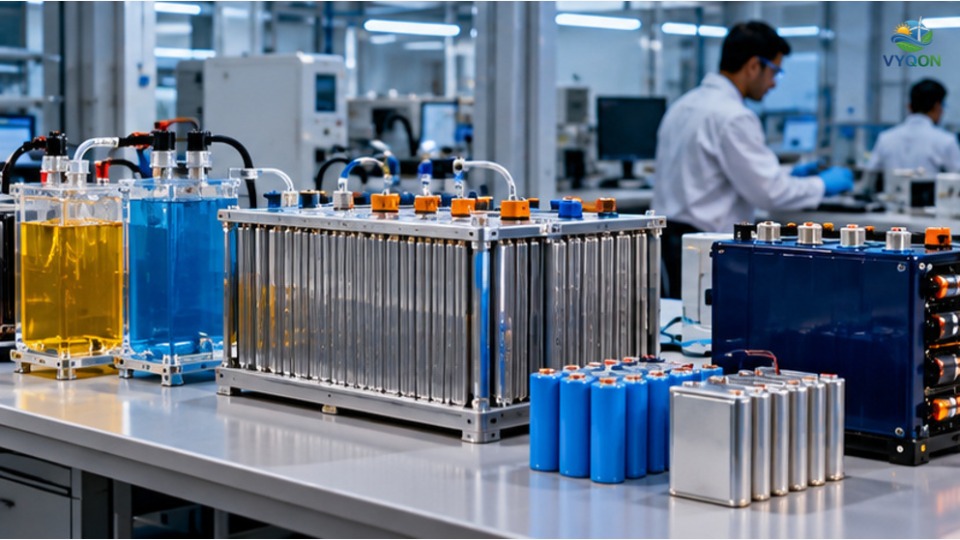
The NetZero Energy Transition Association (NETRA), a global industry association that connects innovators, investors, manufacturers and policymakers to commercialise and deploy net-zero technologies, has urged the Government of India to adopt a technology-agnostic, multi-chemistry battery strategy. In a statement issued on 9 October 2026, the association said that relying on a single chemistry exposes India’s storage build-out to import dependence and price volatility. NETRA, the industry association, should not be confused with NTPC’s R&D centre, which uses the same acronym.
A Storage Market Growing at Scale
India’s storage requirement is rising steeply. According to the Ministry of New and Renewable Energy (MNRE), the Central Electricity Authority’s National Electricity Plan 2023 projects a requirement of 82.37 GWh in 2026-27, rising to 411.4 GWh by 2031-32, of which 236.22 GWh is battery storage and 175.18 GWh is pumped storage. By 2047, the requirement is expected to reach 2,380 GWh as renewable additions grow in line with the 2070 net-zero target. MNRE notes that storage helps reduce the variability of renewable generation, improve grid stability, enable peak shifting, provide ancillary services and defer transmission and distribution investment.
The Ministry of Power has also notified a long-term Energy Storage Obligation (ESO) trajectory, which rises from 1 percent in FY 2023-24 to 4 percent by FY 2029-30, with at least 85 percent of the stored energy to be sourced from renewable energy on an annual basis.
NETRA warns that this growth carries cost risk. According to the association, lithium battery prices in India fluctuated by more than 25 percent over the last year because of raw material constraints, exchange rate shifts and the cost of imported cells.
NETRA’s Recommendations to the Government
NETRA has submitted the following recommendations to the government:
- Reserve a defined share of grid-scale battery deployments and public procurement for domestically manufactured cells and alternative chemistries.
- Provide sustained research, development and manufacturing support for sodium-ion, flow, zinc-based and iron-based batteries, alongside lithium-ion.
- Build domestic supply chains for key materials and components.
- Strengthen industry-academia collaboration to develop intellectual property and a skilled workforce.
Sodium-Ion as a Near-Term Option
NETRA identifies sodium-ion batteries as the most promising near-term alternative for stationary storage. Debi Prasad Dash, Executive Director, NETRA, said their advantages include material accessibility, safety, temperature tolerance and potential cost competitiveness, and that the chemistry can draw on sodium, iron, manganese and other materials available in India. He added that “India needs a Sodium Ion Mission” to drive technology development and manufacturing scale-up.
Indian research institutions are already working on the technology. The International Advanced Research Centre for Powder Metallurgy and New Materials (ARCI), an autonomous R&D centre under the Department of Science and Technology, has developed sodium vanadium phosphate (NVP) cathode powder and demonstrated it in sodium-ion pouch cells under the ANRF-supported MAHA EV project. In December 2025, ARCI signed an MoU with Voltasun Technologies for industrial performance validation of these cells, beginning with the supply of 80 pouch cells of 5 Ah capacity, with stationary energy storage identified as a key application.
Utilities are also starting trials. NTPC has invited a global expression of interest (Ref. NTPC/PE/ET&PR/EOI-06/2026-27, dated 9 September 2026) for a pilot grid-connected sodium-ion BESS at its thermal power stations or office buildings. Applicants may propose a standardised system with 100 kWh of usable capacity or a demonstration-scale system based on their standard configuration. The pilot will assess performance, safety, reliability, degradation and commercial viability under Indian grid and climatic conditions, and responses are due by 15 October 2026.
Flow Batteries for Long-Duration Needs
For applications requiring many hours of discharge, NETRA highlights flow batteries, particularly vanadium redox systems, as suited to renewable-energy firming, peak-load management and grid flexibility. Jacob Seet, Chief Commercial Officer of VFT, said vanadium flow batteries could play a central role in India’s long-duration storage plans because of their safety, durability and long asset life.
Beyond Lithium Summit 2026
NETRA will host the Beyond Lithium Summit 2026 on 24 October 2026 in New Delhi under the theme “Building India’s Multi-Chemistry Storage Future.” The summit will assess the readiness, economics, deployment potential and policy requirements of storage technologies beyond lithium-ion, linking technology development with pilots, manufacturing, supply chains, safety, standards, recycling and long-duration storage policy.
Six sessions are planned, covering the move from lithium dominance to a multi-chemistry approach; sodium-ion technology; flow batteries; iron, zinc and aluminium-air systems; solid-state and silicon-enhanced cells; and non-electrochemical storage such as pumped hydro, compressed air and thermal storage. The event is aimed at policymakers, regulators, DISCOMs, developers, manufacturers, researchers, investors and other stakeholders across the storage value chain. Discussions will also cover the opportunities and limitations of non-lithium technologies in the Indian market, including technology readiness, safety, cost, standards, testing needs and localisation opportunities.
Outlook
NETRA is not calling for lithium-ion to be replaced. It wants a portfolio of chemistries matched to different durations and applications, backed by domestic manufacturing and supply chains. As storage requirements multiply over the next decade, the association argues that early policy support for alternative technologies is essential to keep India’s energy transition secure, affordable and self-reliant.
References
1. NETRA – Beyond Lithium Summit 2026 (official event page)
2. NETRA – Net-Zero Energy Transition Association (official website)
3. Ministry of New and Renewable Energy – Energy Storage Systems (ESS) Overview
5. NTPC e-Tender Portal – EOI Ref. NTPC/PE/ET&PR/EOI-06/2026-27
Leave a Comment