
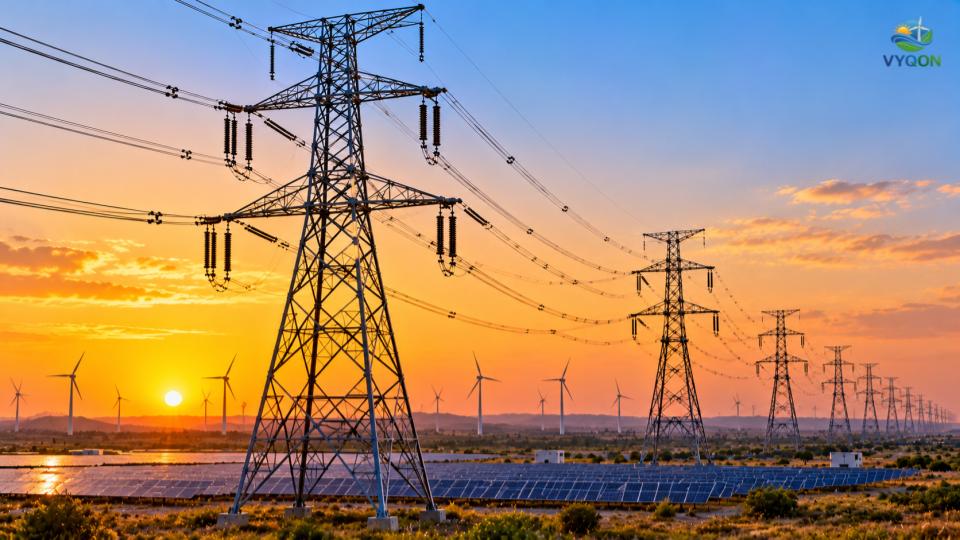
Bajel Projects Limited has secured a ₹1,500 crore EPC contract from Lakadia A Power Transmission Limited for a major 765 kV transmission development in Gujarat. The project includes approximately 270 km of double-circuit transmission lines and associated substation works, supporting electricity evacuation infrastructure linked to 14 GW of planned renewable energy development.
Gujarat, 27 October 2026: Bajel Projects Limited has announced the receipt of multiple Letters of Award (LoAs) worth approximately ₹1,500 crore, including GST, from Lakadia A Power Transmission Limited for the development of extra-high-voltage electricity transmission infrastructure in Gujarat.
The company disclosed the order to the stock exchanges on 26 October 2026, describing it as the largest transmission contract secured in its history.
The newly awarded engineering, procurement and construction (EPC) package includes approximately 270 kilometres of 765 kV double-circuit transmission lines between Halvad and Vadodara, along with additional works at the Halvad, Vadodara and South Olpad substations.
The contract forms part of the wider transmission system planned to support electricity evacuation from renewable energy zones in western Gujarat.
According to Bajel Projects, the associated development programme supports renewable energy zones with a combined planned generation capacity of approximately 14 GW.
The newly announced award represents a significant commercial milestone for the company. However, it does not mean that the transmission corridor has been completed, energised or placed into commercial operation.
₹1,500 Crore Turnkey Contract Expands Bajel’s Transmission Portfolio
The latest order strengthens Bajel Projects’ presence in India’s power transmission engineering and construction market.
Under the EPC arrangement, the company will undertake activities covering engineering, procurement, construction and related project execution requirements for the specified transmission infrastructure.
The development includes a high-voltage double-circuit line connecting Halvad and Vadodara, along with associated substation works required under the awarded package.
These components are essential for integrating the transmission corridor into the wider electricity network.
According to the company’s regulatory disclosure, the contract is valued at approximately ₹1,500 crore, inclusive of Goods and Services Tax.
The stated execution period is 36 months from issuance of the relevant purchase order.
This distinction is important because the contractual duration should not automatically be calculated from the date of the stock-exchange announcement.
The company has not disclosed a definitive commissioning date, detailed construction schedule or separate contract values for individual transmission and substation components.
The receipt of EPC orders establishes the company’s contractual responsibility for the awarded work, while successful construction and energisation remain future project milestones.
Connecting Gujarat’s Major Renewable Energy Zones
The transmission development is associated with the Common Transmission System for Evacuation of Power from Lakadia Phase II, Jam Khambaliya Phase II and Jamnagar Phase I.
The wider transmission scheme is intended to facilitate electricity evacuation from renewable energy development zones in Gujarat.
According to Bajel Projects, the associated renewable energy zones comprise:
- Lakadia Phase II: 7.5 GW
- Jam Khambaliya Phase II: 5.5 GW
- Jamnagar Phase I: 1 GW
Together, these zones represent approximately 14 GW of planned renewable generation capacity.
The transmission infrastructure is intended to support the movement of electricity from renewable-rich areas towards the broader electricity network.
However, the 14 GW figure describes the planned generation capacity associated with the wider evacuation programme.
It does not represent the rated power-transfer capacity of the newly awarded 270 km transmission line.
It also does not indicate that 14 GW of renewable generation has already been installed or commissioned.
Actual electricity transfer capability will depend on the transmission system’s final configuration, technical limits, connected generation and operating conditions.
Importance of 765 kV Transmission Infrastructure
Extra-high-voltage transmission infrastructure plays an important role in supporting large electricity systems.
As India expands solar and wind generation, electricity networks must accommodate power flows from generating locations to industrial centres, distribution systems and other consumption regions.
Renewable energy projects are frequently developed in areas with favourable wind or solar resources, which may be located considerable distances from major electricity demand centres.
High-capacity transmission corridors help connect these generation regions with the broader grid.
A 765 kV transmission line operates at an extra-high voltage level, making it suitable for substantial bulk electricity transmission.
For a given power transfer, operating at higher voltage can reduce the current required, which can help limit resistive losses in transmission conductors.
However, actual transmission efficiency depends on system design, network loading and operating conditions.
The Halvad–Vadodara package includes a double-circuit transmission arrangement.
In this context, double circuit refers to two electrical circuits incorporated into the transmission configuration. It should not be confused with high-voltage direct-current technology.
The associated substation works are also important because transmission corridors require suitable electrical interconnections, protection systems and equipment coordination.
Successful completion will depend on detailed engineering, construction quality, testing and compliance with applicable electricity transmission requirements.
AnantGrid’s Role in the Transmission Development
The newly awarded EPC contract is linked to an earlier developer-selection milestone for the same transmission scheme.
In August 2026, AnantGrid Projects One Private Limited emerged as the successful bidder in the tariff-based competitive bidding process for the Lakadia-related Part-A transmission development.
The project special-purpose vehicle, Lakadia A Power Transmission Limited, was subsequently transferred from PFC Consulting Limited to AnantGrid Projects One Private Limited.
According to Bajel Projects’ regulatory disclosure, AnantGrid Projects One is owned 74% by the National Investment and Infrastructure Fund (NIIF) and 26% by Bajel Projects Limited.
The October announcement concerns the EPC work awarded to Bajel by the project vehicle.
This represents a different milestone from the earlier selection of AnantGrid as the transmission project developer.
The distinction is commercially important.
The developer-level award establishes responsibility for developing the transmission scheme, while the EPC award identifies the contractor responsible for executing specified infrastructure works.
The two announcements should therefore not be treated as separate, unrelated transmission schemes.
Instead, they represent successive stages in the development of the same wider project.
Related-Party Transaction Disclosed to Stock Exchanges
Bajel Projects has also disclosed the transaction’s related-party characteristics.
Because of its ownership interest in AnantGrid Projects One Private Limited, the company classified the contract as a related-party transaction under the applicable regulatory disclosure requirements.
Bajel stated that the transaction was undertaken at arm’s length and that prior shareholder approval had been obtained.
The disclosure separately states that the company’s promoters, promoter group and group companies have no interest in the entity awarding the order.
These declarations form part of the company’s regulatory reporting and provide relevant context for evaluating the contractual arrangement.
The transaction demonstrates the relationship between project ownership and EPC execution within the wider transmission development.
For investors and industry stakeholders, future project progress and contractual performance will remain important indicators of successful execution.
Strengthening India’s Renewable Energy Grid Infrastructure
India’s renewable energy expansion requires investment not only in generating equipment but also in transmission and grid infrastructure.
Solar and wind capacity cannot deliver its full potential without suitable electricity evacuation arrangements.
Large generating projects may face constraints if the associated transmission network is delayed or lacks adequate capacity.
Transmission development is therefore a critical component of renewable energy integration.
The Gujarat corridor associated with Lakadia, Jam Khambaliya and Jamnagar is relevant because of the scale of renewable generation planned across these zones.
Additional high-voltage infrastructure can support the development of stronger grid connections and help accommodate future electricity flows.
However, the potential grid benefits will materialise only when the required transmission assets have been constructed, tested, energised and integrated into the electricity system.
The new Bajel contract represents progress towards those outcomes rather than their completion.
Execution Priorities and Project Development
The newly awarded transmission project will require coordination across engineering, procurement, construction and testing activities.
Transmission line execution typically involves detailed route engineering, foundation works, tower erection, conductor stringing and electrical testing.
Substation packages may involve additional civil, electrical and equipment-installation requirements.
Large transmission projects can also face challenges associated with site access, right-of-way requirements, material deliveries and construction scheduling.
These factors make project management particularly important for high-voltage EPC contracts.
For Bajel Projects, the contract represents a sizeable addition to its domestic construction responsibilities.
Nevertheless, the announced contract value should not be interpreted as revenue already recognised or profit already earned.
The financial contribution will depend on project execution and applicable accounting requirements.
Future company disclosures may provide additional information about implementation progress, purchase-order dates and construction milestones.
Outlook
Bajel Projects Limited’s ₹1,500 crore EPC order marks an important step in the development of Gujarat’s high-voltage electricity transmission network.
The contract covers approximately 270 km of 765 kV double-circuit transmission infrastructure between Halvad and Vadodara, together with related works at three substations.
The development forms part of a larger renewable energy evacuation programme associated with 14 GW of planned generation capacity across Lakadia, Jam Khambaliya and Jamnagar.
With an execution period of 36 months from purchase-order issuance, the project creates a substantial implementation responsibility for Bajel Projects.
The next important milestones will include confirmation of the applicable purchase-order dates, construction mobilisation, engineering progress, equipment installation and eventual testing and energisation.
For India’s renewable energy sector, the award highlights the importance of expanding electricity transmission infrastructure alongside solar and wind capacity.
The project also illustrates how transmission development progresses through distinct stages of developer selection, EPC contracting, construction and commissioning.
The confirmed development is Bajel Projects’ receipt of approximately ₹1,500 crore in EPC awards on 26 October 2026—not the commissioning of the transmission corridor or the addition of 14 GW of operational renewable generation.
Official Sources and References
1. Bajel Projects Limited — NSE Stock Exchange Disclosure, 26 October 2026
Intimation under Regulation 30 of SEBI Listing Regulations — Receipt of Letters of Award.
Includes the contract value, scope, execution timeline, related-party details and renewable energy evacuation context.
https://nsearchives.nseindia.com/corporate/BAJEL_26102026185258_IntimationunderReg30FinalSigned.pdf
2. Bajel Projects Limited — Official Investor Relations
Company disclosures, stock-exchange announcements and corporate information.
Leave a Comment