
The Union Cabinet, chaired by Prime Minister Narendra Modi, has approved a Viability Gap Funding (VGF) Scheme for the Development of Grid-Scale Energy Storage Systems, with total financial support of ₹14,500 crore for the period FY 2026-27 to FY 2030-31. The decision was announced on 4 November 2026. The scheme aims to support 92 GWh of energy storage capacity across the country that is yet to be commissioned.
According to the official release, the scheme will support new capacity equal to 170% of the grid-scale energy storage capacity that India has today. It is also meant to help the country reach the 411 GWh of grid-scale storage capacity it will require by 2031-32. The 92 GWh target is therefore a substantial step, though it covers only part of the total requirement the government has set out.
Technology mix and investment
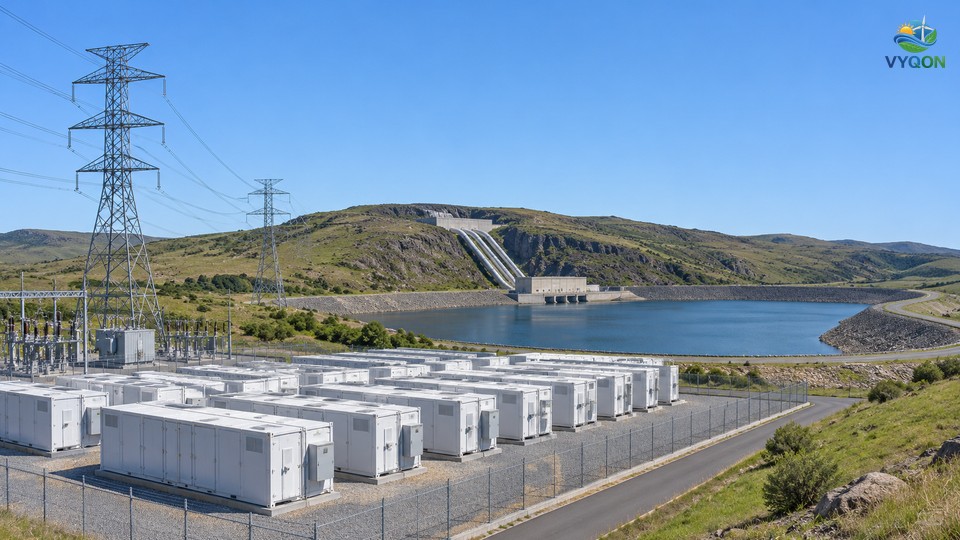
The scheme envisages 92 GWh of storage in three parts. Hydro Pumped Storage Plant (PSP) capacity accounts for the largest share at 60 GWh. Battery Energy Storage System (BESS) capacity makes up 30 GWh. A further 2 GWh is reserved for alternative energy storage technologies. The total estimated investment across the three categories is ₹97,600 crore, against the ₹14,500 crore of central VGF support.
VGF is a form of capital support that improves the financial viability of projects that are needed by the system but may not earn enough returns on their own in their early years. The release states that the support will help improve the financial viability of these storage projects and accelerate the deployment of large-scale energy storage infrastructure in the country.
How capacity will be allocated
Energy storage capacity under the scheme will be allocated through a tariff-based competitive bidding process. Public and private sector electricity distribution companies will be eligible for VGF support for BESS and hydro PSP projects. Projects based on alternative energy storage technologies will be implemented by public and private sector entities.
The release does not give state-wise allocations, the per-GWh rate of support, or bidding dates. These details are not disclosed in the official announcement.
Domestic content requirement for batteries
A key objective of the scheme is to strengthen India’s domestic energy storage manufacturing ecosystem through demand-side financial support, and to reduce dependence on imported components. To promote indigenous manufacturing, BESS projects under the scheme will be subject to a minimum Domestic Content Requirement (DCR) of 40%.
The government says the requirement will encourage domestic manufacturing and create opportunities for Indian industry. It is also described as complementing the existing supply-side incentives for battery manufacturing. In other words, the VGF creates demand for batteries built in India, while the earlier incentives are aimed at the factories that make them.
Why storage matters for the grid
The release links the scheme to several system needs: large-scale integration of renewable energy, reliable and affordable round-the-clock power supply, and stronger grid stability. It notes that grid-scale storage helps address the variability of renewable generation and can reduce dependence on conventional generation for balancing and round-the-clock supply.
The government also presents the scheme as an intervention towards a flexible, resilient and future-ready electricity system. It will facilitate greater utilisation of renewable energy, encourage domestic manufacturing and enhance the country’s energy security, in line with the Atmanirbhar Bharat and Viksit Bharat vision.
What it means for India’s clean-energy sector
For developers, distribution companies and equipment makers, the approval sets out a funded national framework for grid-scale storage, with a defined VGF envelope and competitive bidding as the allocation route.
The 60 GWh pumped storage component is the largest part of the plan. The 30 GWh BESS component carries the 40% domestic content condition, which is aimed at Indian manufacturers, and the whole programme runs over the five years from FY 2026-27 to FY 2030-31.
Several points will matter for how the scheme turns into projects: the per-GWh support rate, the way distribution companies are assigned capacity, the bidding calendar and the treatment of alternative technologies in the 2 GWh category. None of these is specified in the release. The figures above are the approved framework; operational detail is not yet public.
Official references
- Prime Minister of India: “Cabinet approves Rs.14,500 crore Viability Gap Funding Scheme for development of 92 GWh Grid-Scale Energy Storage Systems”, 4 November 2026 – pmindia.gov.in
Leave a Comment