
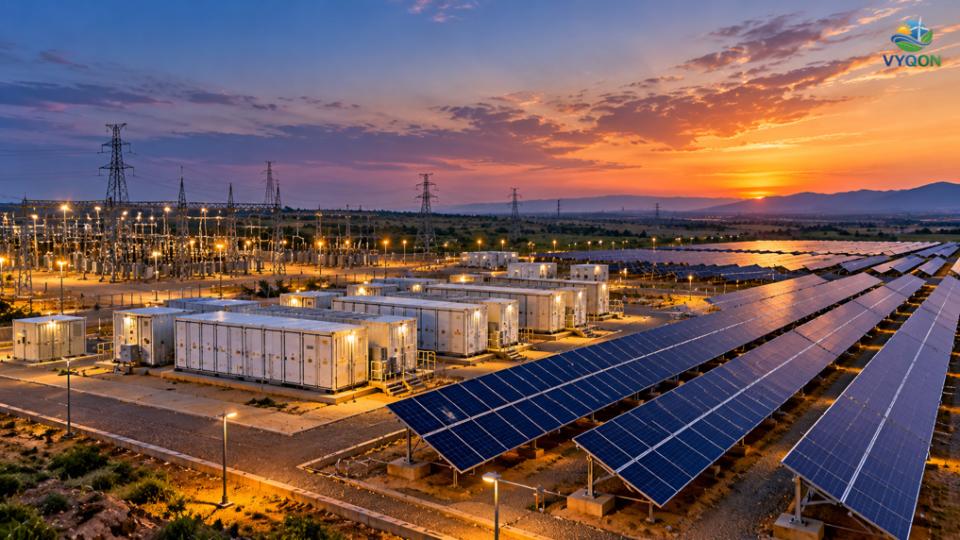
The 25-year agreement will support 300 MW of assured peak electricity supply, equivalent to 1,200 MWh across four daily non-solar hours, combining renewable energy generation with battery storage to strengthen India’s dispatchable clean energy infrastructure.
ACME Solar Holdings Limited, through its wholly owned subsidiary ACME Greentech Twenty Private Limited, has signed a Power Purchase Agreement (PPA) with the Solar Energy Corporation of India Limited (SECI) for 300 MW of assured peak electricity supply under the Firm and Dispatchable Renewable Energy (FDRE) Tranche IX procurement programme. The agreement establishes a contracted tariff of ₹6 per kilowatt-hour and is designed to deliver reliable renewable electricity during designated non-solar hours, when conventional solar generation is unavailable or significantly reduced. The agreement became effective on 6 October 2026, while the company publicly announced the development on 19 October 2026.
The project represents an important development in India’s evolving renewable energy landscape, where electricity procurement is increasingly shifting from capacity-based renewable generation towards reliable and dispatchable power supply. By integrating solar photovoltaic generation with battery energy storage technology, ACME Solar intends to meet defined peak-hour electricity requirements while supporting greater renewable energy penetration into the national grid. The agreement also demonstrates the growing commercial importance of battery energy storage systems in addressing the mismatch between renewable electricity generation patterns and consumer demand.
Understanding the 300 MW Peak Power Agreement and Battery Storage Requirements
Under the FDRE-IX procurement framework, ACME Solar is required to provide assured electricity supply during four designated non-solar hours daily. The contract establishes a delivery requirement of 4 MWh per megawatt of contracted capacity, translating into a peak-energy supply obligation of 1,200 MWh for the 300 MW agreement. This structure is intended to ensure that renewable electricity remains available during periods when solar generation naturally declines, particularly in the evening and night-time hours. The purchasing entity can identify the designated supply periods in accordance with the procurement framework, requiring the developer to maintain sufficient operational flexibility to meet the agreed electricity-delivery schedule.
An important distinction is that the 1,200 MWh figure represents the contractual peak-energy delivery requirement rather than the confirmed installed capacity of the battery storage system. The final battery configuration will depend on several technical and operational considerations, including usable storage capacity, energy conversion efficiency, system degradation, charging requirements and operating reserves. ACME Solar will need to determine an appropriate combination of renewable generation and storage infrastructure to ensure that the contracted electricity can be delivered consistently throughout the project’s operational life.
The agreement also establishes a minimum monthly availability requirement of 90%, placing considerable emphasis on dependable electricity supply rather than installed generation capacity alone. Meeting this requirement will involve accurate renewable energy forecasting, efficient battery charging and discharging strategies, real-time system monitoring and coordinated power scheduling. Any significant deviation between forecast renewable generation and actual electricity availability could create operational challenges, making advanced energy-management systems and reliable storage infrastructure essential to successful project execution.
Integration of Solar Generation and Battery Energy Storage
The integration of solar photovoltaic generation with battery energy storage is central to the project’s operating strategy. During daylight hours, renewable electricity can be generated and used to charge battery systems, allowing stored energy to be discharged during designated peak-demand periods. This arrangement provides greater flexibility in electricity delivery and helps address one of the primary limitations of conventional solar power installations: the inability to generate electricity after sunset. By combining renewable generation with energy storage, the project is intended to provide a more predictable electricity supply profile while contributing to the growing requirements of India’s power distribution system.
The performance of such an integrated system depends on the coordination of several interconnected technologies. Battery management systems monitor battery operating conditions, including temperature, voltage, current and state of charge, while power conversion systems manage the flow of electricity between the storage units and the grid. Energy-management systems coordinate renewable generation forecasts with charging and discharge schedules, ensuring that sufficient stored electricity remains available during the contracted delivery periods. Battery degradation, conversion losses, auxiliary consumption and operating limitations must also be considered when determining the effective amount of electricity available for dispatch.
ACME Solar has indicated that the project will utilise night-time grid connectivity already available within the company, potentially improving the utilisation of existing electricity evacuation infrastructure. However, the final installed solar generation capacity, battery configuration and detailed project location have not been separately disclosed in the company’s announcement. These details will become important during project implementation, particularly in determining the technical architecture, operational efficiency and long-term performance of the proposed renewable energy system.
Commercial Significance of the ₹6/kWh Tariff and Long-Term Agreement
The contracted tariff of ₹6 per kilowatt-hour reflects the commercial characteristics of a renewable electricity product designed to deliver power during specified peak-demand periods. Unlike conventional solar projects, which primarily generate electricity according to sunlight availability, assured peak supply projects must incorporate the infrastructure and operational capabilities necessary to meet defined delivery schedules. This introduces additional investment requirements associated with battery energy storage, power conversion equipment, monitoring systems and long-term maintenance. Consequently, the tariff should be evaluated in the context of its assured electricity-delivery obligations rather than directly compared with conventional daytime solar generation tariffs.
The financial viability of the project will depend on several interconnected factors, including renewable energy generation costs, battery procurement expenditure, financing arrangements, equipment availability, storage degradation and operational efficiency. As battery systems experience performance changes over their operating life, developers must account for long-term capacity retention, replacement requirements and maintenance expenditure. Effective charging strategies and accurate electricity scheduling will be especially important because failure to maintain the required supply availability could affect project revenues and create additional contractual liabilities.
According to ACME Solar’s stock-exchange disclosure dated 16 October 2026, the agreement has a tenure of 25 years from the scheduled commencement of electricity supply, with the scheduled supply commencement date established as 6 April 2028. The long-term PPA provides a contractual framework for future electricity sales and supports planning for project financing, equipment procurement and infrastructure development. However, execution of the PPA represents a commercial milestone rather than confirmation of operational commissioning. The project must complete the necessary development, installation, grid integration, testing and commissioning activities before commercial electricity delivery can begin.
Strengthening ACME Solar’s Renewable Energy Portfolio
The agreement contributes to the expansion of ACME Solar’s renewable energy development portfolio and strengthens its participation in projects combining generation and storage technologies. Following execution of the PPA, the company reported that its under-construction portfolio covered by signed power purchase agreements had increased to 4,310 MW, representing a substantial portion of its total under-construction contracted capacity of 5,380 MW. The company also reported a diversified contracted renewable energy portfolio of 8,370 MW, encompassing solar, wind, hybrid, firm and dispatchable renewable energy, and battery storage solutions.
ACME Solar’s October 2026 announcement additionally cited approximately 3,123 MW of operational capacity and 4.96 GWh of battery energy storage capacity within its broader portfolio. These figures highlight the company’s involvement in renewable electricity development and the increasing importance of storage-integrated projects within its commercial strategy. Its engineering, procurement, construction, operations and maintenance capabilities are relevant to the implementation of projects requiring coordinated generation, energy storage and grid infrastructure. The FDRE-IX agreement further reinforces the role of long-term renewable electricity procurement in supporting investment in dispatchable clean energy solutions.
Implications for India’s Renewable Energy Transition
The agreement reflects a broader transformation in India’s renewable electricity market, where the ability to deliver reliable power during specific demand periods is becoming increasingly important. As solar and wind generation capacity expands, the electricity system must manage variations in renewable output while maintaining grid stability and dependable electricity availability. Battery energy storage can support this transition by shifting electricity from periods of generation availability to periods of greater demand, reducing the mismatch between renewable electricity production and consumption requirements.
Projects developed under firm and dispatchable renewable energy procurement programmes can also encourage improvements in renewable power forecasting, energy scheduling, battery performance monitoring and integrated system operations. Nevertheless, achieving dependable electricity delivery requires careful project design, sufficient storage availability and continuous compliance with contracted supply obligations. The next important milestones for ACME Solar will involve project implementation, infrastructure development, grid connectivity and eventual commissioning, followed by verification of actual electricity delivery against the contractual requirements.
ACME Solar’s 300 MW assured peak power agreement with SECI therefore represents a significant commercial development in India’s transition towards storage-supported renewable electricity. By combining a long-term power purchase arrangement with defined peak-hour supply obligations, the project illustrates how renewable energy procurement is evolving beyond installed generation capacity towards dependable electricity delivery. Its ultimate contribution will depend on timely commissioning and sustained operational performance, but the agreement establishes a clear framework for integrating renewable generation and battery storage to meet India’s increasingly complex electricity requirements.
Official Sources and References
ACME Solar Holdings Limited — Official Announcement, 19 October 2026
https://nsearchives.nseindia.com/corporate/ACMECS_19102026084958_IntimationPPA19102026.pdf
ACME Solar Holdings Limited — Stock Exchange Disclosure, 16 October 2026
https://www.bseindia.com/stockinfo/AnnPdfOpen.aspx?Pname=ce390362-096f-4cc9-a8bb-ff6287cab439.pdf
Solar Energy Corporation of India — Official FDRE-IX Auction Results
https://www.seci.co.in/uploads/tenders/bidders/SECI_FDRE-IX-_6000_MWh_result_website_upload.pdf
Solar Energy Corporation of India — Standard FDRE-IX Power Purchase Agreement
https://www.seci.co.in/uploads/tenders/Standard_SECI_PPA_FDRE-IX-_final_upload.pdf
Leave a Comment