
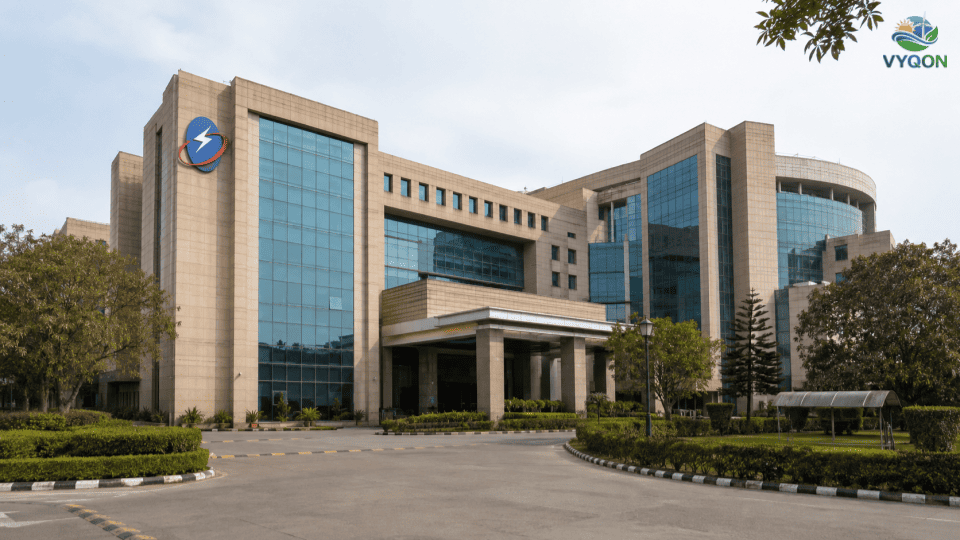
Official Merger Announcement
The Boards of Directors of Power Finance Corporation (PFC) and REC Ltd. have formally approved a scheme of arrangement for the merger of REC into PFC. This pivotal step follows the receipt of Presidential approval on June 10, 2026, signaling the start of a massive consolidation within India’s public sector financial framework. The transaction is designed to streamline energy sector financing and is slated for completion by April 1, 2027.
Transaction Metrics and Share-Swap Ratio
The merger establishes a financial behemoth with unprecedented scale in the Indian NBFC space. The following metrics define the mechanics and combined financial standing of the entity:
- Share-Swap Ratio: Shareholders will receive 88 shares of PFC for every 100 shares of REC held.
- Consolidated Loan Assets: The combined entity commands a massive loan book of ₹11,63,768 crore (approximately ₹11.64 Lakh Crore), based on FY26 performance highlights.
- Combined Net Worth: The aggregate net worth stands at ₹1,73,441 crore, providing a robust cushion for future credit expansion.
- Profit After Tax (PAT): The group reported a combined PAT of ₹33,625 crore for the fiscal year ending March 2026.
- Capital Adequacy: The group maintains a high Capital to Risk-weighted Assets Ratio (CRAR) of 23.44%, indicating a strong capital position.
Regulatory Friction and Market Context
The merger enters a complex regulatory landscape as the Reserve Bank of India (RBI) tightens oversight of Upper-Layer NBFCs (NBFC-UL). Under the proposed framework, entities with assets exceeding ₹1 lakh crore will face stricter compliance, notably through the removal of exemptions previously granted to government-owned firms.
A significant point of regulatory friction has emerged regarding the RBI’s draft proposal to reduce group exposure limits from 50% to 35%. PFC Chairman and Managing Director Parminder Chopra has actively voiced pushback against this change, noting that several large borrower groups in the current portfolio already exceed the 35% threshold. This regulatory shift may necessitate significant portfolio realignments, potentially impacting lending flexibility.
From a market perspective, while the merger creates a “single-window” platform to meet the $145 billion annual investment requirement for India’s power sector, investors remain mindful of risks. Analysts estimate a potential 34% equity dilution for existing PFC shareholders, a factor that continues to weigh on valuation outlooks despite the strategic benefits of scale.
Strategic Objective and Institutional Milestones
The structural goal of the consolidation is to create a singular, focused institution capable of funding large-scale infrastructure and renewable energy projects essential to India’s energy transition.
The following table highlights the institutional trajectory leading to this merger:
| Year | Institutional Milestone |
| 2017 | PFC acquires a majority stake in REC; subsequently becomes the largest power sector financier in India. |
| 2026 | Merger announced in the Union Budget; Presidential approval received in June. |
Operational and Financial Position
The combined entity is launching from a position of record-high asset quality. As of March 2026, the consolidated net credit impaired asset ratio reached an all-time low of 0.13%. This was driven largely by aggressive resolution efforts, including the successful resolution of the ₹3,001 crore Sinnar Thermal Power Ltd project.
Supported by Tier 1 capital levels of 21.93%—well above the regulatory floor—and a balance sheet exceeding ₹12 lakh crore, the merged entity solidifies its position as the largest NBFC group in the country. Crucially, the group now stands as the highest profit-making NBFC in India, uniquely positioned to dominate the financing of the nation’s energy and infrastructure landscape.
Leave a Comment