
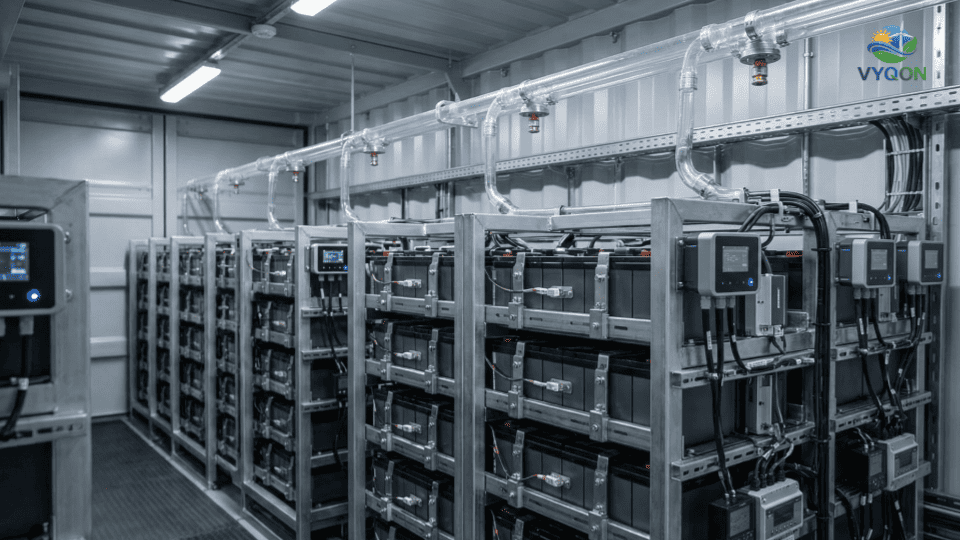
On March 27, 2026, the Central Electricity Authority (CEA) notified the “Measures relating to Safety and Electric Supply Amendment Regulations, 2026,” signaling a pivotal shift in India’s power infrastructure. Scheduled to take effect on April 1, 2027, these regulations—specifically the introduction of a dedicated Chapter XA—codify stringent safety measures to prevent electrical fires and accidents. As the grid evolves to accommodate massive renewable capacity, the CEA has effectively transitioned Battery Energy Storage Systems (BESS) from optional “add-ons” to a regulated, structured, and essential pillar of the national power ecosystem. With the industry facing a widening technical skill gap, these mandates serve as a critical baseline for resilient energy infrastructure.
Regulatory Scope and Technical Definitions
The amendment applies to all battery energy storage installations, establishing compliance requirements based on rigorous voltage thresholds. Under the new Chapter XA, the regulatory distinction is defined as follows:
- Systems above 650 V: Required to maintain full, exhaustive compliance with the specific mandates of Chapter XA.
- Systems 650 V and below: Required to adhere to all relevant established safety and technical standards for low-to-medium voltage installations.
To standardize the design and execution of storage projects, Regulation 2 has been updated with the following technical definitions:
- Battery Energy Storage System (BESS): A comprehensive system utilizing electrochemical batteries (e.g., Li-ion, Lead Acid, flow, or solid-state) to store and deliver electricity, encompassing all units, auxiliaries, and management software.
- Battery Management System (BMS): The electronic control system responsible for protecting the battery and monitoring its state of health.
- Power Conversion System (PCS): The hardware and software responsible for converting power between the battery (DC) and the grid (AC).
- Walk-in containerized units: Specialized enclosures housing BESS equipment designed to allow personnel entry for operational maintenance.
Key Technical Safety Provisions
The framework emphasizes a shift from reactive to proactive safety, mandating high-level technical protections to mitigate the inherent risks of large-scale electrochemical storage:
- Two-Fault Tolerance: Installations must be engineered to remain in a safe state even during the simultaneous occurrence of two independent failures.
- Advanced BMS Monitoring: Systems must provide continuous, real-time tracking of voltage, temperature, current, and thermal runaway indicators.
- Automated and Manual Response: The system must trigger audio-visual alarms and initiate an automatic stoppage of operations if safety limits are exceeded. Furthermore, the inclusion of manual emergency stop buttons is a mandatory physical override.
- Multi-Level Fire Protection: Comprehensive safety protocols must be integrated across the cell, module, rack, container, and site levels.
- Detection and Suppression: Mandatory installation of automatic fire detection (sensing smoke, gas, heat, and flame) alongside automatic fire suppression systems.
Design, Infrastructure, and Site Security Specifications
The regulations specify physical infrastructure mandates designed to contain failures and prevent cascading fire events.
Battery Containers and Cooling
Battery enclosures must be equipped with explosion protection systems, proper pressure control, and forced ventilation to prevent the accumulation of hazardous combustible gases. HVAC (Heating, Ventilation, and Air Conditioning) systems are mandatory and must be integrated with safety controls; a ventilation failure must trigger an automatic system shutdown. Furthermore, strict spacing and layout requirements are established to prevent fire spread between containers and adjacent buildings.
Security and Accessibility
Sites are categorized as high-value, high-risk infrastructure, necessitating:
- Security fencing with a minimum height of 1.8 meters.
- Integrated CCTV, motion sensors, and security alarms.
- Emergency lighting and standardized signage for navigation and emergency protocols.
- Strict adherence to earthing requirements for the battery systems and all associated electrical infrastructure to ensure both equipment and human safety.
Compliance, Audits, and Operational Timelines
The CEA has positioned the first edition of the “Electricity Handbook” as the primary implementation guide for these regulations, providing prosumers and operators with actionable best practices for resilience. To address the sector’s skill gap, the framework mandates:
- Mandatory Audits: BESS operators must complete a third-party fire safety audit within three months of project commissioning.
- Emergency Preparedness: The issuance of Standard Operating Procedures (SOPs) and specialized training for local fire departments to manage battery-specific fire risks.
Grid Integration and Developer Obligations
Under the “Build, Own, Operate” (BOO) framework, the Battery Energy Storage System Developer (BESSD) carries sole liability for the project’s lifecycle safety and performance.
- Technical Gatekeeping: Developers must obtain all technical certifications and safety clearances from the CEA or an identified agency prior to grid synchronization. This certification serves as a mandatory gate for project commissioning.
- Operational Standards: Developers are responsible for designing, testing, and commissioning projects in strict accordance with the Grid Code and Prudent Utility Practices.
- Performance and Degradation: Developers are contractually obligated to manage degradation, augmentation, and battery replacements to ensure no reduction in discharge capacity (e.g., maintaining a 4000 MWh discharge for a 2000 MW project) throughout the contract term.
- Efficiency Mandates: Contractual liabilities, including liquidated damages based on Average Pooled Price of Power (APPC), are tied to maintaining a monthly Round Trip Efficiency (RtE) of at least 85% (90% for co-located projects), ensuring that technical safety and commercial viability remain interlinked.
Leave a Comment