
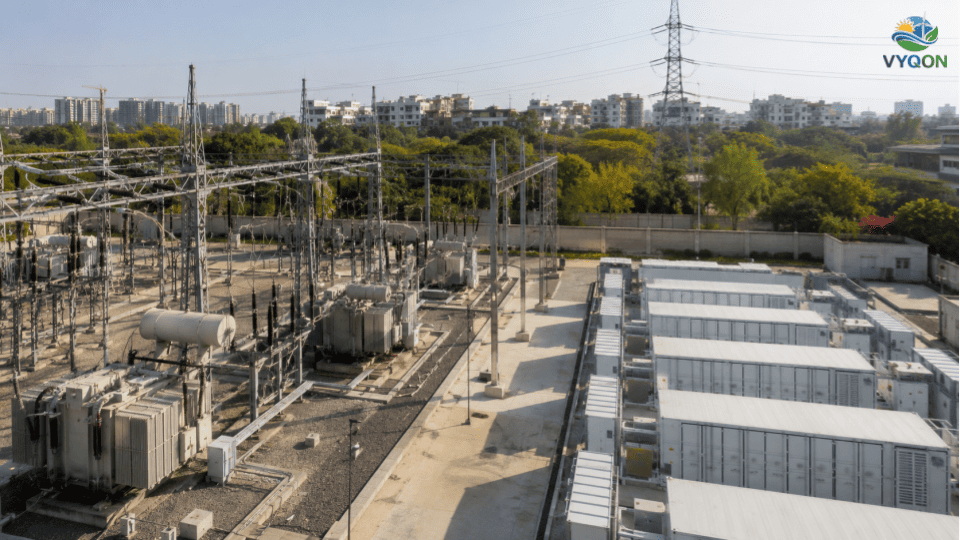
The Delhi Electricity Regulatory Commission (DERC) granted in-principle approval to BSES Rajdhani Power Limited (BRPL) on June 18, 2026, providing regulatory clearance for the solicitation of bids for a 97.5 MW / 195 MWh Battery Energy Storage System (BESS). This decision mandates the immediate commencement of a competitive bidding process, overseen by The Energy and Resources Institute (TERI), to deploy distributed energy storage assets across South and West Delhi to manage peak demand and enhance grid stability.
Technical Specifications and Distributed Infrastructure
The project capacity is distributed across five grid substations in South and West Delhi. Each system is designed to function as a two-hour dispatchable asset, operating for two cycles per day to optimize energy load management.
| Substation Location | MW Capacity | MWh Capacity |
| G4 Dwarka (66/11 kV) | 5 MW | 10 MWh |
| G3 PPK Bindapur (66/11 kV) | 15 MW | 30 MWh |
| Hari Nagar (66/11 kV) | 7.5 MW | 15 MWh |
| Sagarpur (66/11 kV) | 30 MW | 60 MWh |
| DTL Pappankala 2 (66/11 kV) | 40 MW | 80 MWh |
Implementation Framework and Key Stakeholder Roles
The project will be executed through a structured framework involving specialized third-party management and a specific utility financial model:
- Bid Manager: The Energy and Resources Institute (TERI) has been appointed as the designated Bid Manager to facilitate and oversee the competitive bidding process.
- Financial Model: The project utilizes a zero-capital expenditure (zero-capex) model for BRPL. Under this arrangement, the utility makes no direct investment in the BESS infrastructure.
- Operational Term: The project is slated for a 12-year operational life following its commissioning.
Strategic Rationale: Grid Stability and Peak Demand
The deployment of the BESS is necessitated by substantial load growth in the capital’s power grid. Identified grid zones have experienced an annual peak demand growth rate of approximately 8% over the last three years.
Key operational objectives and benefits include:
- Reducing network congestion during peak demand periods, particularly during the high-usage summer months.
- Supporting the grid during evening hours when solar generation declines as consumer demand accelerates.
- Providing emergency backup support through islanding capabilities, ensuring power to critical infrastructure remains maintained during transmission disruptions.
- Easing pressure on Delhi’s transmission network and decreasing reliance on expensive gas-based power generation.
Financial Projections and Regulatory Path to Tariff Adoption
The project is estimated to generate levelized benefits of approximately INR 88.35 crore annually. Under the zero-capex model, these financial gains are intended to serve as a net offset in the power purchase cost within the utility’s Annual Revenue Requirement (ARR), ultimately passing the savings to consumers.
The approval issued by the DERC on June 18 is “in-principle,” serving as the formal authorization to begin procurement. Final tariff adoption remains contingent upon the specific rates discovered through the competitive bidding process and a subsequent assessment of prevailing market conditions by the DERC.
Leave a Comment