
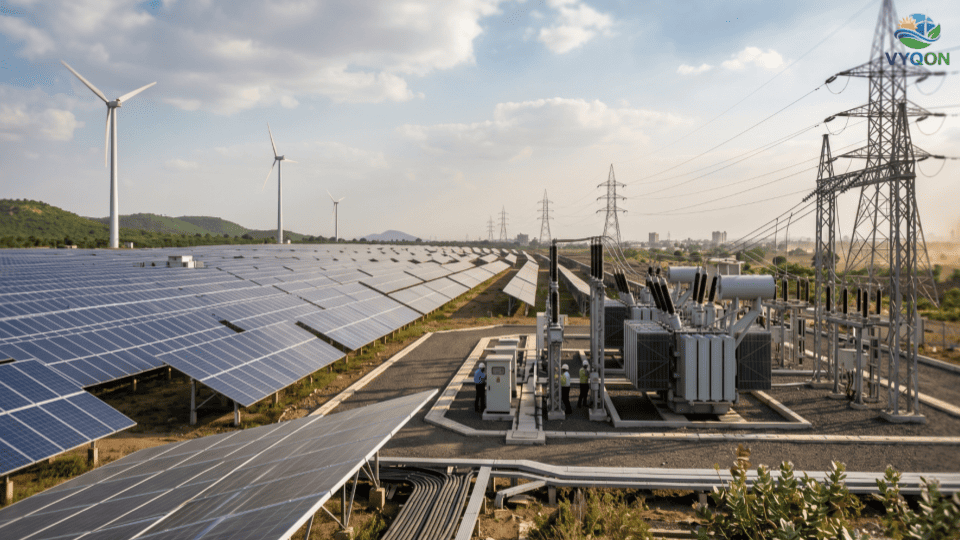
The Union Government has confirmed its decision to link state fiscal incentives and the disbursement of interest-free loans to the adoption of renewable energy (RE) and the timely signing of Power Purchase Agreements (PPAs). The policy shift is designed to incentivize state governments to accelerate clean energy transitions and address long-standing regulatory and financial bottlenecks within the sector.
The Policy: Fiscal Linkages and New Directives
Union Minister for New and Renewable Energy Pralhad Joshi, speaking at the CII Annual Business Summit, announced a new policy framework accepted by the Ministry of Finance and the Ministry of Power. Under this directive, the extension of interest-free loans to state governments will be contingent upon meeting specific RE-related criteria, with a particular focus on the execution of PPAs.
To streamline compliance with revised consumption obligation norms, the government has defined three routes for states and entities to fulfill their requirements:
- Direct RE Consumption: The physical procurement and use of renewable energy.
- Purchase of RE Certificates: The acquisition of certificates, which now includes the use of virtual PPAs.
- Payment of Buyout Prices: A financial settlement mechanism for entities unable to meet obligations through direct consumption or certificates.
The PPA Context: Addressing Regulatory and Financial Bottlenecks
The framework aims to resolve persistent stagnation in PPA execution and the renegotiation of existing contracts. The Finance Ministry’s decision to introduce “loan conditionality” is primarily driven by the need to address the following core factors:
- Financial Health of DISCOMs: The deteriorating financial condition of state distribution companies (DISCOMs) has created significant cash flow uncertainties, leading to delays in PPA signings. The new fiscal linkages seek to compel these utilities to prioritize RE commitments despite their distressed balance sheets.
- Regulatory Variations and ISTS Charges: Significant state-specific differences in open access and tariff setting continue to impact project bankability. The Cross-Subsidy Surcharge (CSS) ranges from a low of ₹0.54/kWh in Tamil Nadu to as high as ₹2.90/kWh in Rajasthan. Furthermore, Inter-State Transmission System (ISTS) charges, which range from ₹0.30 to ₹1.10 per kWh, are now applicable to all projects commissioned after June 2025, following the expiration of the previous waiver period.
- Market Imbalances and PPA Volumes: Industry stakeholders have highlighted a misalignment where project bids frequently exceed DISCOM demand. Market data illustrates the current disparity in state-level success; for instance, Tamil Nadu has achieved a PPA volume of 2,500 MW, whereas Punjab has recorded significantly lower volumes of approximately 410 MW. Gujarat remains a strong performer with 1,950 MW in PPA volume.
To facilitate PPA execution, the Central Electricity Regulatory Commission (CERC) has officially notified the terms and conditions of the carbon credit certificates regulation, 2026. This move is intended to provide a more structured market framework for developers and utilities.
Quality Control and Import Monitoring Measures
The Ministry of New and Renewable Energy (MNRE) is implementing stricter quality and monitoring standards to safeguard project reliability and investor interests:
- Warranty and Performance Cover: The government has mandated a minimum 10-year warranty on solar PV modules, supplemented by a 25-year performance cover.
- Import Monitoring Systems: In collaboration with the Ministry of Commerce, the government has launched a dedicated monitoring app to track RE equipment imports regularly.
- Surya Ghar Program Integrity: The MNRE has moved to bar the submission of duplicate serial numbers for modules and inverters to prevent fraudulent claims within the Surya Ghar residential solar scheme.
Market Performance and Key Stakeholders
Despite a 7% decline in global renewable energy investments in 2025, India’s RE market saw a substantial increase in deal value, indicating a concentration of capital in larger-scale projects.
RE Market Metrics (2024-2025)
| Metric | 2024 | 2025 |
| Number of Deals | 21 | 18 |
| Total Value | $378 million | $2 billion |
The implementation of these policy shifts involves coordinated efforts from the Ministry of New and Renewable Energy (MNRE), the Ministry of Power, the Ministry of Finance, and the Ministry of Commerce. These initiatives support the national baseline target of achieving 500 GW of non-fossil capacity by 2030. Minister Joshi noted that while the industry has suggested increasing this target, the current government priority is focused on “resolving existing constraints” to ensure the stability of the sector before expanding the national ambition.
Leave a Comment