
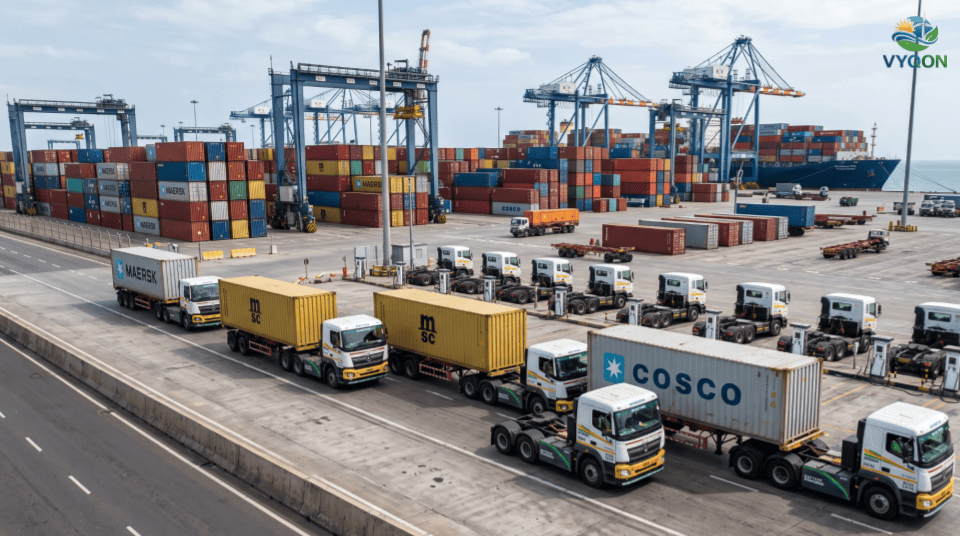
The Directorate General of Trade Remedies (DGTR), operating under the Ministry of Commerce & Industry, has formally initiated an anti-dumping investigation into the import of electric tractors originating in or exported from China. Launched on June 30, 2026, the probe is identified as SETU Case ID- AD/OI/020/2026 and is being conducted under the statutory framework of the Customs Tariff Act, 1975 and the Anti-dumping Rules, 1995.
The investigation follows a petition filed by IPLTech Electric Private Limited, a subsidiary of TI Clean Mobility Pvt. Ltd. and the Murugappa Group. After a preliminary review, the DGTR found prima facie evidence of dumping and subsequent material injury to the domestic industry, justifying the commencement of a formal probe.
Technical Scope and Specifications
The “Product Under Consideration” (PUC) for this investigation is defined as Electric Tractors in 6×4 and 4×2 axle configurations. The scope and technical parameters of the investigation are as follows:
- Commercial Usage: These vehicles are specifically designed for logistics and goods transportation. Applications include the industrial and commercial movement of cement, steel, FMCG (fast-moving consumer goods), packaged commodities, construction materials, and allied cargo.
- Operational Ecosystem: The PUC is primarily utilized by fleet operators, logistics service providers, manufacturers, and distributors for point-to-point transport between factories, warehouses, ports, and delivery locations.
- Import Classifications: The investigation encompasses units imported as Completely Built Units (CBUs), Completely Knocked Down (CKDs), and Semi-Knocked Down (SKDs). Standalone parts imported on a separate basis are excluded.
- Indicative Customs Classification: The subject goods are typically imported under HS Codes 87012400 and 87049012, though these headings are considered indicative and not binding on the final scope.
- Product Control Number (PCN) Methodology: To ensure precise dumping margin calculations, the authority will categorize products based on:
- Power Transmission: E-axle or Gear Box.
- Battery Capacity: Specific values of 282 V, 302 V, and 376 V.
The Allegations: Dumping and Material Injury
The applicant has submitted rigorous legal and economic claims regarding the impact of Chinese market practices on Indian manufacturing:
- Dumping Claim: The petitioner argues that the subject country should be treated as a “non-market economy.” Consequently, the “normal value” of the tractors should not be based on Chinese domestic price points but rather determined by Indian production costs, inclusive of reasonable administrative expenses and profit.
- Evidence of Injury: The domestic industry alleges that imports have increased significantly in both absolute and relative terms. This has led to price suppression, adversely affecting the operating performance of local producers. Industry data suggests that the non-implementation of recommended trade remedies has already resulted in an annual loss of nearly Rs 2,000 crore to the domestic sector.
- Investigation Timeline: The Period of Investigation (POI) is defined as January 1, 2025, to December 31, 2025. The injury analysis will evaluate data from April 1, 2023, through the end of the POI.
Broader Trade Context
The tractor probe is one of five investigations launched simultaneously by India in late June 2026. Other concurrent anti-dumping cases include:
- moulded soda-lime glass vials
- cyanuric chloride
- polyethylene terephthalate film above 100 microns
- carbon raiser made anthracite coal
India currently stands as the most frequent user of trade remedies against Chinese goods, having initiated 68 such investigations during the 2024–2025 period. This domestic surge mirrors a global trend of record trade remedy enforcement against China. A notable outlier in 2025 is Mexico, which saw a 100% year-over-year increase in cases against Chinese goods—a shift largely attributed to the influence of U.S. trade policy and regional pressure.
For Indian policymakers, the investigation underscores a complex “import dilemma.” While implementing all pending trade recommendations could save approximately $3 billion annually in foreign exchange and protect domestic manufacturing capacity, officials must weigh these benefits against the risk of raising input costs for downstream industries, potentially affecting their global competitiveness.
Leave a Comment