
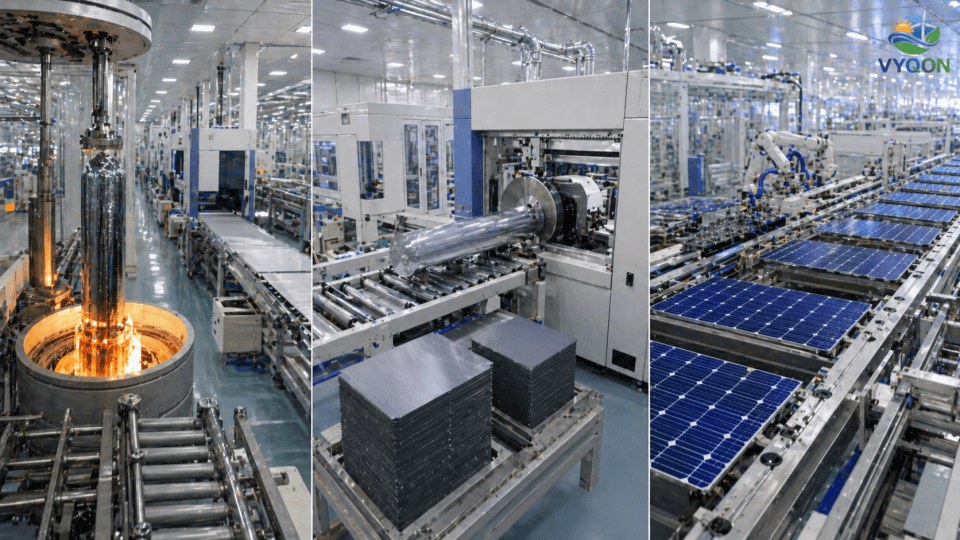
The Indian government, through the Ministry of New and Renewable Energy (MNRE), has approved a commissioning extension of up to two years for solar equipment manufacturing projects under the Production-Linked Incentive (PLI) scheme. This administrative decision, which covers both Tranche I and Tranche II of the national program, was cleared by the empowered group of secretaries led by the Cabinet Secretary. To ensure full administrative compliance, any proposed changes to the implementation framework will require final clearance from the Department for Promotion of Industry and Internal Trade (DPIIT). The move is designed to realign project timelines with current operational realities following a series of systemic logistical setbacks.
Rationale for the Extension
The decision to adjust the deadlines follows a period of significant operational friction cited by industry stakeholders between 2022 and 2024. While the government remains committed to its renewable energy trajectory, the domestic manufacturing ecosystem has encountered the following Key Challenges:
- Machinery Import Restrictions: Export restrictions on specialized machinery from China have significantly slowed the setup of manufacturing lines.
- Technical Expert Shortages: Visa delays and refusals for Chinese technical experts—required for the installation, training, and repair of critical manufacturing equipment—have stalled progress. These restrictions are only now beginning to ease in 2025.
- Capital Goods Procurement: Extensive delays in the procurement and installation of capital goods necessary for high-efficiency module and cell production.
- Supply Chain Volatility: Shortages and price fluctuations in essential materials, including polysilicon, wafers, and ethylene vinyl acetate (EVA).
- Upstream Technology Transfer: Slow technical expertise transfer required for the domestic production of complex upstream components like ingots and wafers.
Tranche I: Status and Awardees
Tranche I of the PLI scheme, launched in April 2021 with an outlay of Rs 4,455 crore, focused on establishing integrated high-efficiency solar PV module units. The following table identifies the successful bidders and the distinction between their planned manufacturing footprint and the capacity eligible for financial incentives.
| Company Name | Integration Level | Installed Capacity (MW) | Eligible Capacity (MW) | Allocated Incentive (Rs. Cr) |
| Shirdi Sai Electricals | Polysilicon + Ingot-Wafers + Cells + Modules | 4,000 | 2,000 | 1,875 |
| Reliance New Energy | Polysilicon + Ingot-Wafers + Cells + Modules | 4,000 | 2,000 | 1,917 |
| Adani Infrastructure | Polysilicon + Ingot-Wafers + Cells + Modules | 737 | 368 | 663 |
The original commissioning deadline for Tranche I was December 2024. Among the awardees, Adani Infrastructure successfully met this target. Reliance New Energy has commenced production lines this quarter, while Shirdi Sai Electricals is currently catching up to its revised production phases.
Tranche II: Capacity and Implementation Baskets
The second tranche, launched in September 2022, carries a total allocation of Rs 13,938 crore and seeks to drive deeper backward integration. Awarded capacities are divided into three baskets:
- P+W+C+M: Polysilicon, Wafers, Cells, and Modules.
- W+C+M: Wafers, Cells, and Modules.
- C+M: Cells and Modules.
Major winners in Tranche II include Reliance New Solar Energy, Indosol Solar, Waaree Energies, FS India Solar Ventures (First Solar) with a 3,400 MW allocation, ReNew Solar, Grew Energy (2,000 MW), Avaada Ventures, and JSW Renewable Technologies. Prior to this extension, these manufacturers were targeting commissioning dates of June 2025 (C+M), December 2025 (W+C+M), and March 2026 (P+W+C+M).
Current Implementation Data vs. National Targets
Despite total PLI-linked investments exceeding INR 48,000 crore and the potential for 38,500 direct jobs, commissioned capacity currently lags behind the total awarded volume.
- Total Awarded Capacity (PLI): 130.7 GW
- Current Commissioned Capacity (under PLI): 25.5 GW (~20% of target)
- Current National Module Capacity: Over 100 GW
- FY2028 National Target: 200 GW for modules and 100 GW for cells
Operational Constraints and Final Deadlines
While the government has granted a commissioning extension, it has maintained the terminal end dates of the schemes. These dates are statutory and remain unchanged:
- Tranche I Terminal Date: FY2030
- Tranche II Terminal Date: FY2032
Note on Timeline: Manufacturers are cautioned that utilizing the full two-year commissioning extension will result in a narrowed window for claiming incentives. Since the 5-year incentive disbursement period must conclude by the terminal dates (FY30/FY32), any delay in commissioning reduces the overall time available to capture the full allocated financial benefits. Manufacturers must accelerate production immediately following plant setup to maximize the scheme’s value.
Strategic Goals of the Extension
The government’s primary objective is to secure domestic self-reliance across the solar value chain, particularly in the upstream segments of polysilicon, ingots, and wafers. The current domestic ingot-wafer capacity stands at only approximately 2 GW, significantly trailing the 100 GW module capacity.
The strategic outlook for these upstream components is reflected in the recent policy decision to extend the Approved List of Models and Manufacturers (ALMM) requirements to wafers only from June 2028. This move acknowledges that significant domestic wafer production is not anticipated for several more years. By providing this extension, the MNRE aims to facilitate the eventual scaling of these critical components, reducing import dependence and building a resilient infrastructure to meet a projected national demand of 50 GW annually.
Leave a Comment