
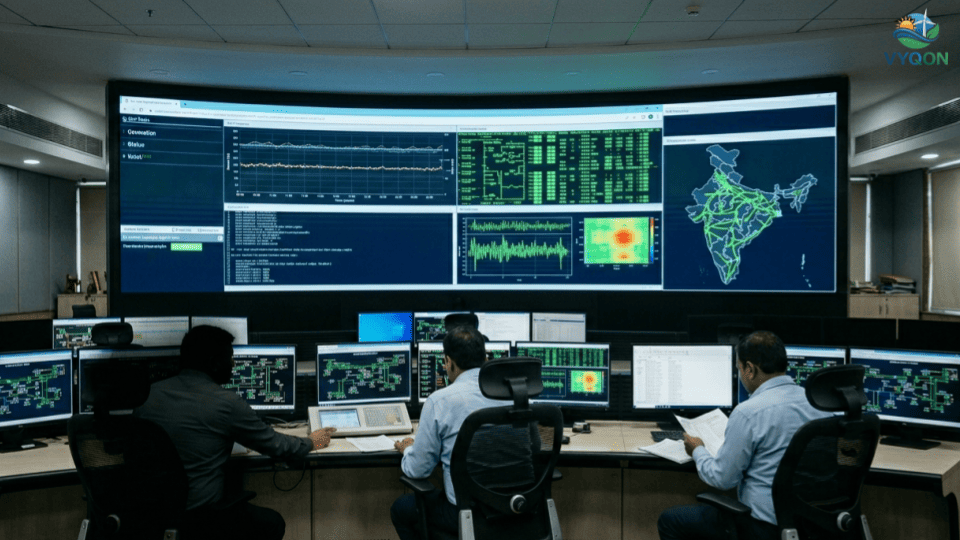
India’s peak power demand eased to 229 GW over the May 2 weekend. The national grid maintained stability during this interval with no reported power shortages. This easing follows an all-time record peak demand of 256.1 GW, which was recorded at 15:38 hrs on April 25, 2026. During that record peak, the Ministry of Power reported that India met domestic requirements while simultaneously maintaining electricity exports to neighboring countries.
Summer Peak Forecast and Strategic Targets
The Ministry of Power (MoP) projects that peak power demand will reach 270 GW during the 2026 summer season. This forecast incorporates the anticipated impact of El Niño weather conditions, which are associated with higher-than-normal temperatures and increased cooling loads. According to Ministry data, electricity consumption grew by 8.9% in April 2026 compared to the same period in 2025. Technical analysis from the International Energy Agency (IEA) indicates that the sensitivity of India’s peak load to a 1°C temperature increase has quintupled since 2017, a trend driven by the rise in air conditioner penetration.
To ensure supply adequacy, the Ministry stated it has implemented a preparedness strategy that includes the deferral of maintenance for approximately 10,000 MW of coal-fired capacity until July. This measure is intended to maximize available generation during the high-demand months.
Infrastructure and Generation Capacity Expansion
The management of current load levels is supported by a record 65 GW capacity addition completed during FY 2025–26. For the current fiscal year (FY 2026), ICRA data indicates that 9-10 GW of new thermal capacity is expected to be commissioned to provide a buffer for growing demand.
Infrastructure milestones as of the current period include:
- Total installed power generation capacity reached approximately 520 GW as of March 2026.
- Inter-regional transmission capacity stands at 120 GW following the expansion of the Inter-State Transmission System (ISTS).
- System reliability is managed through resource adequacy planning and real-time coordination among the National Load Despatch Centre (NLDC), Regional Load Despatch Centres (RLDCs), and State Load Despatch Centres (SLDCs).
Technical Grid Performance and Generation Mix
At the moment of the 256.1 GW peak on April 25, grid frequency was maintained at the standard 50.00 Hz. The following table provides the source-wise contribution during that peak event, representing the benchmark for current system capability:
| Source | Contribution (MW) | Percentage of Total Generation |
| Thermal | 174,565 | 66.9% |
| Solar | 56,204 | 21.5% |
| Hydro | 11,422 | 4.4% |
| Nuclear | 6,293 | 2.4% |
| Gas | 5,205 | 2.0% |
| Wind | 4,897 | 1.9% |
| Others | 2,110 | 0.8% |
| Storage (PSP & BESS) | 201 | 0.1% |
Technical status reports indicate that domestic coal stocks at power plants were at five-year highs of approximately 20 days as of May 21, 2026. These levels were maintained following a period of improved supply and the modulation of thermal generation growth earlier in the season.
Leave a Comment