
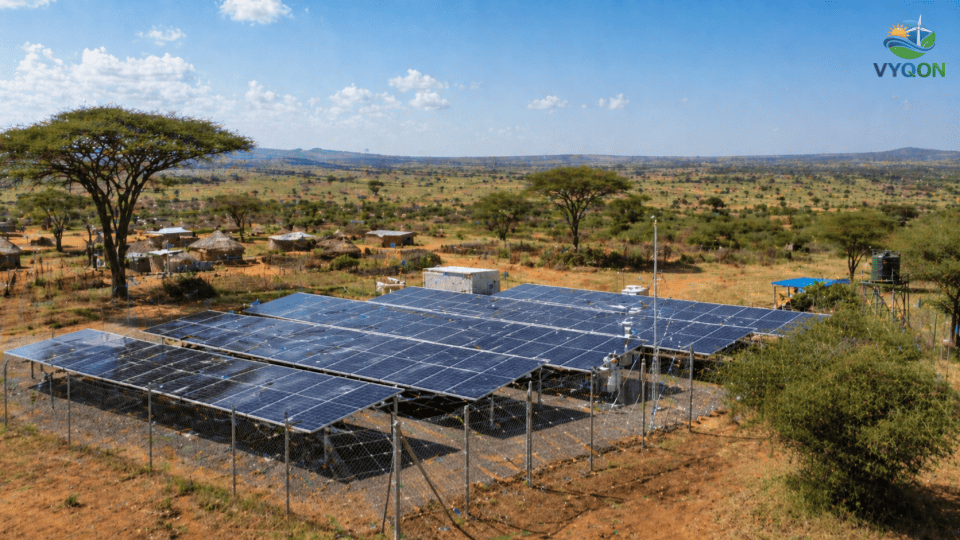
The International Solar Alliance (ISA) formally approved the “Solar Facility” during its Fifth Assembly in New Delhi, establishing a multi-component financial mechanism designed to mitigate investment risks and catalyze solar adoption in underserved markets. Led by India as President and France as Co-President, the Assembly—comprising ministers and delegates from over 110 member and signatory countries—authorized the facility to address the chronic lack of private capital flowing into Africa’s renewable energy sector. While the policy framework was ratified in 2022, recent developments in 2023 and 2024 have moved the facility toward full operationalization through significant capital commitments and international partnerships.
The Global Solar Facility: A Triple-Pillar Financial Structure
The Global Solar Facility (GSF) serves as the ISA’s primary intervention to unlock commercial capital through concessional financing tools and first-loss instruments. Unlike earlier iterations, the finalized GSF is structured around three distinct technical components designed to protect private investors from the specific risks of emerging markets:
- Solar Payment Guarantee Fund: This component provides a partial “first-loss guarantee” to support projects during defaults, reducing the risk of early bankruptcy and improving project bankability.
- Solar Insurance Fund: Designed to accelerate development by offsetting insurance premium expenses during the critical pre-revenue and construction phases.
- Solar Investment Fund (Project Preparation Facility): This third pillar provides core equity or investment of up to 10% of project costs for ventures participating in the payment guarantee scheme.
The facility aims to raise an initial starting corpus of $100 million, with the specific “Africa Facility” targeted at $200 million. By 2030, the GSF is projected to enable $10 billion in investments, providing clean energy access to 35–40 million African households and benefiting approximately 200 million people.
Strategic Context: The Global Investment Disparity
The GSF was established to address a profound disparity in the global renewable energy landscape. Despite Africa’s vast solar potential, the region continues to experience an investment plunge compared to developed economies. Statistical findings derived from ISA reporting include:
- Capacity Disparity: Africa accounts for only 1.3% of the world’s installed solar capacity (11.4 GW out of 849 GW as of 2021).
- The Investment Gap: Global net-zero goals require a $12.5 trillion investment in renewable energy by 2030, yet current solar investment constitutes only 10% of the required amount.
- Regional Trends: Per capita renewable energy investment in Sub-Saharan Africa plummeted by 44% between 2015 and 2021. In contrast, investments are 41 times higher in North America and 57 times higher in Europe.
Capitalization and the MIGA-ISA Partnership
Following the 2022 approval, the GSF received its first major capitalization update in October 2023. The Government of India is considering a $25 million investment as a capital contribution, supplemented by $10 million from the ISA’s own resources. Additional support has been committed by Bloomberg Philanthropies and the Children’s Investment Fund Foundation (CIFF).
In September 2024, the ISA and the Multilateral Investment Guarantee Agency (MIGA) established the MIGA-ISA Solar Facility, a multi-donor trust fund that serves as the first program under the GSF’s guarantee component. This partnership has already delivered a proof-of-concept solar project in the Democratic Republic of Congo (DRC), where combined MIGA guarantees and ISA financing reduced operating costs by approximately 20%, leading to lower tariffs for consumers.
“The GSF aims to address this challenge and provide security to investments,” stated R.K. Singh, ISA President and India’s Union Minister for Power and New & Renewable Energy. “India is a good example of development due to private sector investments. It has no sovereign risks and has a strong legal and security framework with a dispute mechanism and security of payments, which has enabled India to attract investments.”
“With the solar facility, ISA is looking to support projects by reducing lenders’ apprehensions and enabling finance to flow for projects that otherwise may not have received funding,” added Dr. Ajay Mathur, Director General of the ISA.
Programmatic Counterpart: SolarX Grand Challenge
Parallel to these financial mechanisms, the ISA launched the SolarX Grand Challenge to foster innovation in decentralized solar applications. The first African edition of the challenge received over 180 applications from 28 countries.
The program evaluated solutions across 10 specific problem statements (P1–P10), including AgriPV, M2M mobile solar solutions, AI-based soft tools, and battery waste management. In July 2023, 20 winning startups were identified—seven of which are women-led. Each winner received a $15,000 cash grant and access to an acceleration program focused on mentorship, brand management, and investor connectivity.
Future Outlook: The “1000” Strategy
The ISA’s long-term strategy involves globalizing the GSF beyond Africa, with future regional facilities planned for Asia, Latin America, and the Middle East. This expansion is central to the ISA’s “1000” goals for 2030:
- 1000 GW of new solar capacity.
- 1000 million people provided with enhanced electricity access.
- 1000 million tons of CO2 emissions reduction.
The GSF remains a cornerstone of the ISA’s broader mission to unlock $1 trillion in solar investments by 2030, leveraging blended finance and specialized investment managers to reduce technology costs and bridge the global energy access divide.
Leave a Comment