
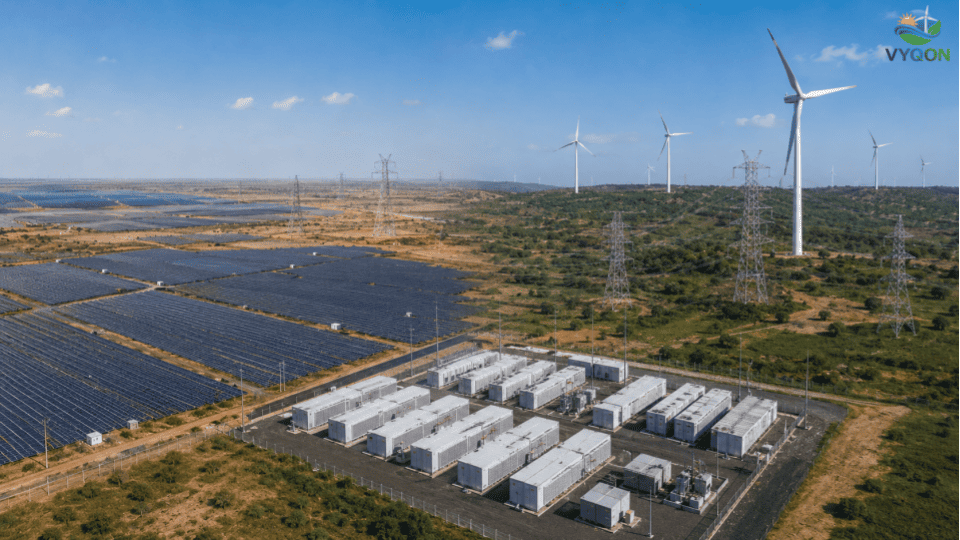
The Maharashtra Electricity Regulatory Commission (MERC) has formally adopted the discovered tariff for the long-term procurement of 2,500 MW of Round-the-Clock (RTC) renewable power. The Maharashtra State Electricity Distribution Company Limited (MSEDCL), acting as the procurer, has identified Adani Power Limited (APL) as the successful L1 bidder following a competitive electronic reverse auction (e-RA) process. This regulatory action facilitates the integration of consistent, dispatchable green energy into the state grid, addressing the inherent intermittency of standard renewable sources.
Bidding Process and Market Response
The competitive selection process culminated on April 1, 2026, when Adani Power Limited received the formal Letter of Award (LoA) at 8:30 PM. This RTC award is technically integrated with a pre-existing 5,000 MW solar power contract. Under the “Executed PPA” signed on October 29, 2024, Adani Renewable Energy Holding Fifty-Five Limited serves as the “Solar Power Generator,” providing the underlying solar capacity that the RTC supplier will utilize to meet its contractual obligations. The tender was conducted under the framework of a domestic bidding process, ensuring transparency and competitive discovery of the L1 tariff.
Financial and Transmission Framework
The regulatory structure of the agreement provides a detailed breakdown of tariff components and grid responsibilities:
- Fixed and Variable Charges: For any non-RE component of the power supply, the tariff is bifurcated into a 75% Fixed Charge and a 25% Variable Charge.
- Un-requisitioned Power: If MSEDCL does not requisition electricity made available at the Delivery Point, the supplier is entitled to sell such power on exchanges. Any resulting gains—calculated as the difference between net revenue and the PPA tariff liability—are shared in a 50:50 ratio between the Procurer and the Supplier.
- Grid Access and Responsibility: The Procurer is responsible for obtaining General Network Access (GNA) for the full supply capacity. All Inter-State Transmission System (ISTS) and GNA charges and losses up to the Delivery Point are borne by the Supplier; charges and losses beyond the Delivery Point remain the responsibility of the Procurer.
Contractual and Operational Specifications
The Power Purchase Agreement (PPA) stipulates a long-term supply period of 25 years, commencing specifically from the Scheduled Commencement Date of Supply (SSD) of Phase III. The agreement defines RTC as a continuous supply of electricity from renewable sources, potentially augmented by battery energy storage systems (BESS) or complementary energy sources. If the supplier utilizes a BESS, it must be co-located at the site of the solar plant established under the Executed PPA.
To maintain grid stability and supply reliability, the agreement enforces the following Minimum Supply Obligations:
- Annual Capacity Utilization Factor (CUF): Minimum of 80%.
- Monthly CUF: Minimum of 70%.
- Daily Peak Hour CUF: Minimum of 90% during the designated 4-hour peak period.
- Traceable Green Power: A minimum of 51% of the total annual supply must be derived from traceable renewable energy sources.
Regulatory and Corporate Compliance
The tariff adoption was executed under Section 63 of the Electricity Act, 2003, in accordance with the guidelines issued by the Central Government via Notification No. 23/05/2020-R&R dated 22.07.2020. Regulatory priority is maintained through the principle of “Must Run” status for RE sources, while scheduling for non-RE components will follow Merit Order Despatch (MOD) protocols.
Adani Power Limited has confirmed that the transaction is domestic and does not involve related party transactions, as neither the promoters nor the promoter group companies hold any interest in MSEDCL. The 2,500 MW capacity will be commissioned in three distinct phases:
- Phase I (1,000 MW): SSD scheduled for February 28, 2027.
- Phase II (1,000 MW): SSD scheduled for April 29, 2027.
- Phase III (500 MW): SSD scheduled for July 29, 2027.
Leave a Comment