
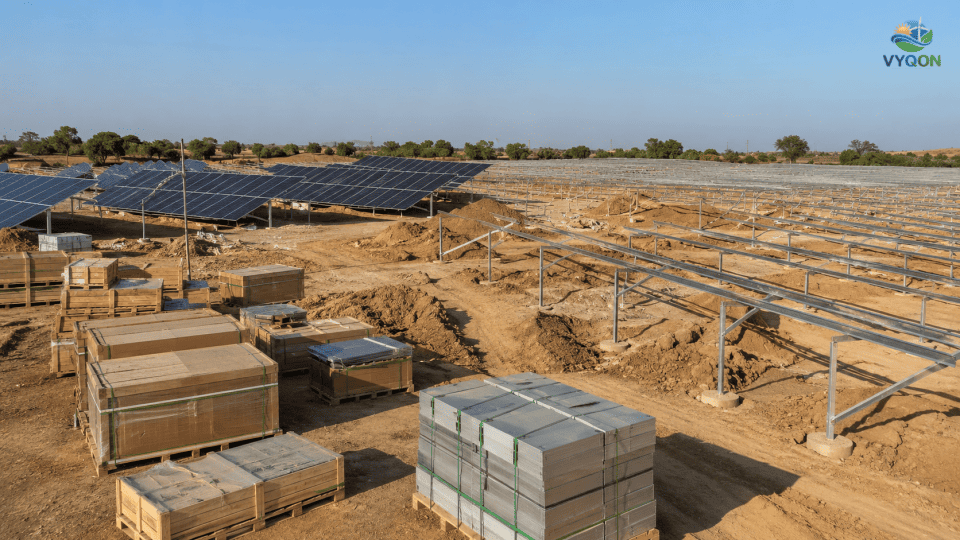
The Ministry of New and Renewable Energy (MNRE) issued a formal advisory on August 21, 2026, recommending a time extension for renewable energy projects facing significant implementation hurdles. The advisory suggests a relief period of not less than two months and not more than four months for developers whose projects have been disrupted by the ongoing geopolitical situation in West Asia. This move seeks to mitigate the impact of international supply chain fractures and protect the progress of India’s clean energy expansion.
Key Provisions and Eligibility Criteria
The MNRE has outlined specific requirements that developers and procuring entities must adhere to when evaluating project relief. These criteria ensure that the extension is applied systematically and only to projects demonstrably affected by the regional conflict.
- Extension Period: In accordance with the Ministry of Finance mandate, the extension period shall be not less than two months and not more than four months. The exact duration within this range is determined by the procuring entity on a case-by-case basis.
- Eligibility Date: Relief applies to projects with a Scheduled Commissioning Date (SCD) or Scheduled Commencement of Supply Date (SCSD)—including any previously granted extensions—falling on or after February 28, 2026.
- Non-Default Requirement: To qualify for relief, developers must prove they were not in default of their contractual obligations as of February 27, 2026.
- Implementing Agencies: The advisory is directed at Renewable Energy Implementing Agencies (REIAs), specifically the Solar Energy Corporation of India (SECI), NTPC, NHPC, and SJVN, as well as the power and energy departments of all state and Union Territory governments.
Legal Framework: PPA and Force Majeure Provisions
The advisory is grounded in the legal intersection of individual Power Purchase Agreements (PPAs) and a Ministry of Finance directive. On April 29, 2026, the Department of Expenditure (Ministry of Finance) issued a memorandum clarifying that the West Asia situation is to be treated as a “war” event for the purposes of Force Majeure.
This August 21 advisory follows a preliminary communication from the MNRE on July 6, 2026, and serves as a critical clarification for the industry. While developers had petitioned for a “blanket extension”—citing a July 31 advisory from the Ministry of Housing and Urban Affairs (MoHUA) regarding real estate projects—the MNRE has explicitly rejected a universal waiver. Instead, relief must follow the specific Force Majeure provisions and contractual procedures of individual PPAs. Crucially, the extension covers only non-performances “directly attributable” to the West Asia situation; all other contractual obligations remain active and will revive immediately upon the conclusion of the approved extension.
Supply Chain and Logistics Disruptions
The conflict has triggered widespread fractures in international trade routes and manufacturing stability. A primary driver of these delays is a severe shortage of commercial gas, which has forced hot-dip galvanizing facilities to reduce or suspend operations. This has rippled through the supply chain, impacting the following materials and components:
- Critical Raw Materials: Procurement and cost stability for copper and aluminum have been compromised.
- Infrastructure Components: Production delays are affecting module mounting structures, transmission-line towers, earthing strips, and switchyard equipment.
- Upstream Industrial Impact: The commercial gas shortage has significantly hindered the manufacturing of structural steel, solar glass, and ceramic insulators.
Furthermore, developers have reported acute challenges in equipment sourcing and international logistics, which have made maintaining rigid construction schedules nearly impossible.
Transmission and Connectivity Relief
To ensure that generation-side extensions do not lead to financial imbalances, the MNRE has requested coordinated action from the Ministry of Power and the Central Transmission Utility of India Limited (CTUIL). The objective is to align grid infrastructure concessions with project commissioning delays to protect overall project economics.
Requested Regulatory Concessions
- Penalty-Free Extensions: Extension of General Network Access (GNA) or connectivity arrangements without the imposition of financial penalties or liquidated damages for the duration of the Force Majeure period.
- ISTS Charge Waivers: Continuation of Inter-State Transmission System (ISTS) charge waivers or concessions for the duration of the extended project period.
Procedural Requirements for Developers
The MNRE has established two distinct procedural tracks for seeking relief, depending on the nature of the claim.
General SCD/SCSD Extensions: Claims for extensions to commissioning or supply dates are evaluated on a “case-to-case basis” by the respective REIAs (SECI, NTPC, etc.) or state agencies. Developers must submit comprehensive supporting information and documentary proof to establish a direct link between the West Asia disruption and the project delay.
ALMM List-II Applicability: For projects seeking relief specifically related to the applicability of the Approved List of Models and Manufacturers (ALMM) List-II, a separate process is in place. Developers must submit their claims through a dedicated portal managed by the National Institute of Solar Energy (NISE) on or before June 30, 2026. These claims are reviewed by a Ministry-constituted Expert Committee, which conducts an objective assessment of “effective steps” undertaken, such as land acquisition, financial closure, or the arrival of solar modules at the project site.
Official Government Sources
- Ministry of New and Renewable Energy (MNRE)
- Official Document: MNRE Force Majeure Time-Extension Advisory (August 21, 2026)
- Official Website: Ministry of New & Renewable Energy (MNRE) Portal
- Press Information Bureau (PIB), Government of India
Leave a Comment