
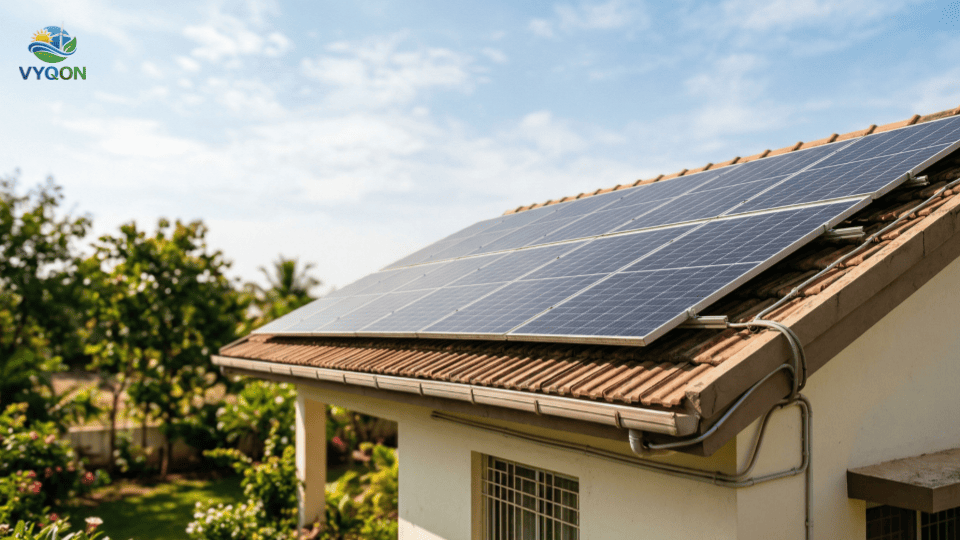
The Ministry of New and Renewable Energy (MNRE) issued a notification on March 17, 2026, establishing mandatory Aadhaar-based authentication for all beneficiaries under the PM Surya Ghar: Muft Bijli Yojana. This requirement applies to any individual seeking financial assistance, specifically Central Financial Assistance (CFA) or subsidies, for the installation of rooftop solar systems. The mandate is designed to streamline beneficiary identification and ensure the integrity of the government’s flagship decentralized energy program.
Beneficiary Identification and Documentation Requirements
Applicants are required to submit all necessary documentation exclusively through the scheme’s National Portal. To establish eligibility for the subsidy, the following items are mandatory for all primary beneficiaries:
- Aadhaar Number: Proof of possession of an Aadhaar number or evidence of Aadhaar enrollment.
- Latest Electricity Bill: Required to confirm a valid electricity connection and the specific geographic location of the rooftop.
- Property Ownership Proof: This document (e.g., sale deed, house tax receipt, or notarized affidavit) is mandatory only if the name on the electricity bill does not match the applicant’s name.
- Bank Account Details: A copy of the bank passbook or a cancelled cheque to facilitate the Direct Benefit Transfer (DBT) of the subsidy.
- PAN Card: Necessary for the verification of bank details to ensure consistency across financial records.
- Passport-size Photograph: A digital copy to be uploaded during the application process.
- Aadhaar-Linked Mobile Number: Essential for receiving One-Time Passwords (OTPs) required for registration and identity verification.
Requirements for Applicants Awaiting Aadhaar Issuance
Individuals aged 18 years and above who have not yet received an Aadhaar number must apply for enrollment to maintain eligibility. Until the Aadhaar number is assigned, these applicants may establish their identity by presenting an Aadhaar enrollment acknowledgment (containing the enrollment identification number) alongside one of the following valid photo identity documents:
- Voter identity card
- Passport
- Driving licence
- Ration card
- Government-issued identity card
- Educational certificate issued by a recognized board
Authentication Protocols and Fallback Mechanisms
Implementing agencies are tasked with managing a multi-modal verification process to authenticate beneficiaries. While standard biometric authentication—including fingerprint, iris, or facial recognition—is the primary protocol, the MNRE has detailed specific fallback mechanisms to address technical or biometric failures:
- Primary Fallback: If standard biometric modes fail, the system allows for authentication through an alternative biometric mode or a One-Time Password (OTP) sent to the linked mobile device.
- Secondary Fallback: In cases where both biometric and OTP methods are unsuccessful, officials may use offline verification. This involves:
- Scanning the Aadhaar secure QR code.
- Utilizing paperless offline e-KYC documents.
Designated ministry officers are responsible for verifying enrollment numbers via the myAadhaar portal of the Unique Identification Authority of India (UIDAI). Furthermore, “Surya Mitras”—trained technical personnel—assist in the process by collecting GPS-tagged photographs and helping beneficiaries navigate documentation requirements.
Strategic Objectives and Implementation Context
The mandate for Aadhaar authentication serves several administrative and policy objectives aimed at optimizing the program’s ₹75,021 crore budgetary outlay:
- Verification and Targeted Delivery: Strengthening protocols to ensure solar incentives reach the intended households.
- Fiscal Transparency: Improving the efficiency of the Direct Benefit Transfer (DBT) mechanism and preventing identity fraud or duplicate claims for the same location.
- Strategic Planning: Providing precise data for Resource Adequacy planning and Renewable Portfolio Obligation (RPO) accounting by distribution licensees.
The PM Surya Ghar: Muft Bijli Yojana aims to power 1 crore households by the end of the 2026-27 fiscal year, providing up to 300 units of free or low-cost electricity per month. This initiative is a core component of India’s green climate commitments, with a current implementation deadline of March 31, 2027.
Program Scale and Progress to Date
As of late March 2026, the PM Surya Ghar: Muft Bijli Yojana has achieved significant operational milestones, with over 26 lakh households across the country successfully powered by rooftop solar installations. In terms of fiscal progress, approximately ₹17,967.53 crore has been disbursed in Central Financial Assistance to beneficiaries since the program’s inception in early 2024. Implementing agencies continue to provide ongoing support to assist applicants with Aadhaar enrollment and details updates to ensure uninterrupted access to scheme benefits.
Leave a Comment