India’s PM E-DRIVE scheme has now supported more than 30 lakh electric vehicles (EVs), with sales counted up to 30 September 2026, Union Minister for Heavy Industries and Steel H D Kumaraswamy said on 20 November 2026. Speaking at the National EV Charging Day event organised by the Society of Indian Automobile Manufacturers (SIAM) in New Delhi, the minister also said Rs 904 crore has been sanctioned to states and oil marketing companies to set up 8,610 public charging stations. The PM E-DRIVE 30 lakh EVs milestone comes with an enhanced scheme outlay of Rs 11,900 crore, which now runs until March 2028.
What the minister announced
Mr Kumaraswamy addressed the inaugural Growth and Readiness for EV Infrastructure Dialogue (GRID), held as part of SIAM’s first National EV Charging Day. He spoke virtually. The 30 lakh figure is a step up from the 26.59 lakh EV sales that the Press Information Bureau (PIB) backgrounder on the scheme listed as of June 2026, when about 28.30 lakh EVs were supported for incentivisation.
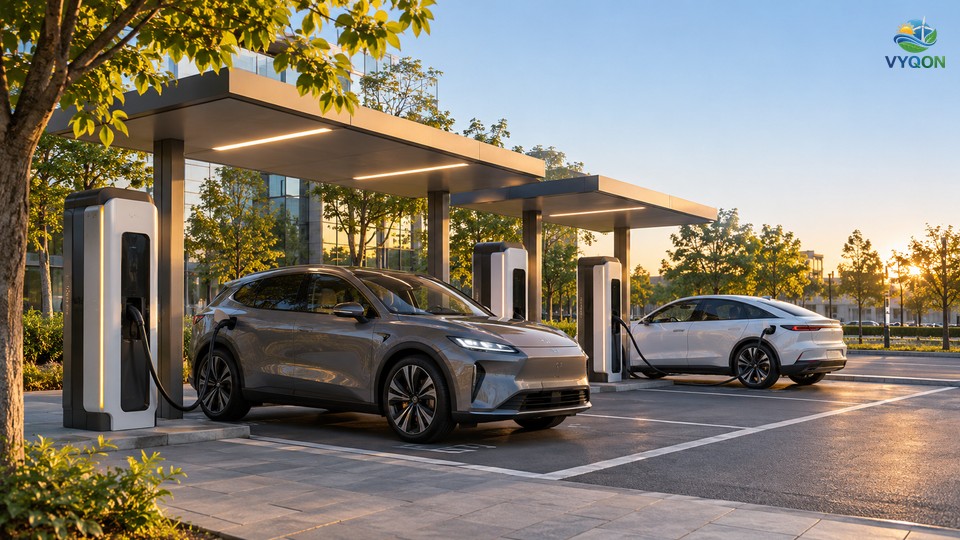
On charging, the government has earmarked Rs 2,000 crore under PM E-DRIVE for public charging infrastructure. Of this, Rs 904 crore, a little under half the earmarked amount, has been sanctioned to states and oil marketing companies for 8,610 charging stations across the country. These are sanctioned stations, not stations already working, a difference the minister himself stressed in his speech.
Judge charging by working stations
The minister said the number of chargers sanctioned or installed cannot be the only measure of progress. A charging station, he said, must be operational, must provide the required power capacity, and must be easy to find and reach. Payment should be convenient, and technical faults should be fixed quickly. Infrastructure that is installed but unavailable does not support mobility or build user confidence, he added.
He also asked for charging to move beyond the big metros. His list covered tier-2 and tier-3 cities, smaller towns, rural and peri-urban areas, industrial clusters, tourism circuits and emerging economic corridors. He said state governments and local authorities can help with land and approvals, while industry can bring technology and investment, and operators must keep stations dependable throughout their working life.
How PM E-DRIVE works
PM E-DRIVE, short for PM Electric Drive Revolution in Innovative Vehicle Enhancement, was launched in 2024 and is run by the Ministry of Heavy Industries. According to the PIB backgrounder of 1 October 2026, the scheme gives demand incentives and infrastructure support across several categories: electric two-wheelers, electric three-wheelers (including registered e-rickshaws and e-carts), e-ambulances, e-trucks, e-buses, public charging infrastructure and the upgrade of testing agencies. The outlay was raised from Rs 10,900 crore to Rs 11,900 crore, and the scheme now runs until March 2028.
For registered electric two-wheelers, the incentive is Rs 2,500 per kWh of battery capacity, capped at Rs 5,000 per vehicle. It applies to vehicles with an ex-factory price of up to Rs 1.5 lakh. The scheme has a fund allocation of Rs 2,767 crore for this segment and aims to support more than 45.79 lakh registered e-2Ws. In the L5 three-wheeler sub-component, target sales were reached and the segment closed on 26 December 2025, while support for e-rickshaws and e-carts continues until March 2028.
Buyers receive the incentive through an electronic voucher. The scheme portal generates an Aadhaar face-authenticated e-KYC voucher at the time of purchase, and a download link goes to the customer’s registered mobile number. The buyer signs it and gives it to the dealer, who uploads it on the PM E-DRIVE portal. The amount is later reimbursed to the vehicle maker by the Ministry of Heavy Industries, so the buyer sees a lower price up front.
E-buses and public transport
Public transport is a large part of the scheme. The PIB backgrounder says Rs 4,391 crore has been allocated for the deployment of 14,028 e-buses under PM E-DRIVE. Of these, 14,000 e-buses had been allocated as of August 2026, and 13,800 of them went to seven cities: Delhi, Bengaluru, Hyderabad, Mumbai, Ahmedabad, Pune and Surat. VYQON earlier reported on the ministry’s Rs 500 crore allocation for e-ambulances and the extension of the deployment timeline to 2028.
The minister asked planners to prepare for higher-capacity charging for e-buses and e-trucks, which need more power and careful site planning near depots, highways and freight corridors. He also said that renewable energy integration and energy storage will matter more as vehicle and battery technologies change, so charging plans should look ahead.
What it means for India’s clean-energy sector
The sales figure shows that demand support is working at scale, but the minister’s own remarks show where the gap is: sanctions are not working stations. The 8,610 sanctioned stations are still proposals backed by funds, and their value will depend on how many are built, connected to the grid and kept in service.
For clean-energy developers and power utilities, charging at this scale is also a new kind of grid load. Higher-capacity chargers for buses and trucks need strong local connections, and pairing them with solar power and battery storage can ease pressure on distribution networks. Charge-point operators, vehicle makers, oil marketing companies, DISCOMs, technology providers and financial institutions will all have to work together on land, connections, investment and uptime.
The reported milestone covers sales up to 30 September 2026. The government has not published a station-wise list of the 8,610 sanctioned sites in the material reviewed for this article, so the locations are not given here.
Official references
- Press Information Bureau (PIB), Government of India, “PM E-DRIVE Scheme: A Step Towards a Sustainable Future”, backgrounder dated 1 October 2026: https://static.pib.gov.in/WriteReadData/specificdocs/documents/2026/oct/doc_10062_20261001_19244601.pdf
Leave a Comment