
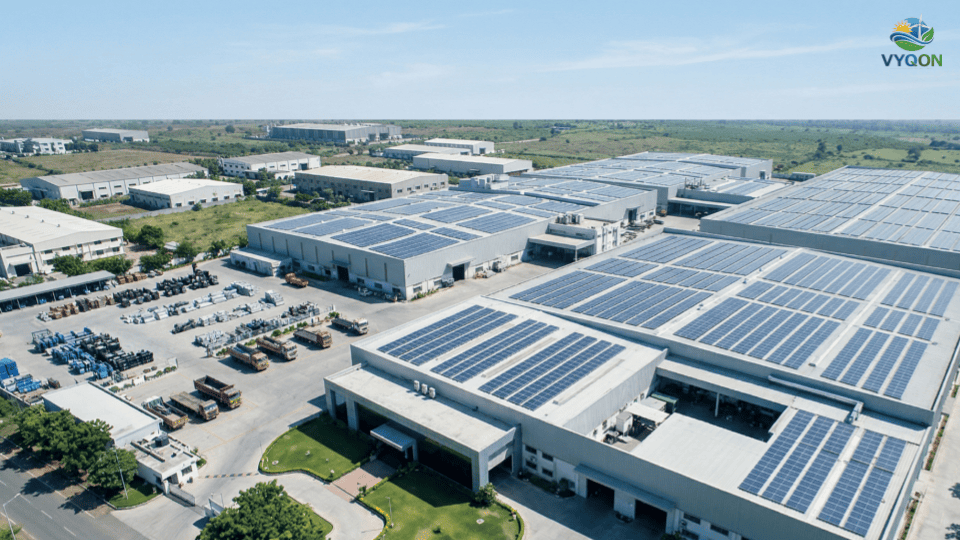
Plastic components manufacturer Pune Polymers has commissioned two rooftop solar power systems with a combined capacity of 705 kW at its primary manufacturing hubs in Chakan and Waluj, Maharashtra. The project, executed by B.U. Bhandari Energy, is designed to buffer the energy-intensive requirements of the company’s injection molding operations against rising utility tariffs. By transitioning to on-site renewable generation, the firm seeks to stabilize operational expenditures across its manufacturing footprint, which currently comprises six specialized units.
Key Operational and Financial Figures
The integration of rooftop solar is projected to significantly alter the company’s energy procurement profile, providing high-torque manufacturing lines with a lower-cost power alternative to the state grid.
- Annual Electricity Generation: Expected to exceed 910,000 units (kWh) of clean energy.
- Power Bill Reduction: Projected decrease of 30% to 40% in monthly electricity expenditures.
- Projected Annual Savings: Estimated between ₹7.3 million and ₹9.1 million, depending on grid tariff escalation.
- Environmental Impact: An annual carbon dioxide (CO2) offset of 751 tons.
Technical Specifications and Site Distribution
The 705 kW capacity is deployed under a capital expenditure (CAPEX) model and utilizes net metering to allow for the export of surplus generation during non-operational windows. To ensure technical authority and performance transparency, the systems are equipped with real-time monitoring solutions to track generation yields across the two disparate industrial sites.
Site-Specific Generation Data
| Facility Location | Solar Capacity (kW) | Estimated Annual Generation (kWh) |
| Chakan | 400 kW | ~531,182 kWh |
| Waluj | 305 kW | ~385,210 kWh |
The Chakan installation achieved a specific yield of 3.6, while the Waluj site recorded a specific yield of 3.4. The technical hardware consists of high-efficiency modules from Waaree Energies and string inverters supplied by Growatt. B.U. Bhandari Energy customized the layout to align with the specific load profiles of the machinery, ensuring maximum behind-the-meter consumption.
Background and Corporate Context
Established in 1991, Pune Polymers has grown from a specialized supplier for Bajaj Auto into a diversified manufacturer of injection-molded components for the defense, telecommunications, and healthcare sectors. The company’s production infrastructure is characterized by high energy demand, utilizing injection molding machinery ranging from 50 to 650 tons.
The solar initiative was spearheaded by a leadership team with deep technical expertise. Managing Director Sanjay Gupta, an industry veteran of three decades, and ED/CEO Yashi Gupta—a Polymer Engineer and Law graduate previously associated with Milacron USA—oversaw the adoption to address systemic energy risks.
Primary strategic objectives for the solar transition include:
- Regulatory Hedging: Mitigating the impact of the Maharashtra Electricity Regulatory Commission’s (MERC) recent energy banking reset, which restricts energy banking to the same time-of-day (ToD) slot.
- Load Management: Lowering peak demand charges associated with high-capacity molding cycles.
- Cost Predictability: Shielding the company’s bottom line from fluctuating industrial tariffs and ToD pricing volatility.
Regional Industry Context
The completion of this project reflects a broader shift among commercial and industrial (C&I) players in Maharashtra’s auto hubs to secure energy independence. As the state utility landscapes evolve, manufacturers are increasingly viewing rooftop solar as a critical infrastructure requirement rather than an elective sustainability goal.
B.U. Bhandari Energy, the project partner, continues to expand its industrial footprint in the region. The firm’s portfolio includes other significant capacity additions in Maharashtra, such as the 1.055 MW installation for Fleetguard Filters and a 620 kW project for Zensar Technologies. This project reinforces the trend of localized, high-yield solar deployment within the state’s primary industrial corridors.
Leave a Comment