
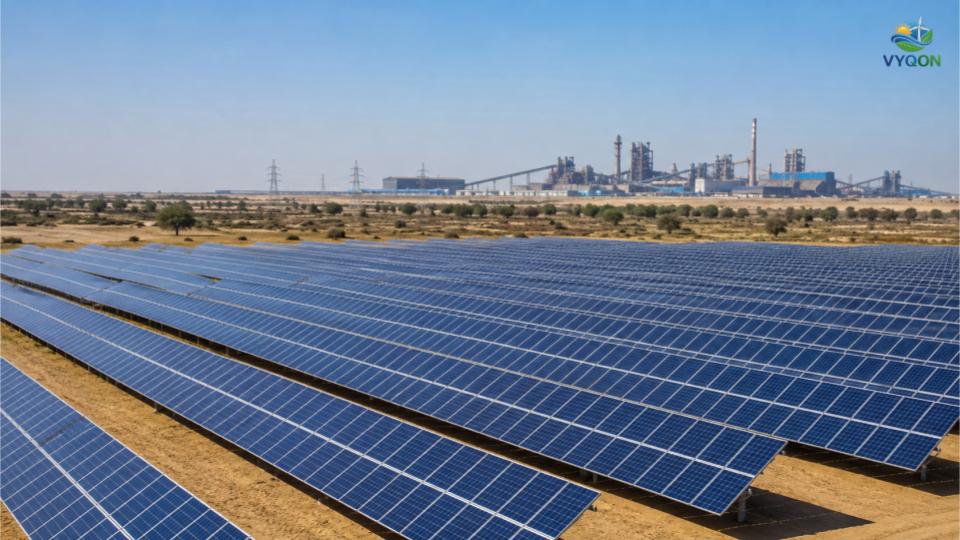
A new captive solar asset begins operation in Bikaner
Tata Power Renewable Energy Limited has commissioned a 72.5 MW captive solar project at Kalasar in Bikaner, Rajasthan, for Tata Steel Limited. Announced on 27 August 2026, the project has been developed through TP Vardhman Surya Limited, a subsidiary of Tata Power Renewable Energy. Electricity from the plant will support Tata Steel’s industrial operations and wider decarbonisation programme.
The development is important because it represents operating capacity rather than a proposal, tender result or early-stage investment plan. Commissioning means the project has moved through construction and testing into the stage where it can begin supplying electricity under its commercial arrangement. For India’s solar market, this is another example of a large industrial consumer using a dedicated renewable asset to reduce the carbon intensity of its electricity consumption.
What the 72.5 MW project is expected to deliver
According to Tata Power’s official release, the ground-mounted plant is expected to generate 166 million units of green electricity each year. The company estimates that this output will offset approximately 118,856 tonnes of carbon emissions annually. These are forward-looking operating estimates, so actual yearly performance will depend on solar irradiation, equipment availability, grid conditions, maintenance and plant losses.
The reported annual generation implies that the asset is designed for a substantial level of utilisation for a solar project. Its contribution should be assessed over time using metered generation, plant availability and the amount of electricity Tata Steel is able to consume under the captive arrangement. The project uses 171,360 photovoltaic modules, giving operators a large equipment base to monitor through string-level data, inverter performance, thermography, cleaning schedules and preventive maintenance.
Why captive solar matters for industrial decarbonisation
A captive renewable project is developed primarily to serve the electricity needs of an identified consumer rather than selling all of its output as generic merchant power. This structure can give an industrial buyer clearer visibility over the source of its electricity and the long-term economics of renewable procurement. For the developer, an established consumer can provide a dependable commercial foundation for financing and operating the asset.
Steel production is energy intensive, and electricity-related emissions form an important part of a producer’s decarbonisation challenge. Solar power can reduce dependence on conventional grid electricity during daylight hours and improve the renewable share of industrial consumption. However, a solar plant alone does not provide constant supply through the night or during low-generation periods. Tata Steel will still need grid power, flexible generation, storage or other procurement arrangements to manage its complete load profile. The 72.5 MW project should therefore be viewed as a practical component of a broader decarbonisation strategy rather than a complete solution by itself.
Domestic modules connect manufacturing with deployment
Tata Power states that all 171,360 modules deployed at the project were manufactured by TP Solar Limited. This detail links the commissioning milestone with India’s expanding domestic solar-manufacturing base. Local module production can shorten logistics chains, improve coordination between the factory and project team, and create a clearer route for quality documentation, warranty administration and technical support.
The disclosure is also relevant to project traceability. Developers and industrial consumers increasingly need accurate records covering module model numbers, batch information, certifications, bills of material and performance warranties. These records support commissioning tests and later investigations if degradation or equipment failures occur. The official statement confirms where the modules were manufactured, but readers should not infer the origin of every cell, wafer or raw material unless separate documentation establishes it. Clear distinctions between module assembly and complete upstream localisation are important in solar-sector reporting.
Operating a large solar plant in Rajasthan
Bikaner is one of India’s major utility-scale solar regions because of its strong solar resource and established renewable-energy ecosystem. At the same time, desert conditions create operational demands. Dust and soiling can reduce output, high temperatures can affect module efficiency, and wind can influence both structural loading and cleaning requirements. The plant’s long-term performance will depend on effective operations and maintenance rather than commissioning alone.
The operator will need to balance cleaning frequency, water use, worker safety and energy recovery. Inverter availability, transformer condition, vegetation control, module hot spots and transmission outages will also affect delivered generation. Digital monitoring can identify underperforming strings or unusual temperature patterns, while periodic field inspections can confirm whether electrical data reflects a physical defect. The first full year of operation will provide a more reliable performance baseline across seasonal conditions.
What the project signals for Tata Power and the C&I market
With the addition of the Kalasar project, Tata Power Renewable Energy reports total renewable utility capacity of 12.3 GW. Around 7 GW is operational, comprising 5.7 GW of solar and 1.3 GW of wind, while approximately 5.3 GW remains under implementation. The company says the development pipeline includes 2.2 GW of solar and 3.1 GW of wind expected to be commissioned in phases over the next six to 24 months.
For India’s commercial and industrial renewable market, the project demonstrates how large consumers can translate sustainability targets into physical assets and measurable electricity output. Demand from steel, data centres, automobiles, chemicals and other industries can create an additional growth channel beside utility procurement. Developers capable of combining land, grid connectivity, domestic equipment, financing and a credible industrial offtaker will be well placed to serve this market. For manufacturers, captive projects create demand for modules, inverters, transformers, monitoring systems and long-term service support.
Conclusion
The commissioning of Tata Power Renewable Energy’s 72.5 MW captive solar project is a concrete addition to India’s operating solar fleet. Its value lies not only in the announced capacity but also in the connection between domestic module manufacturing, a dedicated industrial consumer and measurable annual generation. The next indicators to watch are actual energy output, availability, maintenance performance and the contribution the plant makes to Tata Steel’s renewable electricity use. If the asset performs close to its design expectations, it can provide another practical model for industrial decarbonisation through captive solar in India.
Original documents and references
Source 1: Official Tata Power media release
Source details: The primary company announcement confirms the commissioning date, 72.5 MW capacity, Kalasar location, Tata Steel captive arrangement, estimated annual generation, emissions offset and number of TP Solar modules.
Source 2: PV Magazine India report
Source details: This independent solar-industry report summarises the commissioned capacity, captive use by Tata Steel, annual output estimate, domestic module count and TPREL portfolio figures.
Direct page link: https://www.pv-magazine-india.com/2026/08/27/tata-power-renewables-72-5-mw-solar-project-tata-steel/
Source 3: Economic Times report
Source details: The report independently covers the Bikaner commissioning and provides additional context on TPREL’s operational solar and wind capacity and its projects under implementation.
Direct page link: https://economictimes.indiatimes.com/industry/renewables/tata-power-renewable-energy-commissions-72-5-mw-solar-project-in-rajasthan/articleshow/133563585.cms
Leave a Comment