Telangana is increasingly incorporating Battery Energy Storage Systems (BESS) into its power-sector planning as the state seeks to manage renewable-energy generation, electricity demand and grid requirements. Official proceedings of the Telangana State Electricity Regulatory Commission (TGERC) and initiatives by the Telangana Renewable Energy Development Corporation Limited (TGREDCO) show that solar-plus-storage is being considered at both utility and distributed levels.
1,500 MWh BESS Procurement Under Regulatory Proceedings
A major development in Telangana’s storage sector is the proposed procurement of 1,500 MWh through a Battery Energy Storage System by Telangana Power Generation Corporation Limited (TGGENCO).
Official submissions before TGERC state that Telangana’s distribution companies sought the Commission’s consent for procurement of 1,500 MWh through BESS to be established by TGGENCO. The matter has been taken up under TGERC’s regulatory proceedings for approval of the procurement and associated tariff.
The official proceedings also record the proposed adoption of the tariff discovered through a competitive bidding process for 1,500 MWh through BESS by TGGENCO for supply to Telangana’s DISCOMs. A June 2026 filing by TGDISCOMs and TGGENCO was submitted to the Commission as part of the relevant proceedings.
The proposed BESS is being considered in the context of Telangana’s growing electricity requirements and increasing renewable-energy generation. The regulatory process represents a significant step in incorporating large-scale battery storage into the state’s electricity procurement framework.
BESS for Renewable-Energy Integration
The official regulatory filings highlight the changing operating requirements of Telangana’s power system as renewable generation expands.
Solar generation is concentrated during daylight hours, while electricity demand can remain significant during periods when solar generation is lower. The regulatory proceedings consider BESS as a resource for managing this difference between renewable-energy generation and electricity demand.
TGGENCO’s submission to TGERC discusses the proposed 1,500 MWh BESS in the context of meeting the state’s power requirements. The filing also seeks approval for procurement of the storage capacity and associated tariff arrangements.
The consideration of BESS within electricity procurement indicates that storage is being viewed as a power-system resource rather than solely as a backup technology. It can support the integration of renewable generation by providing greater flexibility in when stored electricity can be supplied to the system.
Framework for the 1,500 MWh Storage Requirement
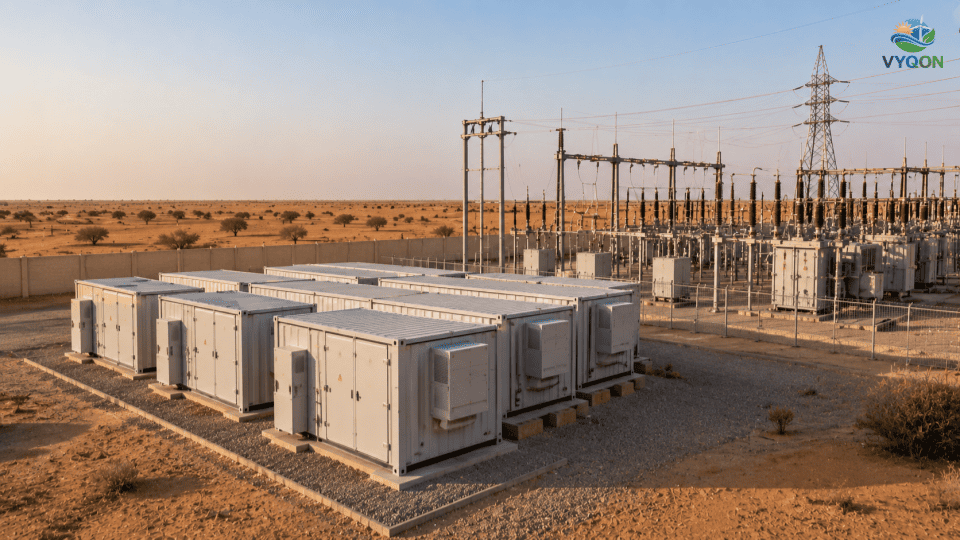
Official TGERC filings also refer to Telangana’s allocation of 1,500 MWh of standalone BESS capacity. One submission states that Telangana was permitted to establish the 1,500 MWh standalone BESS project at available lands associated with TGTRANSCO substations, including Maheshwaram and other locations.
The regulatory documents form part of the process for determining the procurement and tariff arrangements associated with the storage capacity. The proposed project therefore provides a utility-scale framework through which battery storage can be incorporated into Telangana’s electricity system.
The proceedings also demonstrate the role of state electricity regulators in evaluating storage procurement, tariff arrangements and the integration of BESS into the state’s future power requirements.
TGREDCO’s Solar-Plus-BESS Initiative
Telangana’s storage development is not limited to utility-scale procurement.
TGREDCO issued an Expression of Interest for the design, supply, installation, commissioning and five years of operation and maintenance of a 100 kW Solar PV system with a 100 kW/400 kWh BESS at Cheekupally Village, Wazeedu Mandal, Mulugu District.
The original EOI was dated August 1, 2025, with the project subsequently listed by TGREDCO during August 2025. The tender specified a 100 kW solar PV system paired with a 100 kW/400 kWh battery energy storage system and included five years of operation and maintenance.
According to the official EOI, Cheekupally is a remote village experiencing frequent power outages, low-voltage conditions and unreliable electricity supply. TGREDCO proposed the solar-plus-BESS system with the objective of providing round-the-clock electricity supply, particularly during grid outages, while creating a model for rural energy resilience.
The procurement structure included the BESS with its power conversion system and battery management system, electrical integration, SCADA/EMS requirements and comprehensive five-year O&M.
The initiative demonstrates how solar generation and battery storage can be combined at a distributed level to address local electricity requirements.
From Solar Generation to Solar-Plus-Storage
The two initiatives represent different applications of storage within Telangana’s power sector.
At the utility scale, the proposed 1,500 MWh BESS procurement by TGGENCO is being examined through the state’s regulatory framework. At the distributed level, TGREDCO’s 100 kW solar PV plus 100 kW/400 kWh BESS project at Cheekupally demonstrates the application of storage alongside solar generation.
Together, these developments show that BESS is being considered across different scales and applications. The regulatory proceedings place storage within formal electricity procurement, while the TGREDCO initiative demonstrates its potential use alongside distributed renewable generation.
The proposed tariff adoption for 1,500 MWh through BESS further indicates that battery storage is becoming part of Telangana’s broader power-sector planning rather than remaining limited to individual renewable-energy projects.
Telangana’s Storage-Led Renewable-Energy Outlook
Telangana’s official BESS proceedings and TGREDCO’s solar-plus-storage initiative show that energy storage is gaining a defined role in the state’s renewable-energy development.
The 1,500 MWh BESS procurement under TGERC proceedings provides the utility-scale component, while the 100 kW/400 kWh Cheekupally solar-plus-BESS initiative provides an example at the distributed level.
As renewable generation expands, the ability to store electricity and make it available according to system requirements becomes increasingly important. Telangana’s current regulatory and procurement activities indicate that BESS is emerging as one of the mechanisms being considered to provide this flexibility.
The ongoing TGERC proceedings will determine how the proposed large-scale storage capacity is incorporated into electricity procurement, while initiatives such as Cheekupally demonstrate the application of solar-plus-storage at the local level.
These developments mark an important stage in Telangana’s renewable-energy transition, with solar generation increasingly being considered alongside energy storage as part of a more flexible electricity system.
Official references:
- Telangana State Electricity Regulatory Commission (TGERC) — TGDISCOMs’ replies regarding 1,500 MWh BESS Official TGERC filing
- TGERC — Submission on BESS proposed by TGGENCO Official TGGENCO BESS submission
- TGERC — Public Notice regarding 1,500 MWh BESS in Telangana Official TGERC public notice
- TGREDCO — Official tender/EOI listing for 100 kW Solar PV + 100 kW/400 kWh BESS at CheekupallyOfficial TGREDCO website
Leave a Comment