
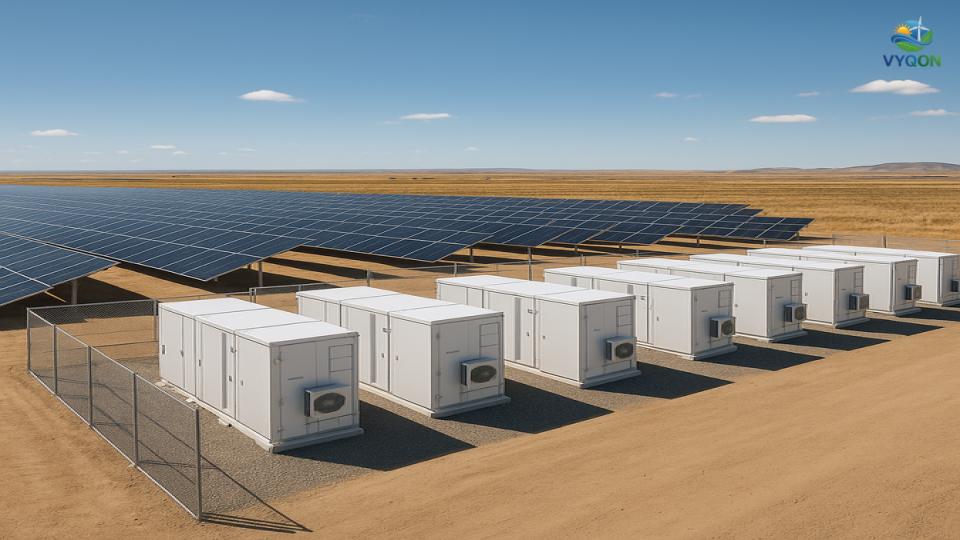
A major financing milestone for dispatchable renewable power
ACME Solar Holdings has secured Rs 1,571 crore in long-term project financing from India Infrastructure Finance Company Limited for the construction and development of a 300 MW assured peak-power project in Rajasthan. The project is being developed through ACME Renewtech Sixth and will combine solar generation with a 1,350 MWh battery energy storage system. According to the company announcement, IIFCL will act as the sole lender and the financing will carry a repayment tenor of 19 years. The transaction is also described as IIFCL’s first sole greenfield financing for an ACME Solar project.
The financing is significant because it is tied to a renewable project designed to supply electricity during specified peak periods rather than simply producing power whenever sunlight is available. Conventional solar plants remain valuable sources of low-carbon electricity, but their production profile is concentrated during daylight hours. By adding large-scale storage, the project can charge batteries when solar generation is available and discharge electricity when demand is high or solar output has declined. This changes solar from a variable resource into a more controllable part of the power system.
Project structure and commercial foundation
The 300 MW project has a 25-year Power Purchase Agreement with Solar Energy Corporation of India Limited at a tariff of Rs 6.28 per unit. ACME Solar has placed the total project capital expenditure at Rs 2,123 crore. The company has stated that grid connectivity is already operational, most of the required land has been secured, and the pooling substation and dedicated transmission line are at advanced stages of development. These factors are important because land, evacuation infrastructure and grid connectivity are frequently among the most difficult elements of utility-scale renewable project execution.
The 1,350 MWh storage component is particularly notable. Storage capacity measured in megawatt-hours indicates how much energy the system can hold, while the 300 MW project rating describes the contracted power capacity. The final operating strategy will depend on the PPA and project design, but the stated storage scale shows that this is not a small balancing system attached to a solar plant. It is a central part of the project’s ability to meet assured peak-supply obligations.
Why lenders are becoming more important to solar-plus-storage
Large battery projects require substantial upfront capital in addition to the cost of solar modules, inverters, land, transmission assets and civil works. Long-tenor financing can better match the operating life and contracted revenue period of such infrastructure. A 19-year repayment period, supported by a 25-year PPA, gives the project a long commercial horizon over which costs and revenues can be managed.
For India’s energy transition, lender participation is as important as technology availability. Solar modules and lithium-ion batteries can be procured, but projects will not reach construction without bankable contracts and financing structures that lenders consider dependable. IIFCL’s role as sole lender suggests that public infrastructure-finance institutions are willing to evaluate integrated renewable-and-storage assets as mainstream infrastructure rather than treating them only as experimental projects.
Financial scale and risk allocation
The disclosed debt facility represents a substantial share of the project’s stated capital cost, but financing alone does not remove execution risk. The developer must manage equipment procurement, construction schedules, interest during construction, battery warranties, performance guarantees and the possibility that storage augmentation will be required later in the operating life. The lender will therefore rely on technical due diligence, project contracts, insurance and security arrangements in addition to the existence of a PPA.
The way these risks are allocated can influence future solar-plus-storage tariffs. If warranties, degradation assumptions and replacement obligations are clear, lenders may become more comfortable and financing could become more competitive. If early projects experience unexpected performance or cost problems, future financing may remain conservative. The Rajasthan project will therefore contribute operational evidence as well as electricity.
What the project could change for the grid
India’s rapid solar expansion creates a growing requirement for flexibility. During high-solar hours, generation can rise quickly; after sunset, the system must replace that output while evening demand may remain strong. Storage helps move part of the daytime solar surplus into the evening peak. It can also support more accurate scheduling and reduce dependence on immediately ramping conventional generation whenever renewable output changes.
The project does not eliminate the need for transmission expansion, demand forecasting or other flexible resources. Battery performance, degradation, augmentation requirements and charging strategy will influence its long-term economics. However, the combination of a long-term PPA, grid connection and dedicated storage provides a stronger foundation for dispatchable renewable supply than a solar-only configuration.
Implications for developers and the Indian market
For renewable developers, the financing provides a useful signal: projects that combine a clear offtake arrangement, adequate storage, land progress and evacuation readiness can attract large, long-duration debt facilities. For equipment suppliers, it strengthens the opportunity in utility-scale battery containers, power-conversion systems, energy-management software, fire protection, transformers and balance-of-system equipment. Rajasthan also reinforces its position as a centre for large renewable projects because of its solar resource, land availability and expanding transmission network.
The broader shift is from selling only low-cost renewable energy to selling renewable electricity with a defined delivery profile. That transition is essential if solar is to serve a larger share of India’s electricity demand without increasing operational stress on the grid.
Conclusion
ACME Solar’s Rs 1,571 crore financing is more than a funding announcement. It demonstrates how solar generation, battery storage, long-term procurement and infrastructure finance are beginning to work as one project model. If the 300 MW development reaches completion on schedule and performs as contracted, it will provide another commercial reference for assured peak renewable power in India. The next milestones to watch will be construction progress, completion of the transmission facilities, battery deployment and eventual commissioning under the SECI agreement.
SEO publishing details
| SEO title | ACME Solar Secures Rs 1,571 Crore for Rajasthan Solar-BESS Project |
| Meta description | ACME Solar has secured Rs 1,571 crore from IIFCL for a 300 MW assured peak-power project in Rajasthan with 1,350 MWh of battery storage. |
| Suggested URL slug | acme-solar-1571-crore-rajasthan-solar-bess-project |
| Focus keywords | ACME Solar, IIFCL funding, Rajasthan solar project, solar BESS India, assured peak power, SECI |
Original documents and references:
Source 1: Official ACME Solar press-release page
Source details: ACME Solar’s official newsroom is the primary company source for the financing announcement and related project updates, including the lender, repayment tenor, PPA, capital cost and storage configuration.
Direct page link: https://www.acmesolar.in/press-release
Source 2: SaurEnergy supporting report
Source details: This sector report explains the Rs 1,571 crore IIFCL financing for the 300 MW assured peak-power project and records the 1,350 MWh BESS, 19-year tenor and project execution status.
Direct page link: https://www.saurenergy.com/solar-energy-news/acme-solar-secures-rs-1571-cr-funding-for-300-mw-assured-peak-power-project-12442073
Source 3: Economic Times report
Source details: The Economic Times independently reports the funding announcement and identifies the Rajasthan project, developer entity, lender and assured peak-power purpose.
Direct page link: https://m.economictimes.com/industry/renewables/acme-solar-raises-rs-1571-crore-for-300-mw-rajasthan-power-project/articleshow/133577675.cms
Leave a Comment