
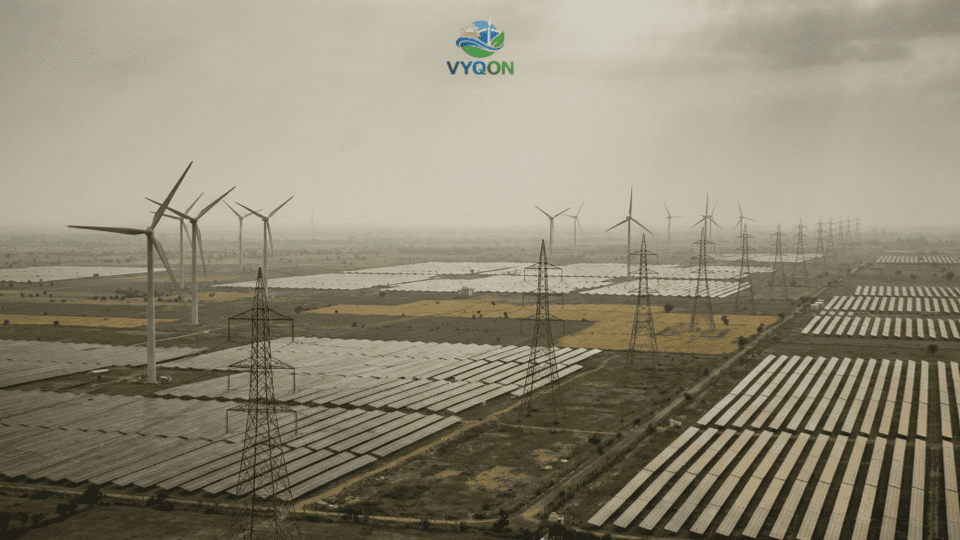
The Growing Pains of India’s Green Revolution
In the power sector, “grid curtailment” represents an involuntary reduction of electricity output from generators—often termed a “dispatch down”—to maintain system stability or address network congestion. While historically a technical balancing tool, curtailment has emerged as a formidable economic threat to India’s renewable energy (RE) developers. Unlike conventional thermal units, wind and solar projects have near-zero marginal costs; every curtailed unit represents a direct loss of revenue and a missed opportunity to displace carbon-intensive generation.
According to a recent warning from Crisil Ratings, India’s ambitious green transition is colliding with a structural infrastructure bottleneck. Over 35 GW of RE capacity faces significant curtailment risk in fiscal 2027. This crisis is primarily driven by a fundamental “gestational mismatch” in the sector: renewable energy projects typically reach commissioning within 1–2 years, whereas the high-voltage transmission infrastructure required to evacuate that power requires a 2–4 year deployment cycle. This two-year lag has left the grid struggling to absorb record capacity additions.
Network Access Explained: LT GNA vs. TGNA
The degree of financial and operational risk a project carries is dictated by its grid access framework. The transition from older connectivity regimes to General Network Access (GNA) has created two distinct tiers of evacuation priority.
- Long-term General Network Access (LT GNA): These projects are backed by dedicated transmission infrastructure and hold multi-year access rights. They enjoy priority scheduling, meaning grid operators must evacuate their power first during periods of congestion.
- Temporary General Network Access (TGNA): Defined as projects that are partially commissioned or lack dedicated infrastructure, TGNA offers only time-bound access. These projects are the first to be “dispatched down” if inter-state transmission system (ISTS) margins are exhausted by LT GNA projects.
Comparison of Grid Access Frameworks
| Feature | Long-term GNA (LT GNA) | Temporary GNA (TGNA) |
| Infrastructure | Dedicated transmission infrastructure | Partially commissioned or lacks dedicated infra |
| Access Duration | Multi-year, stable access | Time-bound access |
| Evacuation Priority | High; priority scheduling rights | Lower; evacuated only if ISTS margin is available |
| Risk of Curtailment | Low; secure scheduling | High; first to be curtailed during congestion |
By the Numbers: The Scale of the Crisis
The following data consolidates historical baselines and projected risks for fiscal 2027, illustrating a widening gap between generation and grid flexibility.
Projected Risk (Fiscal 2027)
- Total Capacity at Risk: An estimated 35–37 GW of RE capacity is exposed to curtailment risk.
- Capacity Breakdown: This includes ~20 GW of fresh ISTS capacity expected to be commissioned on TGNA and ~17 GW of existing TGNA capacity (as of February 2026).
- Regional Concentration: Rajasthan and Gujarat contribute 45% of India’s total RE. In these zones, 13–14 GW of TGNA capacity faces curtailment levels as high as 50%.
Historical Baseline and Systemic Inefficiency (2025)
- Concentrated Curtailment: Projects on TGNA accounted for approximately 80% of total curtailment between April and December 2025.
- The October Peak: Nearly 40% of the total 2025 curtailment occurred in October alone, as the grid could not ramp down coal plants fast enough to accommodate peak solar during a period of unseasonably low demand.
- Systemic Financial Loss: Per the Ember report, solar generators received Rs 5,750–Rs 6,900 crore ($63–76 million) in compensation for power that was paid for but never used—a massive notional loss to the system.
- Household Impact: The 2.3 TWh of solar power curtailed in 2025 was sufficient to power roughly 400,000 households for a full year.
Financial and Credit Implications
The “credit risk elevation” identified by Crisil Ratings suggests that for projects in their stabilization phase, prolonged curtailment can severely erode financial buffers.
Analyst Perspective: Systemic Credit Risks “An average curtailment of 50% over a 12-month period is a significant credit event,” notes Ankit Hakhu, Director at Crisil Ratings. Such levels can reduce the Debt Service Coverage Ratio (DSCR) by up to 10 basis points (bps) and the Equity Internal Rate of Return (IRR) by up to 150 bps. Beyond the financial metrics, this represents a broader failure to avoid approximately 2.11 million tonnes of CO2 emissions, further complicating the ESG profiles of major portfolios.
Ankush Tyagi, Associate Director at Crisil Ratings, identifies three mitigating factors for current credit quality:
- Loan Moratoriums: Many TGNA projects are recently commissioned and are currently in principal repayment moratoriums.
- Sponsor Support: Major developers maintain strong commitment as IRRs remains adequate despite temporary compression.
- Liquidity Buffers: Standard maintenance of Debt Service Reserve Accounts (DSRA) provides a cushion for near-term interest servicing.
Industry-Wide Solutions: Storage and Smart Access
The mismatch in development timelines and the technical inflexibility of the coal fleet have necessitated a multi-pronged regulatory and technological response.
The “Must-Run” Regulatory Friction
Under the Electricity (Promotion of Generation of Electricity from Must-Run Power Plant) Rules, 2021, RE projects are legally protected from curtailment for commercial reasons. However, grid reality often conflicts with policy; much of the 2.3 TWh curtailed in 2025 was driven by the “technical minimum” requirements of coal plants (typically 55% load), forcing operators to prioritize coal stability over green energy.
Battery Storage (BESS) and Pumped Storage (PSP)
To manage the Levelized Cost of Storage (LCoS), the government has proposed Viability Gap Funding (VGF) of up to 40% of capital costs for early BESS projects. This is a critical driver for meeting the National Electricity Plan’s target of 60 GW of storage by 2030, allowing surplus daytime solar to be time-shifted to evening peaks.
Hour-Split Access
This policy allows solar generators to utilize grid capacity during the day, while freeing that same transmission access for wind or storage projects during non-solar hours, effectively doubling the utility of existing ISTS lines.
Transmission Superhighways and GEC Delays
The Green Energy Corridor (GEC) remains the structural fix. However, Phase I—intended to evacuate 24 GW—continues to face “Right of Way” (RoW) and environmental delays. Specific constraints related to the Great Indian Bustard (GIB) habitat have slowed progress in Andhra Pradesh, Gujarat, and Maharashtra, contributing to the current 10-12 month commissioning lag.
Conclusion: A 12-Month Outlook
The 35 GW risk identified by Crisil is not a failure of renewable energy, but a symptom of the industry’s success outstripping its infrastructure. Analysts Manish Gupta and Anand Kulkarni emphasize that this is a transitional bottleneck. As the 10-12 month transmission lag resolves by the end of fiscal 2027, the majority of TGNA capacities are expected to convert to more secure LT GNA status.
However, the 2025-2027 window serves as a vital warning: to reach the national target of 500 GW of non-fossil capacity by 2030, India must harmonize its generation and transmission timelines. Achieving energy security requires more than just adding panels; it requires a future-ready transmission infrastructure and a grid flexible enough to prioritize green electrons over legacy coal baseload.
Leave a Comment