
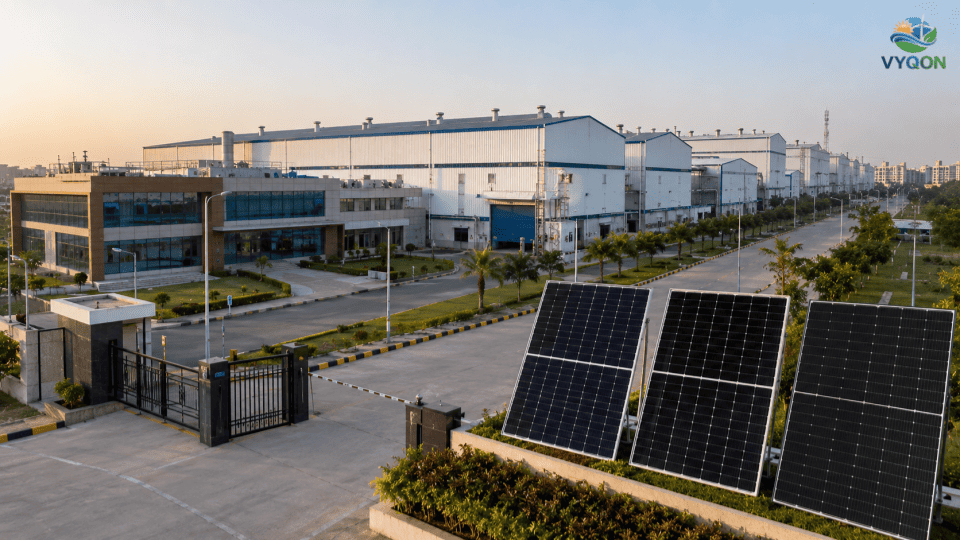
Waaree Energies is entering a “scorch ahead” phase, with financial projections for the fiscal year ending March 2026 (FY26E) indicating a significant leap in both scale and profitability. Total operating income is forecast to reach ₹1,94,190 million, representing a 39.7% year-over-year (YoY) increase. Notably, EBITDA growth is projected to outstrip revenue expansion at 59.6%, a trajectory underpinned by the commissioning of internal cell manufacturing and a strategic pivot toward margin-accretive domestic segments.
Financial Performance and Margin Trajectory
The following table details the projected financial metrics for FY26E based on Nuvama Research estimates. The data highlights a robust earnings catch-up as the company leverages backward integration to improve its profitability profile.
| Financial Metric (FY26E) | Value (₹ Millions) | YoY Growth (%) |
| Total Operating Income | 1,94,190 | 39.7% |
| EBITDA | 41,231 | 59.6% |
| EBITDA Margin | 21.2% | — |
| Adjusted Profit | 26,948 | 52.2% |
This growth is driven by significant operating leverage and a fundamental shift in product realisations. The transition from moderate-margin Approved List of Models and Manufacturers (ALMM) modules (USD 0.17/w) to high-margin Domestic Content Requirement (DCR) modules (USD 0.25/w) represents a USD 0.05/w improvement in EBITDA margin. Furthermore, while Nuvama has conservatively modeled an INR 8 billion EBITDA contribution from the new cell plant in FY26E, the facility has the mechanical potential to “fast-charge” EBITDA by up to INR 20 billion at optimal utilization.
Operational Milestones and Capacity Expansion
Waaree’s manufacturing footprint is scheduled for aggressive expansion in FY26, transitioning the firm toward an integrated production model.
- Projected Module Capacity: 17.9 GW.
- Projected Cell Capacity: 5.4 GW. This capacity is split between 1.4 GW of Mono PERC technology (commenced February 2025 and currently ramping up) and 4 GW of TOPCon technology, scheduled for commissioning by April–May 2025. The utility control room, a critical facility for managing these lines, is already commissioned.
- US Operational Update: A 1.6 GW module facility in Texas became operational in January 2025. While this establishes a critical export beachhead, the current “IRA Halt” under the new US administration introduces uncertainty. There is a specific risk that IRA benefits (USD 7 cents/w) may not be disbursed, potentially failing to offset higher US operating costs and leading to margin dilution at the consolidated level.
Forward-Looking Guidance and Diversification
The company maintains high revenue visibility through a substantial order book and a roadmap for vertical integration by FY27.
- Order Book Visibility: Currently stands at INR 500 billion (₹50,000 Cr), representing 26.5 GW of capacity.
- FY27 Integrated Target: 20.9 GW Module / 11.4 GW Cell / 6.0 GW Wafers.
- FY27 EBITDA Guidance: Projected to reach ₹57,627 million as backward integration to wafers and ingots further captures the profit pool.
- New Energy Strategic Foray: Diversification into adjacent green energy segments is well underway. This includes a 3.5 GWh Lithium-ion storage cell plant and a 300 MW Green Hydrogen electrolyser facility, both slated for Q2FY27. Additionally, a 3GW annual inverter capacity is expected by Q4FY26.
Business Strategy and Investment Rationale
Management is executing a transition from a standalone module manufacturer to an “integrated New Energy play.” This vertical and horizontal integration serves as a primary de-risking mechanism against commodity price fluctuations and the intensifying competitive landscape. By controlling the solar value chain—from wafers to BESS and Green Hydrogen—the company aims to maintain a long-term sustainable EBITDA margin of ~20%.
Analytically, the Indian solar sector is viewed as being on the cusp of a “mammoth J-curve breakout.” This early-stage, high-growth industry life cycle is frequently compared to the “Y2K-like IT opportunity” of the 1990s, where high initial valuation multiples are expected to be justified by subsequent earnings catch-up and rapid scale.
Sensitivity Analysis and Market Risks
While the growth trajectory is steep, financial performance remains subject to several critical sensitivities and market imponderables:
- Capacity Utilisation (CU) Sensitivity: Financial modeling indicates that every 5% change in CU impacts EBITDA by approximately 12%.
- Regulatory & Tariff Shifts: The potential phasing out of Basic Customs Duty (BCD) on modules (40%) and cells (25%) from FY28 onwards could compress realisations as domestic supply begins to crossover with demand.
- Technological Transition: The industry is moving rapidly from PERC to TOPCon. While the transition from TOPCon to Heterojunction Technology (HJT) is a future possibility, it would require significant capital expenditure to replace existing production lines.
- Supply Glut: There is a looming risk of solar module overcapacity by FY27E as multiple domestic players scale simultaneously, though cell supply is expected to remain in deficit until at least FY29E.
Leave a Comment