
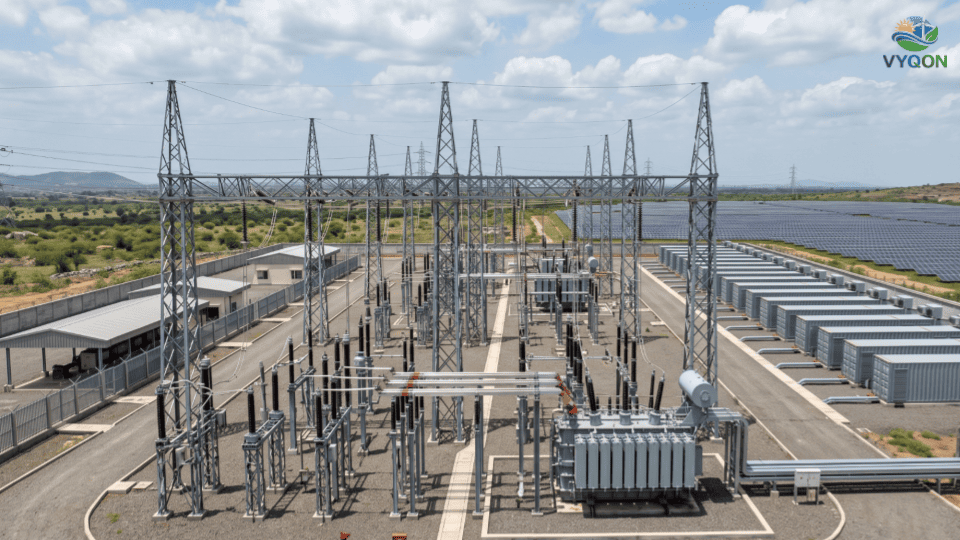
The Central Electricity Authority (CEA) has officially notified the “Technical Standards for Construction of Electrical Plants and Electric Lines Amendment Regulations, 2026,” a landmark regulatory update designed to modernize India’s grid for a 500 GW non-fossil fuel future. Set to become enforceable on April 1, 2027, the regulations introduce the comprehensive “Chapter VI,” which establishes rigorous technical, operational, and safety benchmarks for solar plants, wind farms, and Battery Energy Storage Systems (BESS). For developers and implementing agencies, this notification signals an immediate shift in procurement strategies; because projects commissioned by early 2027 must meet these standards, technical specifications must be integrated into current and upcoming tender documents to account for multi-year project gestation periods.
Regulatory Scope and Implementation Timeline
The 2026 Amendment integrates directly into the principal 2022 regulations, following an extensive consultation period that began in October 2025. The new framework specifically targets the rapidly evolving renewable energy asset classes.
- Asset Classes Under Chapter VI:
- Part A: Onshore Solar Power Plants
- Part A1: Floating Solar
- Part B: Onshore Wind
- Part B1: Offshore Wind
- Part C: Battery Energy Storage Systems (BESS)
- Effective Date: While the formal enforcement date is April 1, 2027, the CEA has signaled that implementing agencies should begin incorporating these standards into bid documents immediately to prevent a compliance gap during the 2027 transition.
Technical Mandates for Battery Energy Storage Systems (BESS)
Part C of the new regulations formalizes the transition of BESS from passive storage assets to active grid-balancing components.
- Core Capabilities: All BESS installations must support active and reactive power control, voltage regulation, frequency response, and fault/frequency ride-through. Systems must also provide Energy Management System (EMS) integration and support “night mode” operation.
- Large-Scale Requirements (≥50 MW): Projects at or above the 50 MW threshold face enhanced mandates to support grid resilience:
- Black Start Capability: The system must be capable of restarting the grid after a total shutdown.
- Grid-Forming Inverter Technology: Mandatory use of grid-forming inverters to ensure stable operations in weak grid environments.
- Automatic Generation Control (AGC): Full support for automated frequency management via remote dispatch.
- Performance Benchmarks: The CEA has established a specific degradation floor over the asset’s operational life:
| Operational Duration | Minimum Output Percentage |
| 5 Years | At least 90% of rated output |
| 10 Years | At least 80% of rated output |
| 15 Years | At least 70% of rated output |
- Efficiency Standards: BESS units must maintain a minimum round-trip AC-to-AC efficiency of 70% (inclusive of auxiliary consumption) and a Power Conversion System (PCS) efficiency of at least 95%. The minimum Depth of Discharge (DoD) is set at 80%.
Wind and Solar Construction Standards
The regulations emphasize physical durability and asset tracking to ensure a minimum 25-year design life for solar installations and optimized use of marine corridors for offshore wind.
- Onshore & Offshore Wind:
- Onshore: A mandatory 500-meter buffer is required between wind turbines and residential areas to mitigate noise impact.
- Offshore: Infrastructure must utilize standardized submarine cable corridors. Mandatory requirements include scour protection for foundations, J-tube or I-tube cable entry systems, and helipads and aircraft warning lights for offshore substations.
- Solar PV (Onshore & Floating):
- Mandatory Components: All modules must feature bypass diodes and be designed for 25 years of operation.
- Floating Solar: Components must be saltwater and UV-resistant. Systems require verified wind tunnel and buoyancy testing.
- Asset Tracking (RFID Tags): High-resolution lifecycle tracking is now mandatory via RFID.
- Solar Modules: Tags must include the manufacturer, serial number, and certification details.
- Battery Modules: Tags must specify cell type, manufacturer, country of origin, nameplate rating, serial number, and certification.
Automatic Weather Station (AWS) Specifications
In alignment with the July 2025 CEA Guidelines, AWS installation is now a critical compliance pillar, directly linked to minimizing financial penalties under the Deviation Settlement Mechanism (DSM).
- Applicability & Autonomy: Mandatory for RE plants of 10 MW or greater. The AWS battery system must be capable of running the station for 20 days without solar charging during persistent cloudy or foggy conditions.
- Physical Infrastructure: Sites must be 10m x 10m, herbicide-treated, and cleared of obstructions. The mast must be a 10m tiltable anodized aluminum alloy structure, supported by stainless steel guy wires and painted in a red-and-white scheme.
- Measurement Parameters:
- Wind Plants: Barometric pressure, air temperature, wind speed/direction, and relative humidity.
- Solar Plants: Global Horizontal Irradiance (GHI), Global Inclined Irradiance (GII), and Rainfall.
- Data Transmission: Weather data must be transmitted in .csv format via SFTP (Secure File Transfer Protocol) to central servers at IMD and NCMRWF at intervals ranging from 1 to 15 minutes. DAS systems must use AES 256-bit encryption and time synchronization via NAVIC.
Grid Monitoring, Data, and Cyber Security
The amendment significantly raises the bar for data resolution and cybersecurity logs to facilitate forensic post-event analysis.
- Phasor Measurement Units (PMU): Under the “Unified Philosophy for Placement of PMUs,” installations are mandatory for all transmission schemes for which bids were submitted on or after January 19, 2024.
- Data Retention & Sampling:
- Operational/Fault Data: High-resolution equipment must store 90 days of data.
- BESS Sampling Rate: Systems must record data at a high-intensity rate of 1,000 samples per second.
- Security Logs: Cyber security and DAS change logs must be retained for a minimum of 180 days.
- Cyber Security: All IP-based devices must comply with CEA Cyber Security Guidelines 2021. This includes mandatory firewalls with Deep Packet Inspection (DPI) and Intrusion Detection Systems (IDS).
Compliance and Enforcement
Strict adherence to these standards is now a prerequisite for grid connection in India.
- Enforcement Mechanism: Grid Controller of India and regional load dispatch centers will enforce these standards during the commissioning process. Implementing agencies must include these technical requirements in all future bid documents.
- Maintenance: The India Meteorological Department (IMD) will specify the necessary provisions for the testing, calibration, and maintenance of AWS sensors.
- Communication Protocols: Authorized data exchange is limited to IEC 60870-5-104, Modbus TCP, and IEC 61850 over Ethernet or fiber-optic links. Remote access is strictly controlled and permitted only for emergency troubleshooting under secure, monitored procedures.
Leave a Comment