
Regulatory Overview
In a significant pivot from the previous roadmap to phase out transmission concessions, the Central Electricity Regulatory Commission (CERC) has issued the draft Fifth Amendment to the CERC (Sharing of Inter-State Transmission Charges and Losses) Regulations, 2026. The proposal introduces a strategic “policy roll-back” necessitated by persistent grid-side infrastructure bottlenecks that have stalled several GWs of renewable capacity. By aligning the transmission charge regime with the newer General Network Access (GNA) framework, the regulator aims to provide a safety net for developers whose projects are generation-ready but remain stranded due to the non-availability of the Inter-State Transmission System (ISTS).
ISTS Waiver Relief for Transmission-Related Delays
The draft amendment addresses the disconnect between generation commissioning and grid readiness by allowing solar, wind, and hybrid projects to retain waiver benefits despite missing original timelines. Crucially, the specific waiver percentage—ranging from 100% to 25%—is determined by the project’s original firm start date of connectivity. This mechanism ensures that projects scheduled for earlier connectivity receive higher relief, provided they meet the following eligibility criteria:
- Contract Execution: Firm power procurement contracts or Power Sale Agreements (PSAs) must be executed by December 31, 2026.
- Minimum Tenure: Power procurement contracts must have a tenure of at least 7 years.
- Commissioning Alignment: Projects must achieve commercial operation within 2 months of their GNA becoming effective.
The Commission has established June 30, 2028, as the hard cutoff for firm connectivity; projects scheduled beyond this date will not qualify for the concessions. To streamline administration, the draft requires developers eligible under multiple waiver provisions to make a one-time, binding selection of their preferred mechanism within 15 days of achieving commercial operation.
Transmission Charge Framework for Integrated BESS
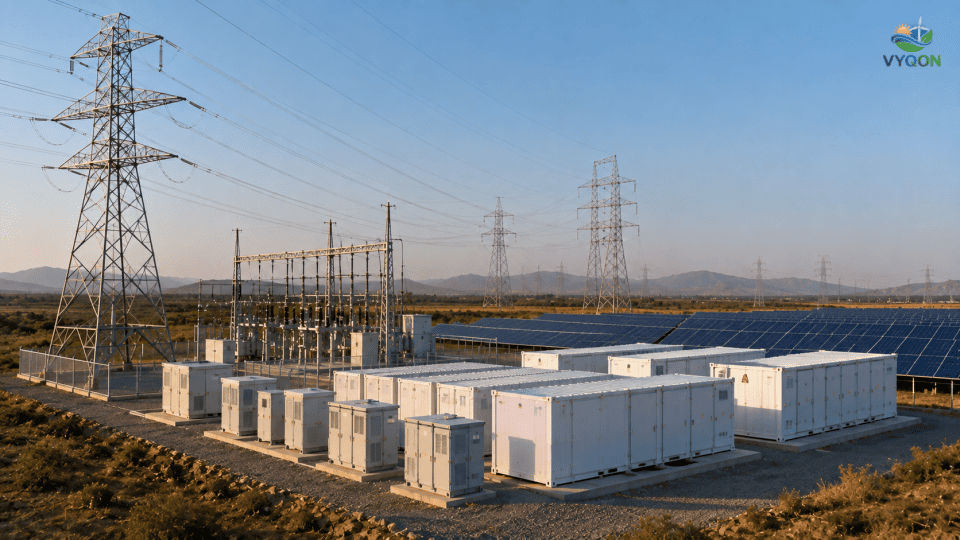
The CERC has proposed a 25-year ISTS transmission charge waiver for Battery Energy Storage Systems (BESS) to incentivize grid-scale storage. However, the proposal introduces a strict “linking rule” to prevent the indefinite extension of concessions. For a BESS to qualify, it must be integrated and scheduled as a single entity with a Renewable Energy Generating Station (REGS) or Renewable Hybrid Generating Station (RHGS).
The waiver duration is fundamentally anchored to the Commercial Operation Date (COD) of the original renewable generating station. If a BESS is added years later as a “source change” under GNA regulations, the 25-year waiver period does not reset; it continues to be counted from the REGS COD. The draft further distinguishes between charging cycles: BESS charging from co-located renewable sources will retain existing waivers, while charging from non-co-located sources via the ISTS may fall under a separate waiver category, subject to accounting procedures currently being developed by the National Load Despatch Centre (NLDC).
Market-Based Procurement and PSP Compliance
In a move to facilitate flexible procurement, the draft recognizes power obtained through the Green Day Ahead Market (G-DAM) toward the mandatory 51% annual renewable charging requirement for Energy Storage Systems (ESS). To maintain compliance, developers must provide source-wise certificates from power exchanges to verify the renewable origin of the energy.
The amendment also introduces a high-impact “contract-wise approach” for Pumped Storage Projects (PSPs). Currently, the regulatory framework often assesses renewable compliance at the project level, meaning a single non-compliant beneficiary could jeopardize the waiver for the entire facility. The new proposal protects compliant beneficiaries by allowing individual contracts that meet the 51% threshold to retain their ISTS waiver benefits independently of the project’s overall status.
Operational Updates: GNARE and Technical Harmonization
The draft Fifth Amendment seeks to harmonize technical definitions with the GNA regime, specifically updating Annexure III to include revised calculations for General Network Access for Renewable Energy (GNARE) and Temporary GNARE (T-GNARE). Key operational updates include:
- REIA Definition: The formal introduction of the Renewable Energy Implementing Agency (REIA) to align administrative roles with GNA standards.
- Dual Connectivity: Revised rules for entities with dual connectivity to both the State Transmission Utility (STU) and Central Transmission Utility (CTU) to prevent overlapping charge liabilities.
- Deviation Accounting: A new mandate for STUs to share access details with the NLDC and the Central Transmission Utility of India (CTUIL). This data is critical for refining transmission deviation calculations, ensuring that deviations are accounted for accurately across state and federal boundaries.
Stakeholder Consultation and Implementation Timeline
The CERC drafted these proposals following extensive representations regarding operational hurdles faced by the industry, notably from Grid-India and the India Energy Storage Alliance (IESA). The regulator has invited stakeholders, including the Ministry of New and Renewable Energy (MNRE), the Ministry of Power, Tata Power, and other developers, to submit comments and objections by August 31, 2026.
Upon final notification, the Implementing Agency must publish revised operational procedures within 60 days. This timeline underscores the urgency of providing a stable commercial architecture for the renewable-plus-storage sector as India accelerates its clean energy transition.
The provided sources identify the primary official documents issued by the Central Electricity Regulatory Commission (CERC) regarding the proposed changes to transmission charge waivers. These documents include the formal draft regulations and the supporting explanatory memorandum. You can find the citations and direct official hyperlinks below for your use:
Official CERC Regulatory Documents
- Draft Central Electricity Regulatory Commission (Sharing of Inter-State Transmission Charges and Losses) (Fifth Amendment) Regulations, 2026 Hyperlink: https://cercind.gov.in/2026/draft_reg/DN-SIST-5rd_Amend.pdf
- Explanatory Memorandum for the Draft Fifth Amendment to the Sharing of Inter-State Transmission Charges and Losses Regulations Hyperlink: https://cercind.gov.in/2026/draft_reg/EM_SIST-5rdAmend.pdf
The CERC has invited stakeholders to submit their comments, suggestions, or objections regarding these official drafts until August 31, 2026. The proposed amendments were developed following representations from various entities, including the Ministry of Power and the Ministry of New and Renewable Energy (MNRE). Under these regulations, the National Load Despatch Centre (NLDC) and the Central Transmission Utility of India (CTUIL) are tasked with developing the necessary operational procedures for implementation once finalised.
Leave a Comment