
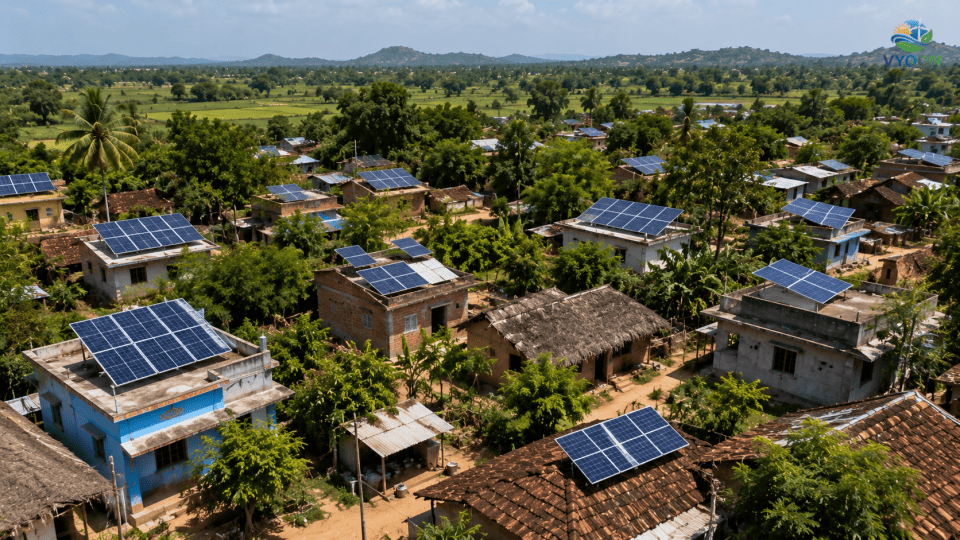
The Odisha Electricity Regulatory Commission (OERC) has notified the draft “Odisha Electricity Regulatory Commission (Grid Interactive Distributed Renewable Energy Sources) Regulations, 2026,” signaling a landmark structural pivot toward disciplined grid management. This proposed framework seeks to modernize the state’s distributed energy landscape by superseding the decade-old 2016 net metering rules. In a significant move reflecting the Commission’s responsiveness to industry feedback, the OERC specifically withdrew an earlier combined draft covering both Renewable Consumption Obligation (RCO) and Distributed Renewable Energy (DRE) after stakeholders argued that these distinct subjects required separate regulatory treatment.
This new framework is designed as a primary mechanism to help Odisha achieve its escalating green energy procurement targets, including a mandatory RCO trajectory that peaks at 43.33% by 2030. Stakeholders and the public have until August 31, 2026, to submit formal objections and suggestions.
Project Scope and Technical Specifications
The draft regulations apply to Distributed Renewable Energy Systems (DRES) with capacities up to 10 MW, connected to the grid at voltage levels of 33 kV and below. Notably, the Commission has opened the door for diverse business models, allowing eligible consumers to install these systems either independently or through Renewable Energy Service Companies (RESCOs).
Mandatory Battery Energy Storage System (BESS) Requirements
To “firm up” intermittent generation and ensure grid stability, the OERC has introduced mandatory BESS requirements for all DRES installations with capacities exceeding 10 kW. These systems must utilize hybrid or grid-forming inverters. The minimum storage capacity is linked to the following thresholds:
- Projects up to 100 kW: 10% minimum storage capacity.
- Projects >100 kW to 500 kW: 20% minimum storage capacity.
- Projects >500 kW to 10 MW: 30% minimum storage capacity.
To prevent the use of BESS for the arbitrage of non-renewable power, the regulations enforce a strict operational compliance rule: at least 85% of the energy stored must be derived from renewable sources. Furthermore, the Commission has provided operational guidance that BESS should preferably be charged during solar hours and discharged during peak demand periods to support the grid.
Transformer Saturation: A “Red-Flag” Constraint
For developers and EPC contractors, the draft introduces a critical technical boundary regarding project siting and bankability. The total aggregate DRES capacity connected to a single transformer is strictly capped at 90% of its rated capacity. This “hard limit” means high-penetration zones will reach capacity quickly, making early-stage feasibility studies essential for future project viability.
Proposed Metering Mechanisms and Consumer Eligibility
The OERC has proposed six distinct metering arrangements to provide maximum flexibility for residential, commercial, and industrial consumers.
| Metering Mechanism | Description / Objective |
| Net Metering | Energy exported is adjusted against imported energy; restricted to specific consumer categories. |
| Net Billing | Energy imported and exported are accounted for separately using different tariff rates. |
| Gross Metering | All generated energy is exported to the grid at a Commission-determined feed-in tariff. |
| Group Net Metering | Allows surplus energy from one service connection to be adjusted against other connections of the same consumer. |
| Virtual Net Metering | Enables shared renewable energy benefits across different locations or substations. |
| Behind-the-Meter (BTM) | Energy is consumed locally to support peak shaving without feeding surplus into the grid. |
Net Metering Eligibility
The Commission has narrowed the eligibility for Net Metering to specific “priority” sectors. Domestic consumers, government educational institutions, government hospitals, local authority buildings, and agricultural consumers are eligible for this mechanism for project capacities ranging from 1 kW to 500 kW.
The inclusion of Group and Virtual Net Metering is intended to facilitate shared benefits for consumers with limited onsite space, allowing them to participate in the energy transition via distant service connections or shared infrastructure.
Implementation, Financial Settlements, and Exemptions
Energy accounting and the settlement of surplus generation will be handled at the end of the designated settlement period. Any surplus energy will be compensated at feed-in tariffs determined by the Commission, with payments made through direct digital transfers to the consumers’ bank accounts.
Grid Charge Exemptions and Incentives
To catalyze adoption, the draft proposes generous exemptions from several grid-related charges for projects under Net Metering, Net Billing, Gross Metering, and BTM arrangements:
- Transmission charges.
- Wheeling charges.
- Cross-subsidy surcharges.
- Additional surcharges.
However, the Commission notes a critical exception: these charges may apply to Group and Virtual Net Metering projects where the participating service connections involve different substations or feeders. Additionally, the OERC retains the right to introduce Grid Support Charges or Parallel Operation Charges via separate future orders.
Compliance and Infrastructure Requirements for Licensees
Distribution licensees are tasked with streamlining the implementation process to remove administrative bottlenecks. Mandatory requirements include:
- The establishment of dedicated, user-friendly online portals for application processing and tracking.
- The publication of standardized operating procedures (SOPs) for interconnection.
- Modernization of billing infrastructure to facilitate new energy accounting and digital settlement methodologies within prescribed timelines.
Stakeholder Submission Details
The OERC invites all interested parties, including developers, EPC contractors, and consumer advocacy groups, to submit their comments and objections by the deadline of August 31, 2026.
Physical Submission Address: Odisha Electricity Regulatory Commission (OERC) Plot No. 4, Chunokoli, Shailashree Vihar, Chandrasekharpur, Bhubaneswar – 751021
Official Contact Email: orierc@gmail.com
Following the review of all stakeholder inputs, the Commission will finalize the regulations for official notification in the State Gazette.
Official Sources and References
- Odisha Electricity Regulatory Commission (OERC) Official website and contact portal for state energy regulations, draft notifications, and public notices. https://www.orierc.org/Contact_Us.aspx
- TP Western Odisha Distribution Limited (TPWODL) Official Application for Approval of Open Access Charges for FY 2025-26, submitted to the Odisha Electricity Regulatory Commission. Source Document: Open Access Charges Application for FY 2025-26 (Referenced via OERC Filing)
- Department of Energy, Government of Odisha Primary government department responsible for the Odisha Renewable Energy Policy (OREP) 2022 and the Pumped Storage Projects (PSP) Policy 2025. https://energy.odisha.gov.in/ (Referenced in State Cabinet Approvals)
- Central Electricity Authority (CEA), Ministry of Power Official reports on India’s installed capacity, generation mix, and the Resource Adequacy Plan for Odisha. https://cea.nic.in/ (Referenced in Technical Data)
- Ministry of New and Renewable Energy (MNRE), Government of India Official statistics for renewable energy potential and state-wise installed capacity. https://mnre.gov.in/ (Referenced in RE Statistics 2023-24)
Leave a Comment