
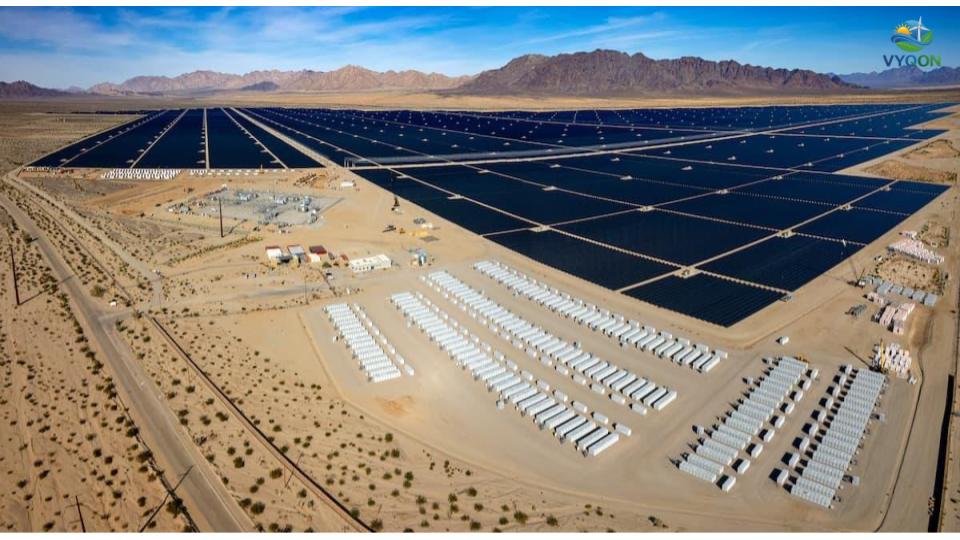
Tata Power Renewable Energy Limited (TPREL), a subsidiary of Tata Power, has successfully commissioned a major 190.5 MW solar Firm and Dispatchable Renewable Energy (FDRE) project in Rajasthan. Located at Kalasar in Bikaner, this project represents a critical step in providing reliable, round-the-clock green energy by pairing large-scale solar generation with advanced grid-support technologies and battery storage. The installation forms a part of SJVN’s FDRE Tranche-1 and will supply firm renewable power to multiple state distribution companies across India.
Key Project Highlights
- Capacity: The project features a 190.5 MW solar Firm and Dispatchable Renewable Energy (FDRE) installation.
- Energy Storage Component: The solar capacity is backed by an advanced 115 MWh Battery Energy Storage System (BESS) to ensure the dispatchability of power.
- Project Location: The installation is located at Kalasar, Bikaner, in the state of Rajasthan.
- Contractual Framework: The project was developed under SJVN’s FDRE Tranche-1 and is part of a larger 460 MW FDRE contract awarded to TPREL.
- Power Off-takers: Clean energy generated from the project will be supplied to the Haryana Power Purchase Centre (HPPC), Maharashtra State Electricity Distribution Company Limited (MSEDCL), and Noida Power Company Limited (NPCL).
- Tariff & Supply Details: TPREL entered into a 25-year Power Purchase Agreement (PPA) in 2024 to supply peak power at a tariff of ₹4.38/kWh. The agreement requires power delivery in two-hour slots twice daily, maintaining a monthly availability of at least 90% during peak hours.
Context and Breakdown: The FDRE Evolution The commissioning of this project highlights a significant maturation in India’s renewable energy strategy. Standard solar photovoltaic plants are highly intermittent, generating electricity only when the sun shines. An FDRE project fundamentally solves this by mandating that the renewable power is both firm (reliable) and dispatchable (controllable on demand). By integrating the 190.5 MW solar capacity with a 115 MWh battery energy storage system, TPREL can capture excess solar energy generated during midday and release it to the grid during high-demand peak hours. This capability transforms intermittent solar into a stable baseload-like energy source, meeting the strict supply requirements of the distribution companies.
Technical Analysis and Grid Impact Beyond basic battery storage, TPREL has deployed sophisticated electrical and grid-balancing technologies to ensure seamless grid integration. The project incorporates Harmonic Filter Banks and Static Var Generator systems. These technologies are crucial for managing power quality, filtering out electrical noise (harmonics) that can damage grid infrastructure, and providing dynamic reactive power compensation to maintain voltage stability.
By supplying power across state lines to utilities in Haryana, Maharashtra, and Uttar Pradesh (NPCL), the Kalasar facility actively supports the balancing of the interstate transmission system. Delivering power in dedicated two-hour blocks during peak demand allows the purchasing states to reduce their reliance on expensive, fossil-fuel-based peak power plants.
Implementation Details and Corporate Milestones The successful execution of this project required navigating significant logistical and supply chain hurdles. TPREL executed the project under highly compressed timelines despite global supply chain disruptions that impacted the availability of transmission line materials, module mounting structures, and other critical equipment. The company accelerated its engineering processes, completing the project’s switchyard in just three months and the Harmonic Filter Bank within a single month.
With the energization of the Kalasar plant, TPREL’s total renewable utility capacity has expanded to 12.4 GW. Currently, approximately 6.9 GW of this portfolio is fully operational, comprising 5.6 GW of solar assets and 1.3 GW of wind capacity. The remaining 5.5 GW is under various stages of implementation and is scheduled for commissioning over the next 24 months.
Reference
- Tata Power Renewable Energy Limited (TPREL) The wholly-owned subsidiary of Tata Power Company responsible for the engineering, procurement, construction, and operation of this utility-scale hybrid project
https://www.tatapower.com/ - SJVN Limited The central public sector enterprise that awarded the FDRE contract under its Tranche-1 bidding and oversees the long-term PPA execution for this capacity.
https://sjvn.nic.in/ - Ministry of New & Renewable Energy (MNRE) The central governing ministry that provides the policy frameworks and standard bidding guidelines for Firm and Dispatchable Renewable Energy (FDRE) projects across India.
https://mnre.gov.in/ - Mercom India A leading clean energy communications and research firm providing market intelligence, news, and analysis on India’s renewable energy sector.
Leave a Comment