
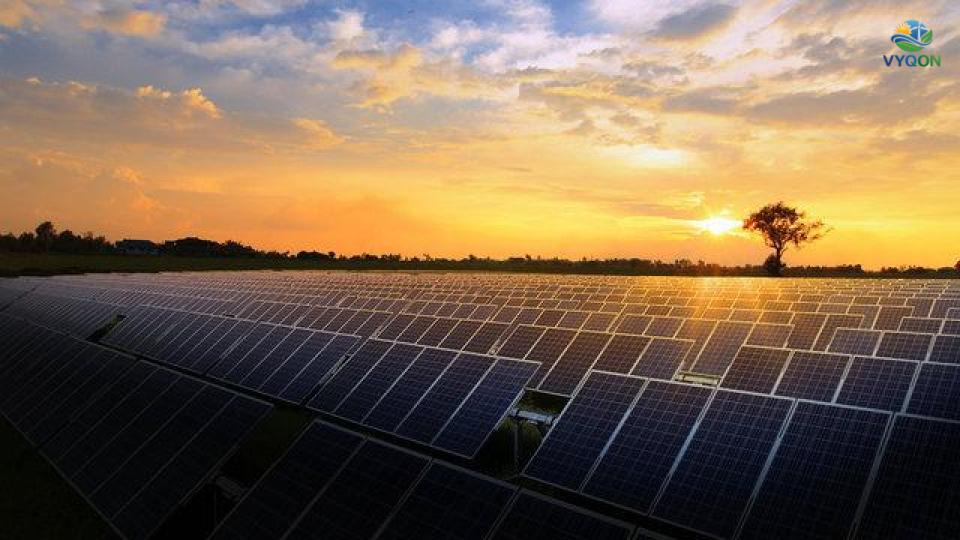
The push to solarize Maharashtra’s agricultural energy infrastructure continues to gain massive scale and unprecedented momentum. In one of the most significant decentralized solar procurement drives of the year, the Bhagwati Group of Companies has floated two extensive engineering, procurement, and construction (EPC) tenders for grid-interactive solar projects. This massive initiative targets a cumulative capacity of 2,249 MW (2.25 GW) and will be executed across a vast network of existing substations operated by the Maharashtra State Electricity Distribution Company Limited (MSEDCL).
Falling directly under the state’s flagship Mukhyamantri Saur Krishi Vahini Yojana 2.0 (MSKVY 2.0), this ambitious rollout is designed to fundamentally alter how power is delivered to the state’s farming communities. By moving generation directly to the rural distribution level, Maharashtra is prioritizing daytime, reliable electricity for farmers, while drastically cutting the utility’s long-term power purchase and transmission costs.
Key Project Highlights
- Total Capacity: The combined capacity of the two tenders stands at an impressive 2,249 MW (approx. 2.25 GW) of grid-interactive solar photovoltaic projects.
- Execution Scope: The successful bidders will be responsible for the complete turnkey delivery. This encompasses the end-to-end design, engineering, procurement, erection, construction, testing, and final commissioning of the solar arrays.
- Decentralized Locations: Unlike massive centralized solar parks, these projects will be highly decentralized, distributed across various existing MSEDCL substations to bypass high-voltage transmission constraints.
- Policy Framework: The capacity is being tendered under the Mukhyamantri Saur Krishi Vahini Yojana 2.0 (MSKVY 2.0). This is a dedicated state initiative expressly aimed at providing high-quality, reliable daytime power to agricultural consumers.
- Bid Submission Deadline: Interested EPC contractors and developers face a highly compressed turnaround window, with the final date to submit bids set for August 27, 2026.
Context and Breakdown: The Strategy Behind MSKVY 2.0 Maharashtra’s MSKVY 2.0 scheme represents a paradigm shift in rural electrification and is currently one of the most aggressive and highly structured decentralized solar programs in India. Historically, the agricultural sector in the state has been supplied with electricity primarily during nighttime hours. This was done to balance grid loads when industrial and urban demand dropped, but it led to immense physical and logistical hardships for farmers who had to irrigate fields in the dark.
MSKVY 2.0 aims to completely flip this dynamic by solarizing local 11 kV and 22 kV agricultural feeders. By strategically building these 2.25 GW of solar assets directly adjacent to or within close proximity of existing MSEDCL substations, the generated power is consumed locally by the farming communities. This localized generation-and-consumption model ensures that peak solar generation coincides perfectly with daytime agricultural demand.
Regulatory Tailwinds and Financial Viability The financial and regulatory groundwork for this massive 2.25 GW tender has already been laid. Just weeks prior, in early August 2026, the Maharashtra Electricity Regulatory Commission (MERC) cleared the path by approving the adoption of tariffs for 2,269 MW of distributed solar power under the same MSKVY 2.0 scheme. Through a highly competitive bidding process, tariffs were discovered ranging from a highly aggressive ₹2.24/kWh to a ceiling of ₹2.90/kWh, resulting in a weighted average tariff of ₹2.825/kWh.
This regulatory approval proves that developers can offer highly competitive rates for decentralized solar. Notably, MERC observed that these lower tariffs were achieved by delinking the procurement from the PM-KUSUM Component C Central Financial Assistance (CFA) and removing Domestic Content Requirement (DCR) mandates. This gave developers the flexibility to source the most cost-effective modules globally, bringing down the overall capital expenditure. The new 2,249 MW tender by the Bhagwati Group will operate in this heavily de-risked, newly optimized market environment.
Economic and Grid Impact From a macroeconomic and grid stability perspective, executing projects of this scale at the distribution level offers immense benefits. Because the 2.25 GW of power will be generated and consumed locally, it does not have to travel across the high-voltage interstate or intrastate transmission system. This allows MSEDCL to drastically reduce its technical transmission and distribution (T&D) losses.
Furthermore, replacing expensive, fossil-fuel-dominated power purchases with solar electricity locked in at sub-₹3.00/kWh tariffs will result in massive financial savings for the state distribution company. Additionally, the solar power procured from these substations will seamlessly qualify toward MSEDCL’s Distributed Renewable Energy Purchase Obligation (RPO) compliance, helping the state meet its statutory green energy targets.
Implementation Challenges and Developer Opportunities For EPC developers, the execution of 2,249 MW represents a massive market opportunity, albeit one fraught with unique logistical complexities. Unlike building a single 2 GW centralized solar park on contiguous land, this tender requires coordinating construction across hundreds of smaller, geographically dispersed substation sites.
Contractors will need to manage multiple supply chains, coordinate right-of-way access in rural areas, and synchronize grid-interconnection schedules across various local MSEDCL offices. The extremely tight August 27, 2026, bidding deadline indicates that the state is moving with urgency to issue Letters of Award and rapidly deploy these assets ahead of upcoming agricultural seasons.
Reference
- Maharashtra State Electricity Distribution Company Limited (MSEDCL) The primary state distribution utility that owns the 11 kV and 22 kV substations where these projects will be interconnected, and the ultimate off-taker of the solar power distributed to agricultural consumers.https://www.mahadiscom.in/
- Mukhyamantri Saur Krushi Vahini Yojana (MSKVY) Portal The dedicated state government platform outlining the guidelines, substation availability, and policy frameworks for the solarization of agricultural feeders under MSKVY 2.0.https://www.mskvynodal.com/
- Maharashtra Electricity Regulatory Commission (MERC) The state regulatory authority responsible for adopting tariffs and ensuring compliance with the state’s Renewable Purchase Obligations (RPO).https://merc.gov.in/
Leave a Comment