
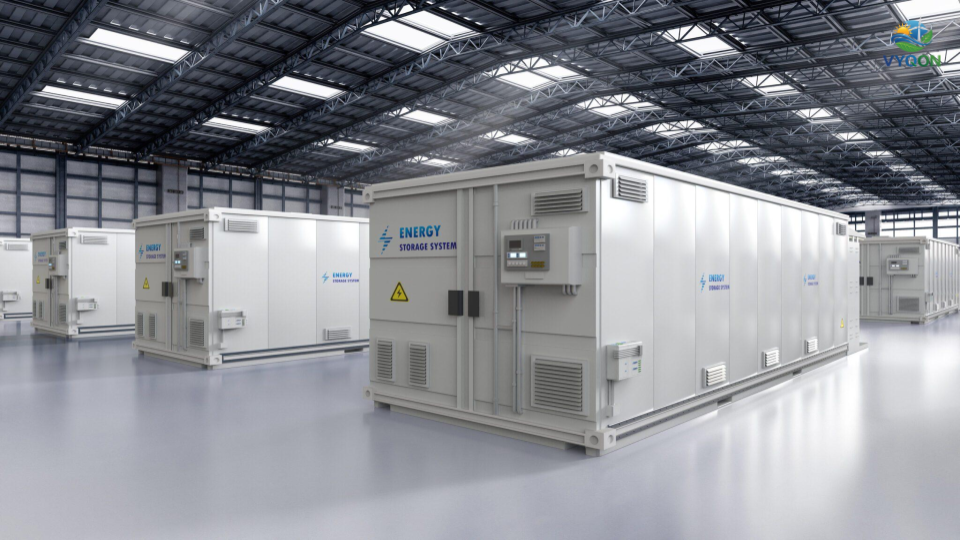
India’s battery energy storage system (BESS) market is moving rapidly from project development to large-scale deployment, but domestic battery-cell manufacturing is not yet expanding at the same pace. Official data from the Central Electricity Authority (CEA) shows a substantial pipeline of storage projects, while the Ministry of Heavy Industries (MHI) continues to identify technology, equipment, skilled manpower and upstream material availability as major constraints for domestic battery manufacturing.
As of June 30, 2026, CEA reported 18 BESS projects with a combined capacity of 2,927.85 MW/8,660.20 MWh in operation. Another 15,754.44 MW/42,530.32 MWh was under construction, while 11,747.30 MW/38,425.20 MWh had been awarded and 19,192.38 MW/67,574.82 MWh was in the tendering stage. Across these categories, the identified BESS pipeline stood at 49,621.97 MW/157,190.54 MWh across 171 projects.
The scale of planned deployment highlights the speed at which storage is becoming part of India’s power-sector infrastructure. CEA’s Long-Term National Resource Adequacy Plan for 2026–27 to 2035–36 separately recorded 10,658.94 MW/28,739.32 MWh of BESS under construction and 22,347.15 MW/69,836.70 MWh under tendering as of January 31, 2026.
This growth is being supported by an expanding policy framework. The Ministry of Power has introduced measures covering BESS procurement, viability-gap funding, transmission-charge waivers and the integration of storage with renewable projects. The Ministry of New and Renewable Energy’s official policy repository lists the ₹5,400-crore BESS viability-gap funding scheme, amendments to its implementation guidelines and other measures aimed at accelerating deployment.
However, the supply side presents a different picture.
India’s principal central manufacturing initiative for battery cells is the Production Linked Incentive (PLI) scheme for the National Programme on Advanced Chemistry Cell (ACC) Battery Storage). Approved in 2021 with an outlay of ₹18,100 crore, the programme seeks to establish 50 GWh of domestic ACC manufacturing capacity.
Progress under the scheme shows the gap between announced manufacturing ambitions and actual installed capacity. According to an MHI statement in Parliament on February 13, 2026, 40 GWh had been awarded to four beneficiary companies, but only 1 GWh had been installed as of December 31, 2025. The ministry reported that the beneficiaries had cumulatively invested ₹3,237 crore and generated 1,118 jobs by that date.
The figures also reveal that the challenge is not simply a shortage of planned factories. MHI has identified several operational and implementation-related barriers. These include limited availability of technology, a shortage of skilled manpower, dependence on imported critical equipment and machinery, and inadequate availability of upstream materials such as cathode active materials, anode active materials and electrolytes.
The raw-material challenge remains particularly important because cell manufacturing cannot become fully domestic merely by assembling cells locally. In a separate Rajya Sabha response, MHI stated that domestic demand for ACCs continues to be met largely through imports. At the same time, the government noted that the PLI programme has encouraged manufacturers to establish cell-production facilities and has stimulated announcements for component manufacturing and recycling capacity.
There are signs that the manufacturing base could expand considerably. MHI reported that, beyond companies participating in the PLI-ACC scheme, at least 10 manufacturers had announced approximately 178 GWh of cumulative battery-cell capacity in India over the following five years. The ministry also noted announcements for manufacturing cathode and anode materials, foils and other components, alongside recycling facilities.
Government policy is also moving upstream. The National Critical Mineral Mission, approved in January 2025, is intended to strengthen the critical-mineral value chain from exploration and mining through beneficiation, processing and recovery from end-of-life products. MHI has identified this initiative as part of the broader effort to build a more secure domestic battery ecosystem.
The immediate issue for India, therefore, is not a lack of demand for storage. The project pipeline demonstrates that demand is already emerging at utility scale. The more pressing question is whether domestic manufacturing capacity, technology, materials and skilled workforce can scale quickly enough to support that deployment.
The contrast is particularly clear in the latest official figures: 42.53 GWh of BESS capacity was already under construction by June 2026, while the government’s PLI-ACC programme had resulted in only 1 GWh of installed ACC cell capacity among its awarded beneficiaries as of December 2025. These figures are not directly comparable because BESS project capacity and ACC cell-manufacturing capacity represent different stages of the value chain, but together they illustrate the underlying supply-chain challenge.
For India, closing this gap will be important not only for reducing import dependence but also for strengthening the resilience and competitiveness of the rapidly expanding storage sector. The next phase of the BESS market will therefore depend on whether project deployment can be matched by a deeper domestic manufacturing ecosystem spanning cells, critical materials, components, equipment and recycling.
Official sources:
Central Electricity Authority — Status of BESS Projects as of June 30, 2026
Ministry of Heavy Industries — Rajya Sabha response on domestic battery manufacturing capacity, February 13, 2026
Ministry of Heavy Industries — Rajya Sabha response on domestic battery raw-material ecosystem, February 13, 2026
CEA — Long-Term National Resource Adequacy Plan 2026–27 to 2035–36
Leave a Comment