
On April 6, 2026, the Rajasthan High Court (Jodhpur Bench) delivered a reportable judgment in the matter of Mahanga Singh vs. Energy Department (D.B. Civil Writ Petition No. 1151/2023), quashing the retrospective withdrawal of fiscal incentives for solar power producers. The division bench, comprising Justice Arun Monga and Justice Sunil Beniwal, ruled that the State Government cannot divest developers of Electricity Duty (ED) exemptions if their projects were commissioned prior to the policy amendment of May 10, 2022. The ruling establishes that sovereign promises made to induce capital-intensive investments are binding under the principles of promissory estoppel and legitimate expectation.
Policy Context: The Rajasthan Solar Energy Policy 2019
The Rajasthan Solar Energy Policy 2019 was notified on December 14, 2019, with a strategic vision to achieve 30,000 MW of solar capacity by fiscal year 2024-25. To attract the high upfront capital required for such infrastructure, the policy provided a “concrete fiscal incentive” under Clause 16.4. This clause promised a seven-year exemption from Electricity Duty for power producers using solar energy for captive consumption within the state.
Unlike general policy aspirations, this was a specific and actionable representation designed to ensure the economic viability of projects characterized by long gestation periods. The court noted that these incentives were essential instruments for the State to meet its constitutional and international climate change commitments.
Chronology of the Dispute: From Incentive to Judicial Intervention
The legal dispute arose from a series of regulatory shifts that disrupted the financial assumptions of solar developers:
- December 14, 2019: Notification of the Rajasthan Solar Energy Policy 2019, guaranteeing the 7-year ED waiver.
- June 30, 2021: Rajasthan Discoms issued a letter asserting that ED was chargeable at ₹0.60 per unit, claiming that previous statutory exemptions had expired on March 31, 2020.
- September 13, 2021: The High Court issued an interim stay in a collateral petition filed by the Rajasthan Solar Association, barring Discoms from collecting the duty.
- May 10, 2022: The State issued a notification amending Clause 16.4. This amendment removed the automatic exemption, making it subject to separate government orders issued under the Rajasthan Electricity (Duty) Act, 1962.
- Post-May 2022: Discoms began issuing ED bills to developers who had already commissioned projects based on the 2019 promise.
The Legal Challenge: Petitioner Detriment and Vested Rights
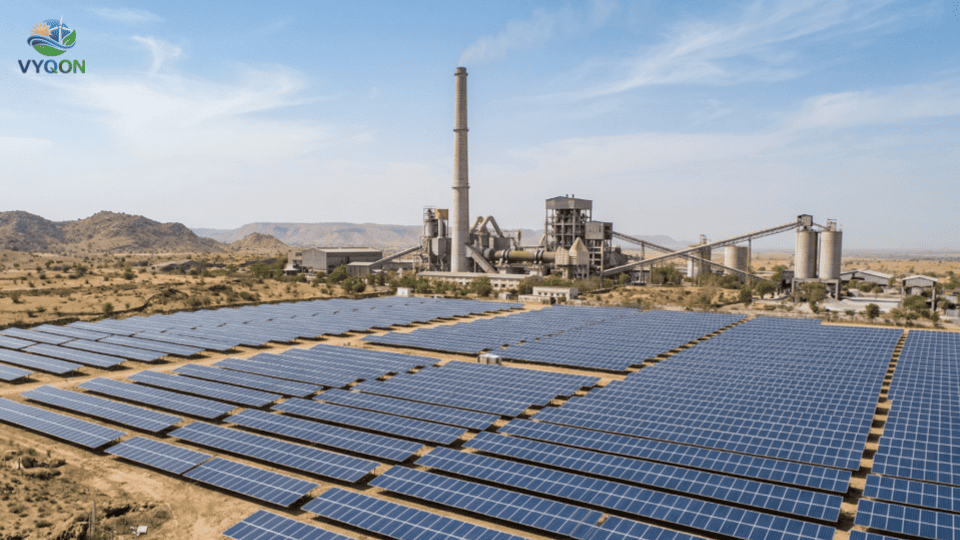
The lead petition was brought by UltraTech Cement Limited, which demonstrated significant financial reliance on the 2019 policy. The company invested approximately ₹89 crore in captive solar projects to power its manufacturing units:
- Aditya Cement Works: Invested ₹46.56 crore in an 8 MW plant, commissioned on May 7, 2022 (three days prior to the amendment).
- Kotputli Cement Works: Invested ₹42.54 crore in a project that was still under development at the time of the policy shift.
UltraTech argued that the abrupt withdrawal of the exemption disrupted the “financial equilibrium” of these projects. The petitioners contended that the State’s attempt to amend the policy while a judicial stay was active (September 2021) constituted an attempt to overreach judicial proceedings and violated the doctrine of legitimate expectation.
Key Court Findings and Ratio Decidendi
The Court’s reasoning centered on the integrity of governmental representations and the limits of executive power:
- Promissory Estoppel: The Court held that the Solar Policy 2019 was a clear and unequivocal representation that induced private parties to commit substantial capital. Under equitable principles, the State cannot resile from such a promise once the investor has altered their position to their detriment.
- Rejection of the Section 3(3) Defense: The State argued that under Section 3(3) of the Rajasthan Electricity (Duty) Act, 1962, an exemption is only valid if a formal statutory notification is issued. The Court rejected this, stating the State “cannot be permitted to rely upon its own failure to issue a notification as a defense to defeat a promise consciously made.”
- Article 14 and Discriminatory Treatment: The Court highlighted a “manifestly arbitrary” disparity between the solar and wind sectors. Under the Wind and Hybrid Energy Policy 2019 (Clause 34.3), wind projects received a blanket exemption without a sunset clause. Withdrawing the solar exemption while maintaining the wind exemption was found to be discriminatory and a violation of Article 14.
- Failure of Public Interest Defense: The State’s “financial constraint” argument was dismissed. The Court observed that the public interest actually favors maintaining incentives, as the State’s 30,000 MW target remains significantly unmet (only ~15,000 MW achieved).
Scope of the Ruling: Impacted Parties
The ruling provides specific protection based on the timing of project completion:
- Eligible Projects: Captive solar and rooftop systems commissioned prior to May 10, 2022. These projects (including UltraTech’s Aditya plant) are entitled to the full seven-year ED exemption from their date of commissioning.
- Ineligible Projects: Projects commissioned on or after the amendment date will be governed by the revised, non-automatic regime.
Directives to the State and Discoms
The Court disposed of the petitions with the following mandates:
- Verification of COD: Competent authorities must verify the exact Commercial Operation Date (COD) for every solar project claiming the benefit.
- Independent Orders: The State must pass reasoned, independent orders for each claim based on the verified COD.
- Restoration of Benefit: For all eligible projects operational before May 10, 2022, the 7-year ED exemption must be granted, and any impugned bills for these projects are effectively set aside.
While the petitions from industry associations were disposed of due to a lack of individual project data, the Court granted their members the liberty to submit separate representations for COD verification and subsequent relief.
Leave a Comment