
Executive Operational Summary
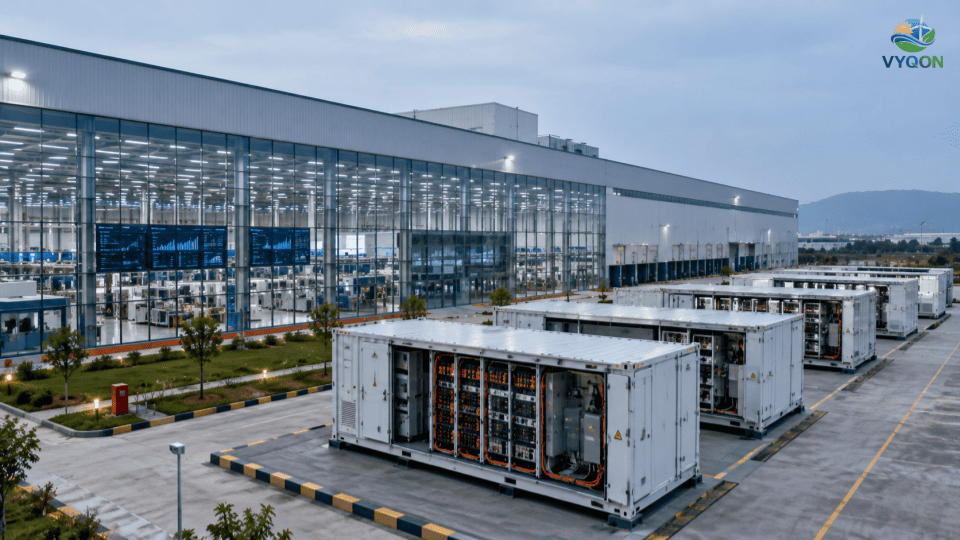
On July 13, 2026, AmpereHour Energy announced the commissioning of its advanced Battery Energy Storage System (BESS) manufacturing and integration facility in Pune, Maharashtra [2]. Located at IndoSpace Industrial Park Chakan III, the plant features a planned annual capacity of 5 GWh [1]. This operational launch marks a pivot from technology integration toward a full-stack manufacturing platform, a strategic move designed to de-risk the supply chain and capture higher margins within the “Make in India” ecosystem [1][2]. The facility, inaugurated on July 11, 2026, is intended to serve as a hub for both domestic grid stability requirements and the company’s expanding footprint in international markets including Oman, Nigeria, Belgium, and the UAE [2].
Manufacturing and Integration Capabilities
The Chakan facility focuses on the localized production of high-performance energy storage hardware tailored for utility-scale and Commercial and Industrial (C&I) applications. By internalizing the assembly process, AmpereHour Energy seeks to integrate deep engineering capabilities with real-world project data to maximize Round Trip Efficiency (RTE) and usable energy—critical performance indicators for modern storage assets [1][3].
The facility is optimized for the production of two primary “Make in India” hardware configurations:
- Cabinet-based Battery DC-AC Blocks
- Containerized Battery DC-AC Blocks
These systems utilize a hardware-agnostic architecture, allowing for the integration of diverse cell chemistries while maintaining a standardized, intelligent technology layer [1].
Software Integration and Digital Quality Control
To mitigate common industry failure points at the commissioning stage, the facility embeds proprietary software intelligence directly into the manufacturing line. This approach transitions the BESS from a passive hardware assembly into an “intelligent asset” capable of autonomous performance optimization [2].
ELINA Energy Management System (EMS) The ELINA EMS serves as the operational brain of each unit, managing renewable integration, grid flexibility, and peak load shifting. The software is specifically engineered to handle the high-velocity data streams required for grid ancillary services and long-term asset health monitoring [1][3].
AH-Suite™: Digital Factory Acceptance Testing (FAT) Quality control is governed by the AH-Suite™ platform, which replaces traditional manual logging with a 100% digital verification process. This system ensures that 100% of signals, cells, and modules are validated and traceable via a cloud-based dashboard before shipment [3].
| Feature | Traditional FAT | AH-Suite Digital FAT |
| Testing Scope | Random sampling (often ~10% of packs) | 100% digital verification of all components [3] |
| Data Access | Manual logs; paper or PDF reports | Live cloud dashboard for real-time remote sign-off [3] |
| Integration Testing | BMS/EMS often tested at site during commissioning | Tested at factory; pre-shipment validation of safety logic [3] |
| Traceability | Limited manual records | Full digital traceability with serial number logging [3] |
| Project Risk | High potential for “site-level surprises” and delays | Zero commissioning surprises via pre-validated hardware [3] |
Leadership Statements on Energy Resilience
Company leadership has framed the expansion as a necessity for modernizing global grid infrastructure through technology-led innovation.
Rahul Shelke, Co-founder and Managing Director of AmpereHour Energy, noted that energy storage has become the “backbone of the future grid.” He emphasized that the transition into manufacturing allows the company to build long-term energy resilience by applying system integration experience to create assets that are inherently safer and smarter in real-world operating environments [1].
Ayush Misra, Co-founder and CEO, stated that energy storage is no longer a matter of simple assembly but of engineering intelligent assets. He highlighted that AH-Suite™ embeds field learnings directly into the assembly line, ensuring every system delivers reliable performance throughout its lifecycle before it ever reaches the project site [2].
Operational Track Record and Financial Context
The manufacturing expansion follows a period of significant project scaling and capital infusion. AmpereHour Energy recently secured $5 million in funding from Avaana Capital and UC Impower to support manufacturing expansion and software R&D [2].
Key Project Milestones:
- Gujarat Standalone BESS: In partnership with IndiGrid and GUVNL, the company commissioned a 180 MW/360 MWh project. This represents India’s first transmission-connected, standalone utility-scale BESS and utilized advanced simulation studies to ensure peak electrical chain efficiency [2][3].
- New Delhi Utility Project: Implementation of a 20 MW/40 MWh standalone BESS at the Kilokari substation, providing grid support for over 12,000 consumers [3].
- Operational Scaling: The company aims to scale its operational capacity to 1 GWh within the next 18 months, supported by existing contracted capacity [2].
Facility Logistics and Socio-Economic Footprint
The facility is strategically located to capitalize on the industrial infrastructure of the Pune corridor:
- Exact Location: IndoSpace Industrial Park Chakan III B700-A, Plot No. D-223/4, Village Bhamboli, Chakan Industrial Area Phase II, Maharashtra [1].
By localizing high-capacity BESS production, the plant directly supports India’s target of achieving 500 GW of non-fossil fuel capacity by 2030, while simultaneously positioning “Make in India” technology for export to emerging energy markets in the Middle East and Africa [1][2].
Leave a Comment