
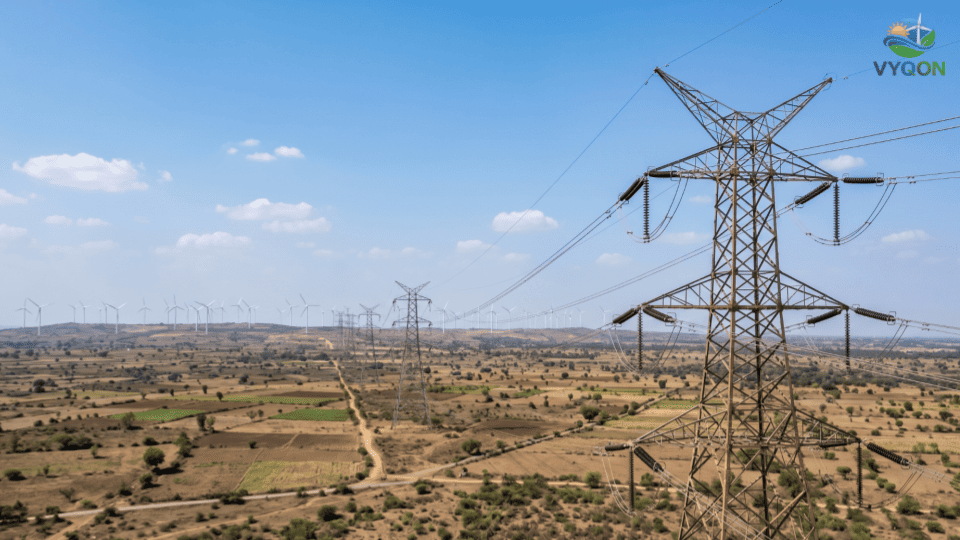
BENGALURU – Jyoti Structures Limited (JSL) announced the successful commissioning of the 400 kV Gadag–II Transmission Line in Karnataka on March 4, 2026. Executed for ReNew Power, the project serves as a nationally significant link within the Inter-State Transmission System (ISTS) designed to facilitate “Round-the-Clock” (RTC) renewable energy evacuation. The completion marks JSL’s second major infrastructure delivery within a two-week window, following the recent charging of the 400 kV Multi-Circuit Line-in-Line-Out (LILO) of the Pirana project for Torrent Power Grid Ltd.
Technical Specifications and Project Scope
The infrastructure utilizes high-performance conductor technology and substantial transformer capacity to integrate large-scale renewable generation into the national grid.
| Parameter | Specification |
| Voltage | 400 kV |
| Configuration | Double Circuit (D/C) |
| Length | Approximately 100 Circuit Kilometers (CKM) |
| Conductor Type | Twin High-Temperature Low-Sag (HTLS) |
| Interconnection Points | Gadag Pooling Station to Koppal Pooling Station |
| Transformer Capacity | 1500 MVA Inter-Connected Transformers (ICTs) at Gadag PS |
Stakeholder Involvement and Execution
The project is owned and operated by Gadag II-A Transmission Limited, a special purpose vehicle (SPV) under ReNew Transmission Ventures Private Limited. ReNew is a subsidiary of NASDAQ-listed ReNew Energy Global, one of India’s largest independent power producers.
As the turnkey EPC contractor, JSL managed the engineering, procurement, and construction phases. Rajesh Kumar Singh, CEO of Jyoti Structures Limited, noted that the commissioning resulted from sustained efforts by project teams to navigate complex field conditions. The successful execution follows the completion of the 240 CKM Pirana LILO project in Ahmedabad, marking a rapid execution phase for JSL’s transmission portfolio.
Operational Challenges and Environmental Context
The construction of the line, which involved the erection of 127 transmission towers, faced significant logistical and environmental hurdles in the Gadag and Koppal districts.
- Terrain and Soil: Work was conducted in difficult interior areas characterized by black cotton soil. These conditions required specialized engineering for tower foundations, including the use of innovative construction methodologies such as porta mats and dewatering pumps to stabilize work sites.
- Right-of-Way (RoW) Constraints: Execution was impacted by severe RoW challenges, specifically involving 29 tower location points that remained pending as of late 2024.
- Timeline Adjustments: These geographical and regulatory constraints led to a delay from the project’s original Scheduled Commercial Operation Date (SCOD) of May 2024, requiring the deployment of heavy-lift cranes and enhanced coordination with local authorities to reach completion.
Strategic Grid Impact and Renewable Integration
The Gadag–II line is a vital component of the 4.5 GW evacuation system for the Koppal Solar Energy Zone, specifically supporting 1,500 MW of renewable capacity. Its primary function is to enable the transmission of “Peak Power” and RTC renewable energy, ensuring a stable supply to the national grid.
The project was implemented under a Build, Own, Operate and Maintain (BOOM) model with a 35-year Transmission Service Agreement (TSA). Revenue for the SPV is secured through the Point of Connection (PoC) mechanism managed by the Central Transmission Utility of India Limited (CTUIL). Under this framework, the project receives annuity-based monthly charges, with financial incentives linked to maintaining line availability above a 98% threshold.
Leave a Comment