
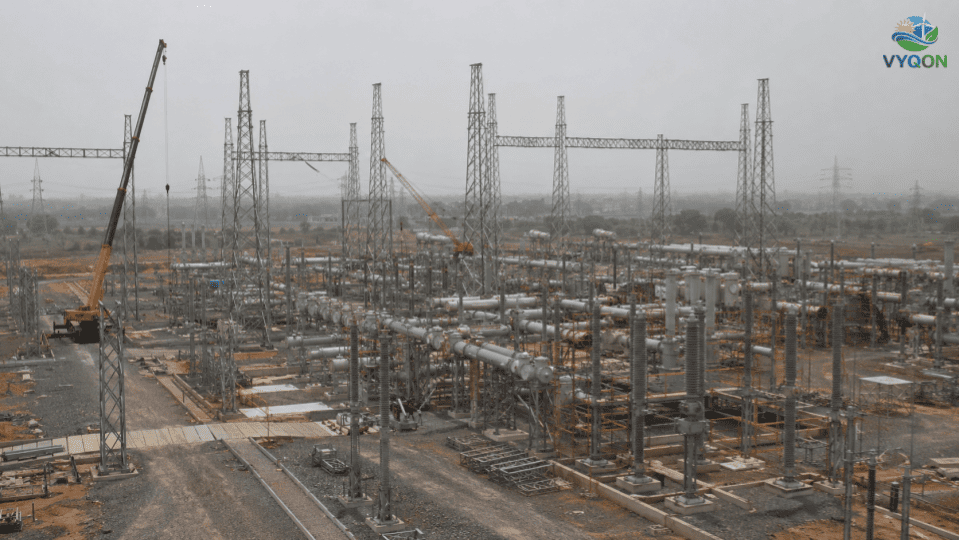
The Central Transmission Utility of India Limited (CTUIL) has formalised a Final Standard Operating Procedure (SOP) to adjudicate commercial relief for Transmission Service Providers (TSPs) navigating Force Majeure (FM) and Change in Law events. This regulatory milestone is a centerpiece of the 2021-22 power sector reforms, following the strategic separation of CTUIL from POWERGRID on April 1, 2021. By establishing an independent utility to oversee the national grid, the Ministry of Power has moved to eliminate historical conflicts of interest, ensuring a transparent, level playing field for both public and private developers.
Structural Framework: The Commercial Shift to BOOT
The Final SOP operationalizes the Revised Standard Bidding Documents (SBDs) issued by the Ministry of Power on August 6, 2021. This framework represents a sophisticated evolution in the commercial architecture of the Inter-State Transmission System (ISTS), most notably in the transition from the “Build Own Operate Maintain” (BOOM) model to the “Build Own Operate Transfer” (BOOT) model.
From a policy perspective, this shift is a deliberate attempt to align the transmission sector with mature infrastructure asset classes like highways and ports. By adopting the BOOT model, the government aims to de-risk projects for private developers and attract global institutional capital. This alignment reduces the “risk premium” previously demanded by investors, making transmission assets more comparable to other stable, long-term infrastructure plays and fostering a more competitive investment climate.
Adjudicating Commercial Relief: The FM Claims Process
To ensure financial discipline and project momentum, the SOP mandates that consolidated Force Majeure claims are to be filed only after project completion. This requirement prevents piecemeal litigation and ensures that the total impact on the project’s lifecycle is assessed with finality.
Central to this process is the “Independent Engineer,” a role introduced during the construction phase to provide objective oversight. The Independent Engineer is responsible for quality assurance and the precise quantification of cost and time impacts. Under the revised SBDs, the technical grounds for these claims include:
- Impact on Project Cost: Precise quantification of financial escalations resulting directly from “Change in Law” provisions.
- Impact on Completion Timelines: Determination of time-related delays specifically attributed to “Force Majeure” events.
- Quality Assurance Standards: Verification that technical integrity was maintained despite disruptions, ensuring the asset meets the mandated grid standards.
Streamlining Approvals: The National Committee on Transmission (NCT)
To replace the historically fragmented and slow regional consultation processes, the Ministry has dissolved the older Regional Power Committees (Transmission Planning). In their place, a high-level Evaluation Committee has been established, comprising representatives from the Central Electricity Authority (CEA), Regional Power Committees (RPC), and Distribution Companies (DISCOMs).
In a critical move to bypass previous bureaucratic bottlenecks, the government has delegated powers to the CTU and the National Committee on Transmission (NCT) to approve inter-state works up to a threshold of ₹500 crore. This “fast-track” mechanism is designed to expedite the implementation of essential grid upgrades, shifting the focus from procedural compliance to rapid infrastructure delivery.
Compliance and the Revolutionary Logic of GNA
TSPs seeking relief must adhere to rigorous documentation standards, particularly regarding their impact on transmission capacity. The SOP integrates the logic of General Network Access (GNA), a fundamental shift in how the grid is utilized. Unlike the previous regime, GNA removes the requirement for power plants to specify “target beneficiaries” upfront, providing unprecedented flexibility to acquire, hold, and transfer transmission capacity.
“The Electricity (Transmission System Planning, Development and Recovery of Inter-State Transmission Charges) Rules 2021 underpin a system designed to bring rationality, responsibility, and fairness to transmission planning. Transparency in planning and rationality in costs are the driving forces behind these requirements, ensuring that power plants and states can optimize their purchase costs without being tied to specific target beneficiaries.”
Implementation and the 500 GW Mandate
This SOP acts as the operational vehicle for the directives issued on August 6, 2021, providing a predictable mechanism for resolving developer risks in the modern grid. By optimizing the ISTS corridor and reducing “market splitting”—where transmission congestion causes disparate regional power prices—the SOP ensures a more unified national power market.
Ultimately, these procedures are essential for achieving India’s goal of 500 GW of non-fossil energy capacity by 2030. By providing a stable regulatory environment for adjudicating commercial relief, the SOP facilitates the seamless transfer of power from renewable-rich regions to deficit centers, securing the reliability of the national synchronous grid for the next decade of growth.
Leave a Comment