
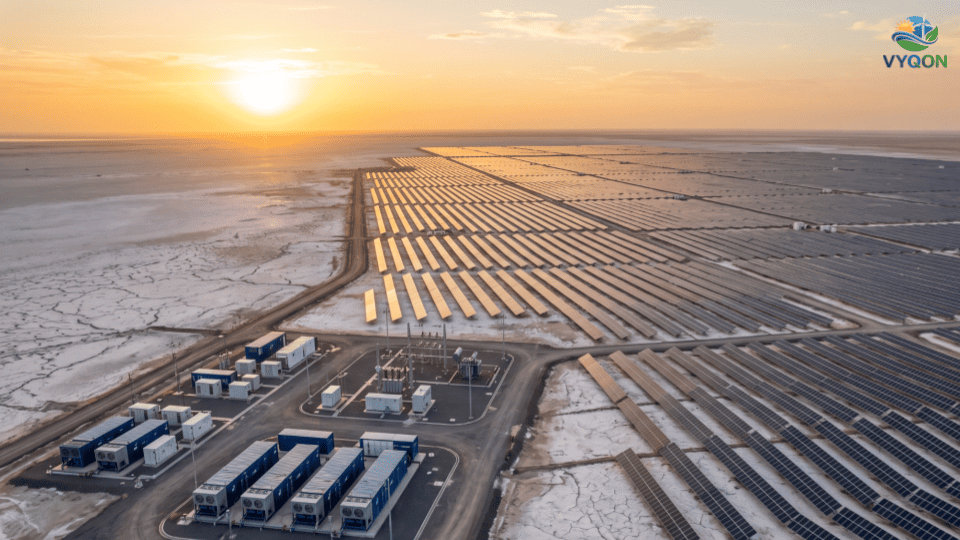
Adani Green Energy Limited has operationalized a 150 MW solar power project at Khavda, Gujarat. The project was developed through Adani Renewable Energy Eight Limited (ARE8L), a wholly owned step-down subsidiary. Commercial power generation at the facility commenced on June 28, 2026.
Capacity Portfolio and Operational Benchmarks
The commissioning of this project has resulted in the following updated operational figures for the company:
- Total Operational Renewable Generation Capacity: 19,985.8 MW (noting a gap of 15 MW from the 20 GW mark).
- Total Operational Battery Energy Storage System (BESS) Capacity: 3,366 MWh.
The company maintains a stated operational capacity target of 30 GW by 2029.
Regional Context: The Khavda Renewable Energy Hub
The project is situated in Khavda, which serves as a large-scale renewable energy hub covering 538 square kilometers. As of FY26, the site has reached a cumulative operational capacity of 9.4 GW. The current 150 MW addition follows a series of capacity increases at this location, including:
- A 292 MW solar project operationalized in April 2026 by Adani Green Energy Twenty Six A.
- A 50 MW solar project operationalized in October 2025 by Adani Green Energy Twenty Six A.
- A 125 MW solar power project operationalized in September 2025 by Adani Green Energy Twenty Six A.
- An 87.5 MW solar capacity addition in September 2025.
These projects contribute to the industrial density of the Khavda site, which has a total planned capacity of 30 GW.
Regulatory and Compliance Disclosures
The operationalization of the project was formally communicated via regulatory filings to BSE Limited and the National Stock Exchange of India Limited. These disclosures were submitted under Regulation 30 of the SEBI (Listing Obligations and Disclosure Requirements) Regulations, 2015. The filings were signed by the Adani Green Energy Limited Company Secretary, Pragnesh Darji.
Technical and Strategic Components
Battery storage is a central component of the company’s operational strategy, functioning to support grid stability and dispatch reliability. The integration of renewable generation with battery energy storage systems and pumped storage projects is intended to facilitate the delivery of clean power on a round-the-clock basis. This approach seeks to convert intermittent renewable generation into a dependable energy supply. Strategically, the storage assets are utilized to capture tariff arbitrage and ancillary service revenues under the CERC regulatory framework.
Leave a Comment