
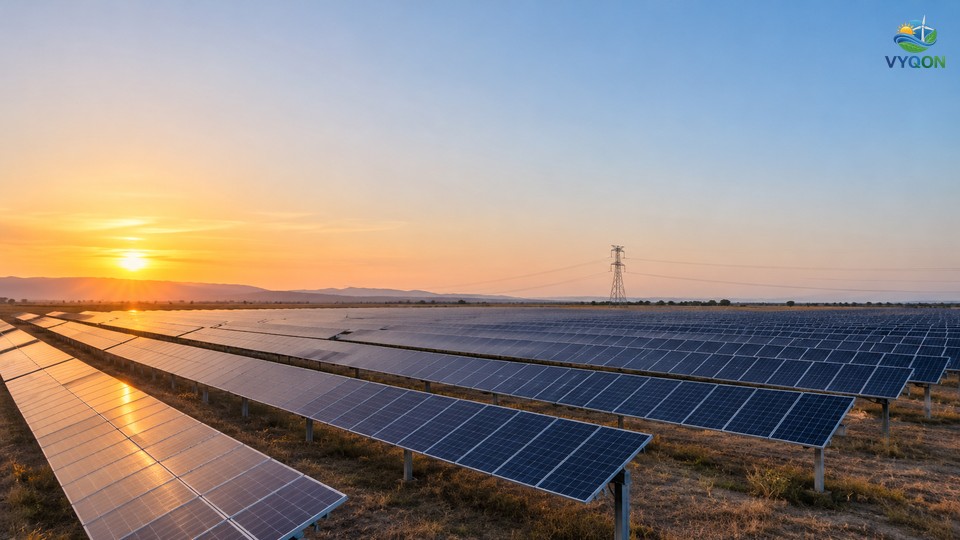
Solar supplied a record 12% of India’s electricity in October 2026, according to the Centre for Research on Energy and Clean Air (CREA). The record came in the same month that the country still burned far more coal, because a weak monsoon cut hydropower output and pushed up demand. CREA published the finding on 23 November 2026 in its first “Monthly clean energy highlights” edition, which covers October 2026.
India solar record 12%: what CREA reports
CREA’s India solar record 12% figure is a share of India’s total electricity generation in October 2026. The organisation calls it a significant number, given that India is one of the biggest consumers of electricity in the world and among the fastest-growing solar markets. It adds that India’s solar power generation in the month was equal to the total power generation of Australia or Italy during the same month.
The analysis was written by Lauri Myllyvirta of CREA and Victor Ponsford of the Secure Energy Project. Its main data source is Ember’s monthly electricity generation data, downloaded on 18 November 2026, which covered October for 45 countries and regions at the time of publication. In this dataset, shares are measured against total electricity generation, and clean power means renewables plus nuclear. For India, the data series starts in 2019, so a “record” means the highest share since 2019.
Why coal use still rose
CREA says India set a solar record in October but still burned far more coal. The reason it gives is El Niño: it weakened the monsoon, which cut hydropower output while pushing up electricity demand.
The same report notes that India was one of three countries that saw the largest drops in the share of clean electricity in October, along with Mexico and Germany. In other words, record solar output did not prevent the overall clean share from falling in the month. CREA’s view is that solar is growing fast, but that India needs storage and more wind to stop a weak monsoon from turning into a coal surge.
Earlier CREA data: the July-September quarter
CREA’s India Energy Snapshot for the second quarter of FY2026-27, released on 12 October 2026, shows how quickly solar has been growing. In that quarter, solar generation increased 39% year on year to 51 billion units (BU) and accounted for 10% of total electricity generation for the first time. Solar also reached a new daily record of 705 million units on 30 September. Wind generation rose 29% year on year to 45 BU.
The snapshot also reported that renewable electricity generation, excluding large hydropower, crossed 100 BU in a quarter for the first time, reaching 101 BU. Large hydropower generation rose from 39 BU in the first quarter of FY2026-27 to 60 BU in the second quarter, but stayed 20% below the level of the same quarter a year earlier. Peak electricity demand reached a record 270 GW in the quarter, 18% higher than the peak in the same quarter of FY2025-26, and total electricity generation rose 11% year on year to 536 BU.
Taken together, the two CREA releases show a pattern: solar’s share moved from 10% in July-September to 12% in October, while the weak hydropower year kept coal central to the power system.
What it means for India’s clean-energy sector
The October figure shows that solar is now a major source of power in India’s monthly generation mix. It also shows the limit of relying on one source. When hydropower falls and demand rises together, solar generation alone, which is available only in daylight, cannot replace the lost output, and coal fills the gap.
This is the point CREA makes when it says India needs storage and more wind. Storage can move daytime solar output into the evening, and wind adds generation at times when solar is not available. For developers, power buyers and grid planners, the October data strengthens the case for pairing solar with batteries and for adding wind capacity, so that a poor monsoon does not push the country back towards coal.
CREA also notes that monthly records depend partly on the season and the weather, which set both generation and demand. A single month’s share should therefore be read together with the longer trend, which for solar in India has been steadily upward.
Leave a Comment