
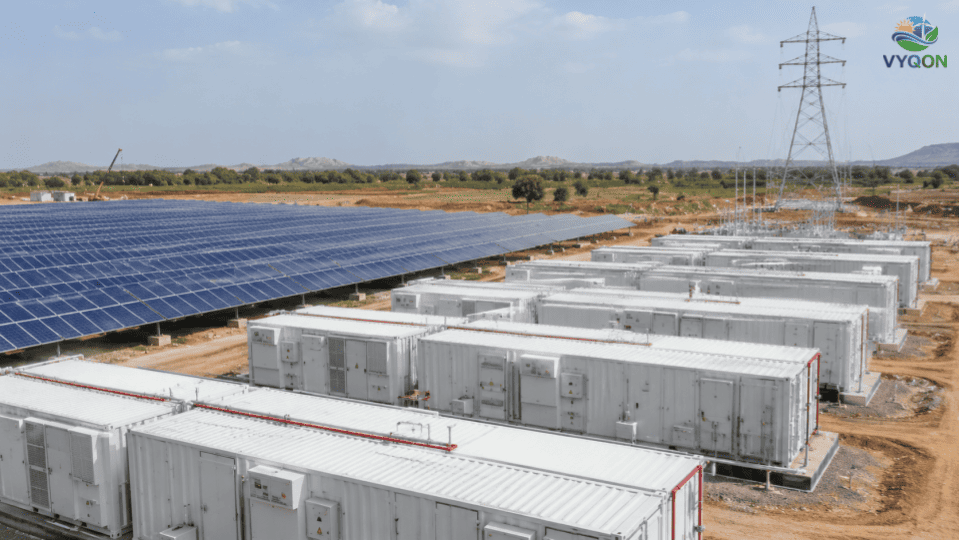
Thiruvananthapuram, 8 October 2026: Kerala has reached an agreement in principle with NTPC Limited on a package of power-sector measures, the centrepiece of which is a 2,000 MWh Battery Energy Storage System (BESS) at NTPC’s Kayamkulam site in Alappuzha district. Chief Minister V D Satheesan announced the decisions on 7 October following talks in New Delhi with NTPC Chairman and Managing Director Gurdeep Singh. Electricity Minister Sunny Joseph and Chief Secretary Bishwanath Sinha also took part in the discussions.
The package addresses both the state’s immediate supply shortfall and its long-term energy security. It comes as Kerala seeks to address growing electricity demand and supply constraints.
The Kayamkulam BESS
The Kerala State Electricity Board (KSEB), NTPC and NTPC Green Energy Limited (NGEL) will sign a tripartite memorandum of understanding (MoU) to implement the project. The system will be located at the Rajiv Gandhi Combined Cycle Power Project, NTPC’s currently non-operational naphtha-based station at Kayamkulam. The site also hosts NTPC’s 92 MW floating solar plant.
The final power rating, battery technology, tariff, charging arrangements and commissioning timeline for the 2,000 MWh BESS have not yet been officially confirmed. These parameters are expected to be established through the MoU, subsequent procurement and the required regulatory process.
The existing land, switchyard and transmission infrastructure at Kayamkulam are expected to simplify development compared with a greenfield site, although detailed grid studies, safety reviews and project-specific engineering will still be required.
Builds on an Earlier Tender at the Same Site
NGEL has already tendered storage at Kayamkulam. In May 2025, it invited bids for an EPC package for a 250 MW/1,000 MWh BESS through international competitive bidding. The scope was split into two 125 MW/500 MWh blocks: one connected at the existing 33 kV solar pooling switchgear and the other at the 220 kV switchyard. The tender specified standardised containers of at least 5 MWh DC capacity each and included a 15-year O&M requirement based on one cycle per day. How this earlier package relates to the newly announced 2,000 MWh project has not yet been clarified by NTPC or NGEL.
Repurposing an Idle Thermal Asset
The Kayamkulam station was commissioned in 1998 as NTPC’s first naphtha-based plant, with a capacity of about 350 MW. Its power was among the costliest in the state. In a 2015 Lok Sabha reply, the Ministry of Power put the average selling price at Rs 12.98/kWh in 2013–14 and Rs 13.07/kWh in 2014–15, with KSEB purchasing the entire output. The plant has since remained largely idle. Using the site for battery storage could allow existing land and evacuation infrastructure to support a flexible grid resource, subject to project-specific studies and approvals.
Why Kerala Needs Peak Storage
Kerala’s supply shortfall is concentrated in the evening. Solar output falls after sunset while household demand continues to rise, forcing KSEB to buy power from outside the state during periods of tight supply. A large BESS can store energy when it is available at lower cost and discharge it during the peak, reducing exposure to high market prices and improving supply reliability.
Storage also complements the state’s renewable procurement. KSEB has signed a 25-year agreement with the Solar Energy Corporation of India (SECI) for 500 MW of solar power at Rs 3.49 per unit, with supply scheduled to begin from September 2026.
Other Measures in the Package
- Short-term supply: Up to 300 MW from NTPC’s Sinnar project in Maharashtra at Rs 5.18 per unit.
- Smaller BESS projects: Two BESS projects at Pothencode and Sreekandapuram, each with an announced capacity of 80 MWh, are to be commissioned by March 2027.
- Solar addition: Work on NTPC’s proposed 27 MW solar project at Kayamkulam will be expedited, with state government support.
- Long-term capacity: Kerala has requested a dedicated NTPC power station in the state. NTPC has expressed willingness to sign a power purchase agreement for supply from its Ramagundam plant. The move also comes after the Ministry of Power’s 2024 recommendation to earmark long-term coal linkage under the SHAKTI Policy for Kerala’s 500 MW requirement.
- Institutional support: NTPC will provide technical expertise to strengthen KSEB’s management, operations and power-management systems.
Kerala’s Wider Storage Pipeline
Kayamkulam is part of a broader state storage programme. KSEB has pursued substation-level BESS projects at locations including Mylatty, Mulleria and Areekode, and central agencies such as NHPC and NVVN have issued standalone BESS tenders for Kerala with viability gap funding support. These projects are at different stages, from tendering to construction.
What Comes Next
The immediate milestone is the signing of the KSEB–NTPC–NGEL MoU. This will be followed by decisions on project configuration, procurement model, tariff and regulatory approval. Until these steps are completed, the Kayamkulam project remains an agreement in principle rather than a contracted installation. If executed as planned, it would become one of Kerala’s largest storage assets and a key tool for shifting daytime renewable energy into the evening peak.
Official References
- NTPC Green Energy Ltd – IFB for EPC Package, BESS at NTPC Kayamkulam (250 MW/1,000 MWh)
- Ministry of Coal – Minutes of SLC (LT) Meeting on Coal Linkage for Kerala (August 2024)
- Lok Sabha Unstarred Question No. 2655 – Generation of Power by NTPC Kayamkulam (12.03.2015)
- NTPC Limited – Declaration of Commercial Operation of Kayamkulam Floating Solar PV Project
- Department of Power, Government of Kerala
- Kerala State Electricity Board
- NTPC Limited
Leave a Comment